Amid the ongoing military conflict, Ukrainian society demonstrates a high degree of mobilization, yet expectations regarding the war's end date remain pessimistic. According to the latest data from the Kyiv International Institute of Sociology (KIIS), published by RBC-Ukraine, the overwhelming majority of citizens do not expect hostilities to conclude in the near future. A poll conducted in August 2026 revealed that 45% of respondents expect the war to last until at least the second half of 2027 or even longer.
Pessimism in Projections: War Until 2027
Statistics show that optimistic scenarios, assuming the conflict will end in 2026, are supported by only 21% of those surveyed. An even smaller percentage — 15% — hopes for peace in the first half of the following year. Thus, more than half of Ukrainians (60% in total) do not see prospects for the war ending in the next two years. 19% of citizens found it difficult to make a forecast, indicating that uncertainty regarding the situation at the front and in diplomatic circles persists.
Endurance Dynamics: From Decline to Growth
Despite the protracted nature of the conflict, the level of Ukrainians' readiness to endure hardships remains high. If in January 2026 this figure was 65%, by spring it dropped to 48%, raising concerns about rising "war fatigue." However, between April and August of the current year, the situation changed: the share of those willing to endure "as long as necessary" rose to 61%. This indicates that society has managed to mobilize internal resources and adapt to the conditions of a prolonged confrontation.
Kyiv as an Example of Resilience
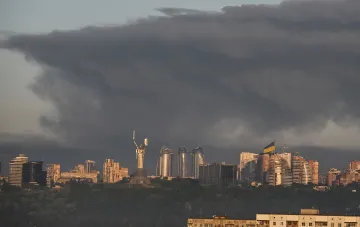
The situation in the capital deserves special attention. Against the backdrop of an intensive campaign of strikes on Kyiv, the share of residents ready for a long war increased from 61% in April to 69% in August. This is a paradoxical but indicative phenomenon: increased pressure did not lead to a drop in morale but, on the contrary, consolidated the population. At the same time, the share of those willing to endure only a few months or half a year decreased from 29% to 20%, indicating a shift from tactical expectation to strategic resilience.
Boundaries and Territorial Integrity
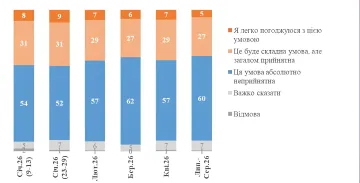
Questions of territorial integrity remain sensitive but clear for the majority of Ukrainians. According to July data, six out of ten citizens consider the transfer of the entire Donbas region under Russian control in exchange for security guarantees to be categorically unacceptable. This indicates that, despite the readiness for a long war, Ukrainian society is not prepared to make compromises that could be perceived as capitulation or concessions to the aggressor. Opinions on the country's future borders are divided, but the principle of territorial inviolability remains dominant.