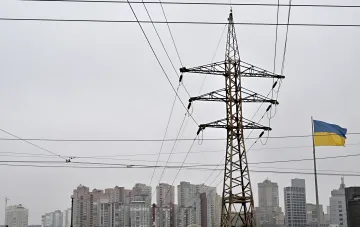
Debt owed by balancing market participants to NPC Ukrenergo has exceeded UAH 45 billion, according to company Supervisory Board member Yuriy Boyko in a commentary to RBC-Ukraine. He estimates that over 80% of this amount is concentrated among so-called problem consumers, the probability of recovery from whom is extremely low. Boyko emphasized that the problem has been accumulating for years and has become one of the key pressures on the financial stability of the country's energy system.
Why Debts Cannot Be Collected
The primary driver of debt growth is consumers who do not pay for electricity but, for various reasons, cannot be disconnected from the grid. Energy Club Vice President Maksym Nemchynov previously pointed out that these consumers include water utilities and other critical infrastructure enterprises, as well as facilities whose disconnection is impossible due to technical or military circumstances. As a result, electricity is actually generated and consumed, but funds fail to reach Ukrenergo, which, in turn, cannot fully settle accounts with generators.
Debt Accumulation Dynamics
According to Boyko, the growth rate of balancing market debt varied significantly by season: in winter months, debt increased by up to UAH 1 billion per month, while in the summer period it grew by UAH 400–600 million. For comparison, throughout 2025, total balancing market debt rose by 21% to a record UAH 42 billion. Simultaneously, Ukrenergo's own debt to market participants increased by 36% to UAH 22.9 billion. NPC Ukrenergo CEO Vitaliy Zaichenko previously estimated the current volume of balancing market participants' debt to the company at over UAH 46 billion, calling it one of the highest figures in the history of the market.
Government Measures to Contain Growth
To slow down the accumulation of new defaults, the Ukrainian government changed the mechanism for distributing funds from heat utility companies: an additional 5% of their revenues are now channeled to Ukrenergo to repay balancing market debts. Furthermore, a special accounts mechanism is being introduced for certain protected consumers, ensuring more transparent payment tracking. Boyko expressed cautious optimism: he does not expect a complete halt to debt growth, but anticipates that the pace of accumulation will decrease "by an order of magnitude" — from a billion in winter months to significantly lower values.
Prospects for European Support
Halting the rapid accumulation of new debts, according to Boyko, will be a necessary prerequisite for reaching agreements with European partners on grant and loan support to clear Ukrenergo's arrears to balancing market participants. Implementing such a mechanism would allow generating companies to receive funds for already produced electricity and direct them toward current operations and infrastructure restoration. Without stabilizing the situation on the balancing market, experts emphasize, attracting external financing remains unlikely.