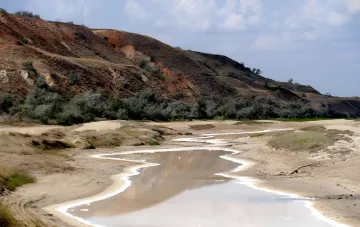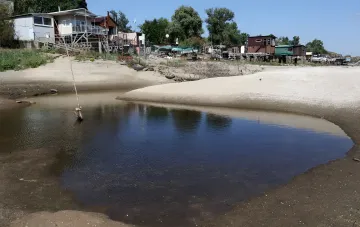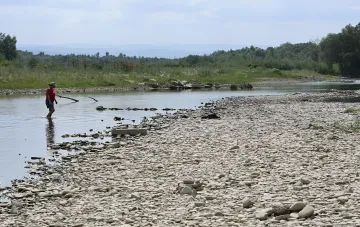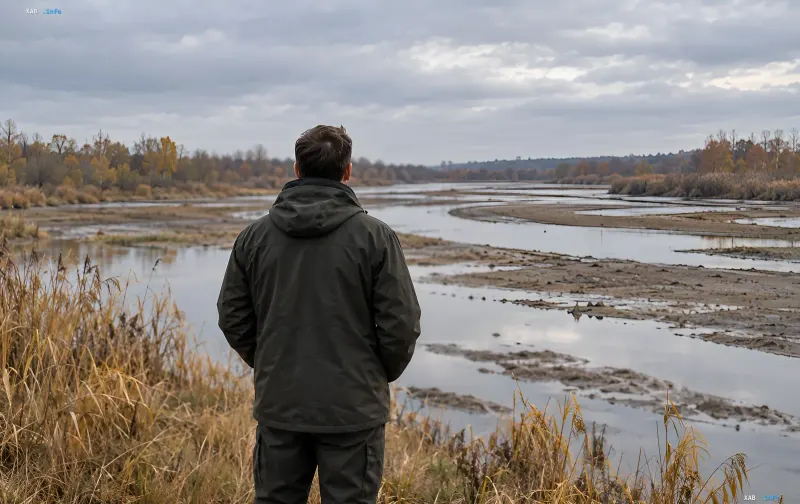
In the first half of October 2026, the hydrological situation on most rivers in Ukraine remained tense. According to the Ukrainian Hydrometeorological Center, on a significant part of the country's water bodies, water levels dropped below the values necessary for the normal functioning of river ecosystems. In certain places, a complete absence of flow was recorded, while the tributaries of the Middle Dnieper — the Sribnianka and Stuhna rivers — continue to experience dry riverbeds. This was reported by RBC-Ukraine with reference to a publication by the UkrHMC press service.
How water content is assessed: methodology and criteria
Regular and prompt assessment of the water content of Ukraine's main rivers is carried out based on a special Regulation on the procedure for assessing and informing about low water (hydrological drought) on land water bodies. UkrHMC experts analyze average water discharges over a specific period and compare them with regulatory values. The regulation establishes clear criteria for the onset or threat of low water, including both main and auxiliary indicators. The auxiliary criterion involves comparing monthly water content with the long-term average water content of the lowest-water month of the year. Calculations for the first 15 days of October 2026 were carried out precisely according to this methodology.
The only "plus": Inhulets at 423% of normal
Of all the large rivers of Ukraine included in the monitoring, water content above the long-term average was recorded only on the Inhulets River (Kryvyi Rih station) at 423% of normal. This is an isolated case that does not change the overall picture: on other water bodies, whose hydrological regime affects the operation of water-dependent economic sectors and public water supply, monthly water content turned out to be lower than the long-term average value of the lowest-water month of the year. According to the main assessment criterion, low water was not only observed at the beginning of October but also intensified on a number of rivers.
Critical levels: from 23% to complete drying
Significantly below normal — in the range of 30–49% of the long-term average value — water content in the first half of October was recorded on several large rivers. Water content close to the formal criteria of low water (23–27%) was found on an even broader list of water bodies. On some rivers, no flow was recorded at all over the entire 15-day period. On the tributaries of the Middle Dnieper — the Sribnianka and Stuhna rivers — the drying of riverbeds persists, which, according to specialists, is the most severe hydrological regime.
Ecological flow exceeded: what this means for ecosystems
The most alarming indicator, according to UkrHMC experts, is the maintenance of water content below ecological flow values. A complex hydrological situation, where the water level does not provide the minimum ecological flow, has been recorded on a significant part of the monitored rivers. Specialists emphasize that such a condition is "critical for the functioning of river ecosystems": with a prolonged absence of sufficient flow, conditions for the life of aquatic organisms are disrupted, coastal zones degrade, and the river's self-purification capacity decreases. If such a regime persists until the end of October and beyond, the consequences for river ecosystems may become irreversible on a seasonal scale.
Context: climate, infrastructure, and winter risks
The situation with water scarcity in Ukraine is being discussed against the backdrop of ongoing debates about the impact of global climate change on the hydrological regime. Earlier, UkrHMC and the State Water Agency explained that the disappearance of water in rivers and wells is caused not only by climatic factors but also by anthropogenic impact — including irrational water use and infrastructure wear and tear. In parallel, public warnings are being voiced about potential water supply problems for major cities in winter, including Kyiv. NAS experts have already joined programs for the restoration and cleaning of urban water bodies. Thus, the UkrHMC data for the first half of October 2026 record not a one-time weather phenomenon, but a steady trend requiring a systematic response at the level of state water policy.