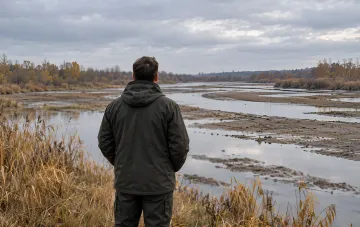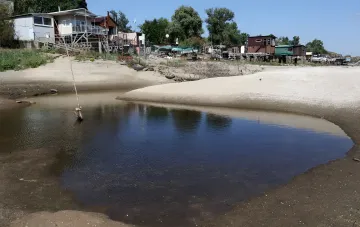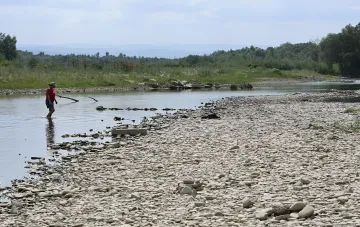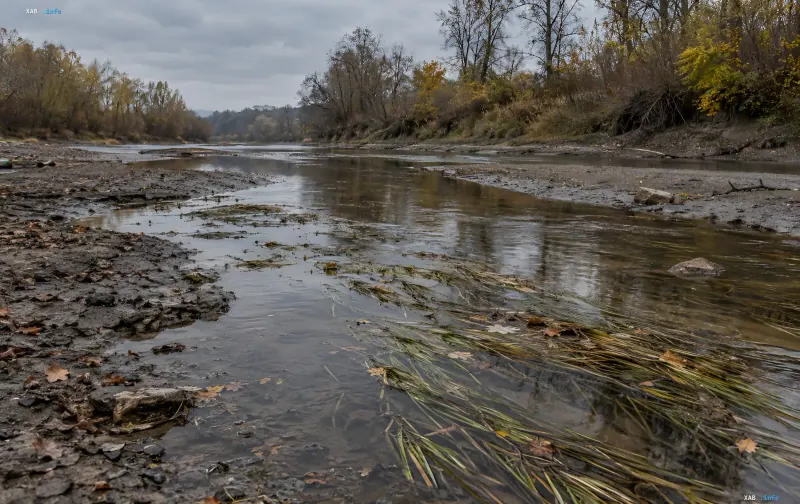
The Ukrainian Hydrometeorological Center (UkrHMC) has declared a 'brown' — the highest — level of danger due to hydrological phenomena on rivers in four regions of the country at once. This was reported on October 30, 2026, by the center's press service on Facebook, referenced by RBC-Ukraine. According to specialists, from October 31 to November 13, a low autumn water level regime will persist on a number of rivers, and water levels will remain close to the lowest values recorded throughout the entire period of instrumental observations, and in some areas even lower.
What the 'Brown' Danger Level Means
According to the List of Hydrological Phenomena of Hazard Levels I, II, and III on Inland Water Bodies of Ukraine, the 'brown' color corresponds to Hazard Level III and signals a critical water shortage. In contrast, the 'red' level characterizes the opposite situation — an excess of water or a flood. In practice, the 'brown' level means that water levels drop below established threshold marks and remain at that level for at least one month. An additional criterion is the drop in water levels during low-water periods below the lowest marks for the entire observation period, lasting for a month or more.
Which Rivers and Territories Are Affected
In the UkrHMC warning about hazardous hydrological phenomena valid until November 13, specific mention is made of the rivers in the Pripyat sub-basin, for which the 'brown' danger level has been recorded. The center also published a separate warning for a number of other rivers in four regions where the situation is similar. An infographic detailing specific watercourses was posted on the official UkrHMC Facebook page. Overall, it indicates that over the next two weeks and beyond, low river water content will remain at a stably critical level.
Consequences for Infrastructure and Ecosystems
As experts note, the 'brown' danger level is essentially a situation where the volume of water becomes so small that it hinders the normal functioning of infrastructure: from water supply for populated areas to the operation of industrial facilities using river water. In addition, such prolonged and deep drops in water levels can be critical for river ecosystems, including hydrobionts and coastal communities. The duration of this situation — at least a month — increases the load on all water-related systems.
Context: Low Water as a Long-Term Problem
The current UkrHMC warning is not an isolated event. Earlier, scientists from the National Academy of Sciences joined water body restoration programs in Kyiv, and the State Water Agency publicly discussed whether low water could turn into a long-term structural problem for the country. Experts point out that a combination of climatic factors and anthropogenic impact leads to increasingly pronounced autumn low-water periods, with river levels dropping below historical lows during certain periods. The situation recorded by UkrHMC at the end of October 2026 fits into this general trend and underscores the need to monitor water resources at the regional level.