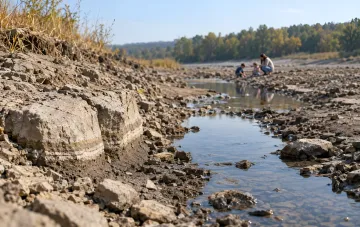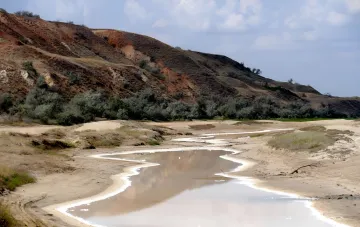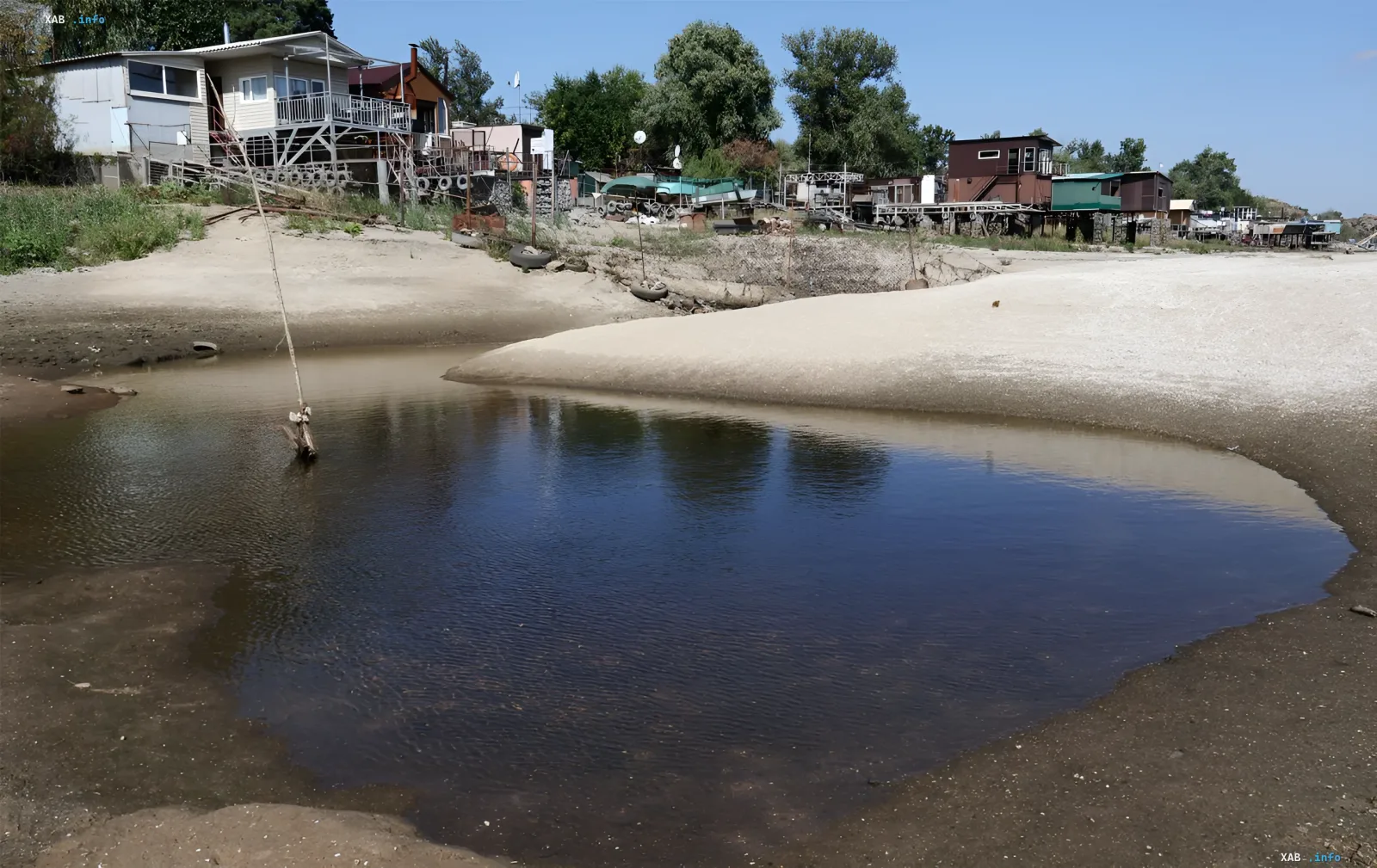
In 2026, most of Ukraine's rivers are experiencing severe low-water conditions, which, according to hydrometeorological assessments, had been building up since May. This was stated in a Facebook post by Vitaliy Postrihan, head of the Cherkasy Regional Center for Hydrometeorology and Environmental Monitoring, which RBC-Ukraine cites with reference to the expert. The photos accompanying the story show dried-up riverbeds and extensive sandbars, characteristic of river sections with critically low water levels.
The scale of the problem: data from European monitoring
The expert emphasized that the issue of shallowing of the main water arteries is increasingly being raised in the media not only in Ukraine but also in a number of other countries, and acknowledged that "there are reasons for it, and the water shortage problem in Ukraine is becoming increasingly acute." Citing analytics from the European Copernicus environmental monitoring and security program, Postrihan stated that the statistics confirm: Ukraine has not been spared from the water problem. According to him, more than 10,000 small rivers have already irreversibly disappeared in the country, and severe low-water conditions are observed on most of the state's rivers.
Where water is at a historic low
On September 11, 2026, the specialist named the most critical sections. On certain stretches of the Serebryanka River in Cherkasy Oblast, he said, "the drying up of the riverbed is persisting." On the Supiy River, the water level is one of the lowest over the entire observation period. On the Ros River, the water flow has dropped below ecological values — that is, below the threshold necessary to maintain the normal state of the river ecosystem.
Dynamics: from weak spring flooding to summer drought
The hydrometeorological center links the growing low-water conditions with a complex of factors that emerged as early as May and led to a systemic water deficit by autumn. Earlier, against the backdrop of weak spring flooding and subsequent weather conditions, critical water-level indicators were already recorded in July. Historic anti-records for the Dniester River and a record-low level of a number of reservoirs, where there is not enough water for population needs, were separately noted.
What this means for the regions
The drying up of riverbeds and the drop in flow below ecological norms mean not only a water shortage for domestic and economic needs but also a direct threat to river ecosystems. For Cherkasy Oblast and other regions with low-water rivers, this may mean additional restrictions on water consumption in the autumn-winter period, when inflow into the riverbeds usually drops even further.