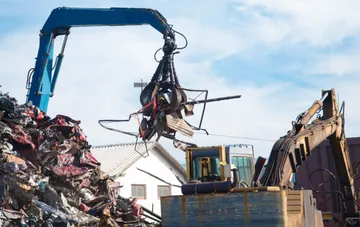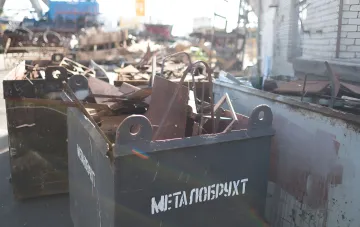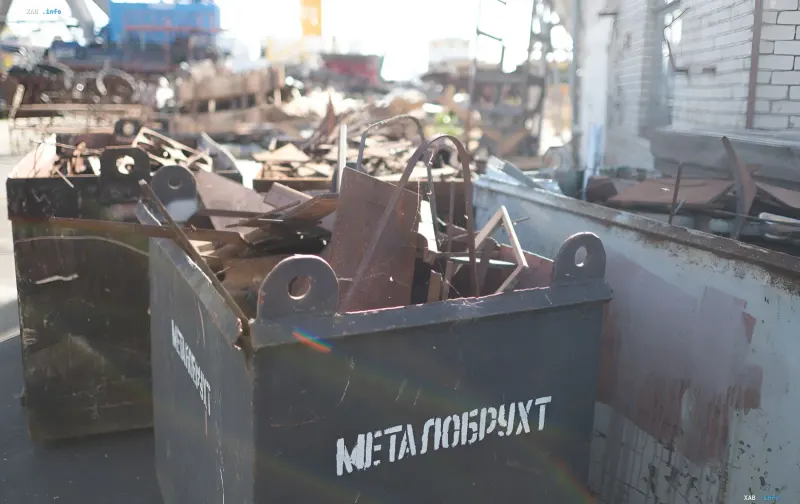
The Ukrmetallurgprom association has sent an appeal to the Ministry of Economy and Environmental Protection of Ukraine asking to regulate the mechanism for selling scrap metal by state-owned enterprises and ensure transparent, equal rules for all market participants. According to RBC-Ukraine, the letter is addressed to Minister of Economy Oleksandr Kravchenko. In the document, the metallurgical industry insists that when introducing scrap sales auctions, exceptional conditions should not be created for state-owned companies, and the starting price of lots should be formed on a market basis.
Against a Separate Export Mechanism for Ukrzaliznytsia
The appeal emphasizes that Ukrzaliznytsia's scrap metal is an important source of strategic raw materials for Ukrainian metallurgy. The industry believes that the maximum volume of such scrap should be sold and processed domestically, as this ensures employment, tax revenues, and the production of high-value-added products. This is why Ukrmetallurgprom opposed the possible creation of a separate scrap export mechanism for state-owned companies. According to the association, such exceptions could create unequal competitive conditions, risks of abuse and shadow schemes, as well as lead to direct losses for the state budget. The document states explicitly: "Any exceptions for state companies are opportunities for schemes and direct budget losses. Equal rules for everyone eliminate this risk."
Readiness to Buy 65–95% of Volumes on the Domestic Market
Metallurgists have stated their readiness to actively purchase Ukrzaliznytsia's scrap metal on the domestic market. According to Ukrmetallurgprom, Metinvest and Interpipe are already ready to buy at least 65–70% of the volumes put up for auction, provided that the starting price is formed on market terms. After the full resumption of metallurgical enterprises, this share, according to the association's estimates, may increase to 90–95%. Thus, the industry proposes approving a clear plan for the sale of Ukrzaliznytsia scrap for 2027 specifically on the domestic market, abandoning draft decisions that provide for the abolition of the zero quota on scrap exports for state-owned enterprises in November–December 2026 and further from 2027.
Financial Mathematics: 16 Million Euros vs. 22.6 Million in Trader Superprofits
The letter provides specific calculations. According to the association's estimates, with a zero starting price at the export quota auction, potential superprofits of exporters could reach 22.6 million euros, while the budget would receive nothing from the quota sale. At a starting price of 80 euros per ton, the budget will receive about 16 million euros with a quota of 200 thousand tons, and export will remain profitable for traders. The principles of possible auctions for export quotas, UMP is convinced, must also be market-driven — the starting price should be at least 80 euros per ton.
The Shadow of "Gray" Schemes: GMK Center Warning
The context of the appeal is reinforced by a previously voiced warning from the GMK Center analytical agency. In its view, the abolition of the zero quota for scrap exports by state-owned enterprises could bring back old "gray" schemes where Ukrainian scrap metal was exported to the EU without duties, re-registered, and then sent to Turkey. In fact, this made it possible to bypass the export duty of 180 euros per ton. As a result, traders made money on exporting raw materials, while the budget lost tens of millions of euros. The difference for the state is significant: exporting one ton of scrap metal brings the budget only 50–100 hryvnias, while the market value of a ton on international markets is measured in hundreds of euros.
The appeal of Ukrmetallurgprom captures the growing tension in the industry around the issue of distributing strategic raw materials between the domestic processing sector and the export channel. Against the backdrop of preparations for regulatory decisions for 2027, the metallurgists' position — in favor of maximum localization of processing and uniform rules for private and state participants — is becoming one of the key arguments in the discussion with the Ministry of Economy.