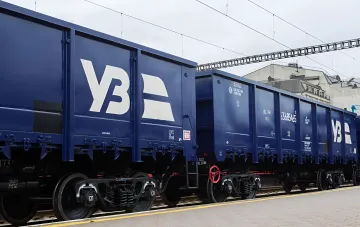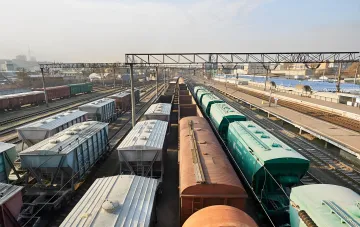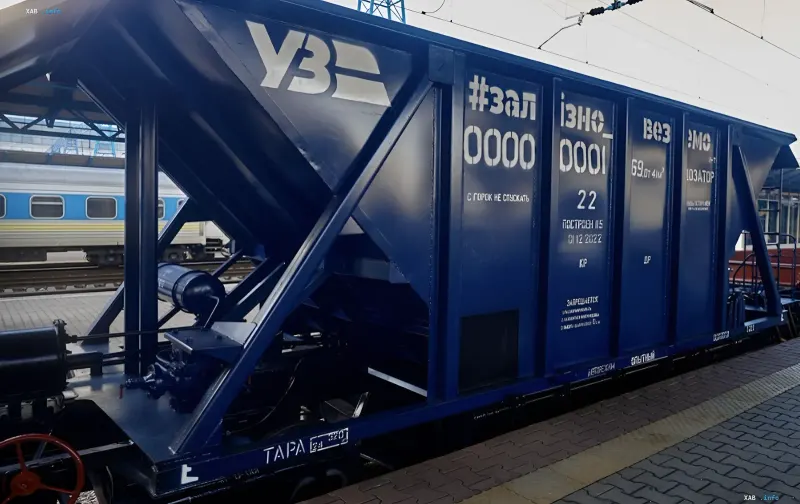
The planned 15% increase in Ukrzaliznytsia’s freight tariffs in January 2027 could undermine industrial enterprises' efforts to resume production following Russian attacks. This was stated by Oleksandr Kalenkov, President of the Ukrmetallurgprom (UMP) association, during the Center for Transport Strategies' annual expert discussion, noting that logistics has become one of the key barriers to recovery alongside security factors.
Logistics — the primary barrier
According to Kalenkov, aside from security, economic factors — primarily the cost of logistics — determine the pace at which enterprises return to work. «I do not want to name specific figures given the aggressor's special attention to our enterprises, but we are doing everything to resume production. Many factors influence this. Aside from security, there are economic ones. And the cost of logistics is in first place», he noted. Business, he said, opposed the 30% increase in Ukrzaliznytsia’s freight tariffs in August and does not consider that decision a compromise.
Cross-subsidization: over UAH 200 billion in overpayments
Kalenkov recalled that over the years of cross-subsidizing passenger transport at the expense of the freight segment, industry has overpaid more than UAH 200 billion. At the same time, according to his estimate, provided that passenger losses are fully covered, a freight tariff increase of about 5% would be sufficient for Ukrzaliznytsia to reach the break-even point. A 15% increase, he said, would already account for the need to service the monopoly's significant financial obligations.
Criticism of Ukrzaliznytsia’s 2027 business plan
Separately, the UMP president criticized Ukrzaliznytsia’s planned expenditure growth for 2027: «Transportation is falling, and expenses are growing again by UAH 27 billion». According to his data, the business plan includes an 18.3 billion UAH salary increase, while savings on the payroll fund amount to only 3.5 billion UAH. Kalenkov emphasized that the issue does not concern machinists and locomotive crews who work under shelling and deserve decent pay — it is about bloated staff on low-activity infrastructure and a lack of significant optimization amid cargo volumes halving.
Alternative: financing the passenger segment from the budget
The situation is critical for industrial enterprises also because resuming production requires significant investment, and enterprises are currently operating at a loss. «Reducing this loss gives a chance for such investment», Kalenkov noted. In his opinion, the state should help lower prime costs at least through the tariffs of state-controlled monopolies by supporting Ukrzaliznytsia and funding loss-making passenger transport from the budget rather than at the expense of shippers.
Risks for the railway itself
The industry's position is supported by other associations. The Metal Producers Federation stated that further increases in freight tariffs could accelerate the decline in shipments, enterprise shutdowns, and worsen the financial condition of the company itself. ICC Ukraine President Volodymyr Shchelkunov pointed out that the metallurgical industry traditionally provides up to 40% of Ukrzaliznytsia's freight revenue, and with reduced production, the railway risks losing its cargo base — «shooting itself in the foot». The National Association of Mining Industries (NADM) noted that Ukrzaliznytsia's cargo base in 2021–2025 almost halved — from 315 million to 161 million tons, while passenger transport losses in 2025 reached about UAH 20 billion, which, according to the association, should be covered from the state budget via the PSO mechanism, as in EU countries.