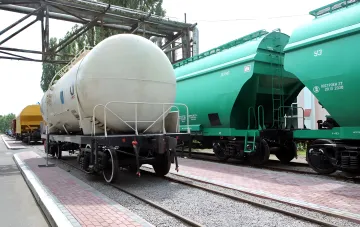
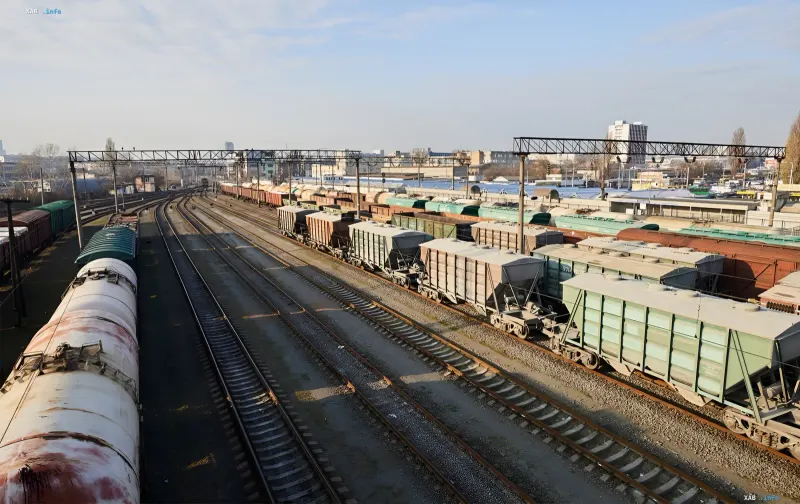
Ukrainian business is facing a serious challenge: «Ukrzaliznytsia» has decided to increase tariffs for freight rail transport by 30%. This decision, dictated by the carrier's critical financial situation, threatens to become a catalyst for rising production costs for key economic sectors — metallurgy and the agro-industrial complex.
The government initiated a price review against the backdrop of the prolonged blockade of Black Sea ports and the rapid increase in the cost of alternative logistics routes. While export flows previously went through the sea, they are now forced to be redirected through the western border and the Danube, which in itself significantly increases costs.
Logistics crisis and new expenses
According to Serhiy Vovk, Director of the Center for Transport Strategies, logistics through the western border adds about $50 to the cost of every ton of cargo. Transportation through the Danube and the Romanian port of Constanța makes the process even more expensive — by $60–70 per ton. Against this background, the Ministry of Recovery's decision to index tariffs by 30% and unify prices for transporting empty wagons becomes an additional blow to enterprise profits.
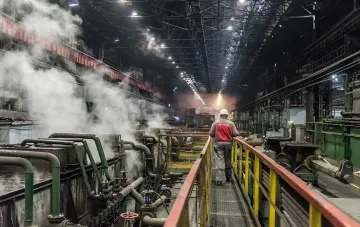
For industrial giants, this means a forced increase in production costs. The largest metallurgical holding, «Interpipe», estimates additional expenses at approximately $15 per ton of product. At the same time, the company emphasizes that it cannot completely abandon rail transport due to security risks for road transport when removing products from locations such as Nikopol.
Metinvest opposes: business arguments
Representatives of «Metinvest» state that the decision to raise tariffs was made without a proper analysis of its impact on the country's economy, despite business warnings about the threat of plant shutdowns and job cuts. The holding points out an imbalance in the carrier's expenditure structure: «Ukrzaliznytsia»'s freight transport remains profitable (last year it brought the company 5.8 billion UAH in profit), while losses in the passenger segment reached about 20 billion UAH.
Business insists: financing social passenger transport should not be shifted onto the shoulders of shippers, who are already working under conditions of war and sanctions pressure.
Agro sector on the verge of losses
The agro-industrial sector will also face a deterioration in export economics. According to estimates by «TAS Agro», new tariffs will add about $5 to the cost of transporting each ton of grain. By the end of the year, the total additional expenses for major exporters will amount to tens of millions of hryvnias.
The situation is complicated by the fact that at current procurement prices, some grain producers are already forced to operate at a loss of $20–35 per ton. Completely replacing the railway with road transport for large-scale export shipments is technically impossible — this limits the maneuvering options for farmers.
Expert forecasts: loss of GDP and export revenue
At «Ukrzaliznytsia», the tariff increase is explained by the need to avoid an operating deficit of 26.3 billion UAH and a net loss of 21.9 billion UAH by the end of the year. However, the forecast by the state enterprise «Ukrpromvnesheksperytiza» paints a bleak picture of long-term consequences: a loss of about 96 billion UAH in GDP per year, a reduction in «Ukrzaliznytsia»'s own freight base by 27 million tons, a loss of $2.4 billion in export revenue, and a reduction in budget revenues by 36 billion UAH.
Experts warn: further pressure on logistics risks leading to a reduction in production volumes, a decrease in tax deductions, and an increase in unemployment in key industrial and agricultural regions.
Future plan: another increase?
Recall that in June, the Ministry of Communities and Territories Development published a draft order proposing to increase tariffs for freight rail transport by 30% from August 1, 2026. From January 2027, the cost of transportation could rise by another 15%. Business has already spoken out against this step, warning that the consequences could be worse than the expected effect.
In addition, experts believe that this «Ukrzaliznytsia» initiative could also affect the cost of fuel in Ukraine, since fuel logistics also depends on rail tariffs.
Thus, the tariff increase is not just a change in price tags, but a systemic challenge for the entire economy of Ukraine, requiring a balanced approach and a search for compromises between the financial interests of the carrier and the survival of the real sector of the economy.