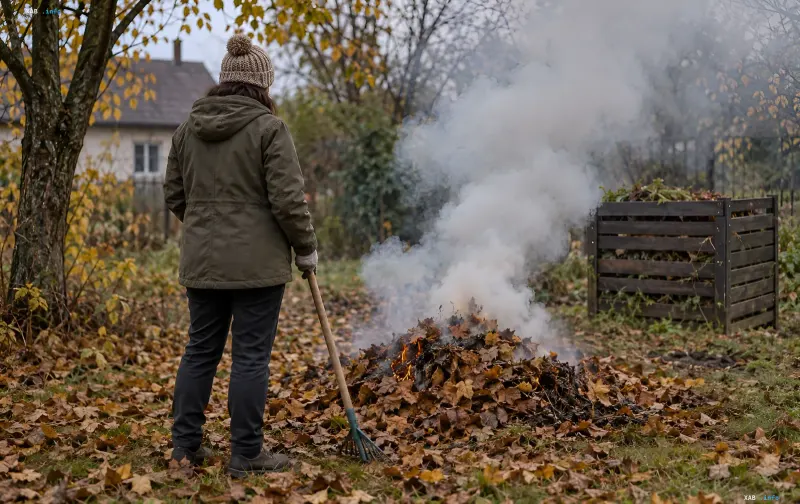
In autumn, when mass cleaning of yards and private plots begins in Ukraine, the number of cases of burning fallen leaves and plant residues is growing again. However, as the Department of Environmental Protection and Climate Change Adaptation of the Kyiv City State Administration (KMDA) reminded, such an action is an administrative offense and entails financial sanctions. This was reported on November 1, 2026, by RBC-Ukraine with reference to the agency's data.
Fine amounts: from 3,060 to 12,240 hryvnias
According to Article 77-1 of the Code of Ukraine on Administrative Offenses, unauthorized burning of vegetation and its residues is punishable by a fine ranging from 3,060 to 6,120 hryvnias for citizens. If the violation is recorded in the territories and objects of the nature reserve fund, the amount of the fine is doubled, ranging from 6,120 to 12,240 hryvnias. Thus, in certain cases, the fine can be twice the base range.
What enters the air during leaf burning
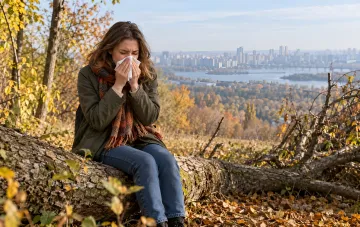
The KMDA emphasizes that burning plant residues releases carbon monoxide, nitrogen oxides, and fine particulate matter into the atmosphere. Smoke from incomplete organic combustion also contains benzene, formaldehyde, and polycyclic aromatic hydrocarbons, including carcinogenic compounds. PM2.5 particles pose a particular danger as they penetrate deep into the lungs. The smoke irritates the eyes and respiratory tract and can aggravate symptoms of asthma and other respiratory diseases. Children, the elderly, and people with chronic conditions are most vulnerable to such pollution. If plastic or other household waste is burned along with the leaves, dioxins, furans, and heavy metals are additionally released into the air.
Environmental risks and fire hazard
In addition to the direct impact on health, burning leaves damages the ecosystem: fire damages the roots of trees and shrubs, destroys insects and other organisms living in the leaf litter. In dry and windy weather, flames can quickly spread to grass, trees, and even buildings, turning a local bonfire into a full-scale fire.
What to do instead of burning and who to contact in case of violation
The KMDA recommends not burning plant residues, but composting healthy fallen leaves by placing them in a composter or a specially arranged compost pile. The resulting compost helps improve soil structure and returns organic substances to it. If you witness leaf burning, the department advises reporting it to the police at 102, or calling rescuers at 101 in case of a fire. When contacting authorities, you should specify the exact location of the incident and, if safe, record the violation on photo or video.
Criminal liability for severe consequences
Separately, the KMDA recalls that if forests, green spaces, or stubble are destroyed as a result of fire, criminal liability may arise—ranging from a fine of 153,000 hryvnias to imprisonment for a term of two to five years. Thus, the autumn practice of burning leaves familiar to many can turn into not only an administrative fine but also serious legal consequences.