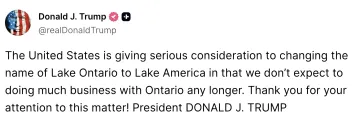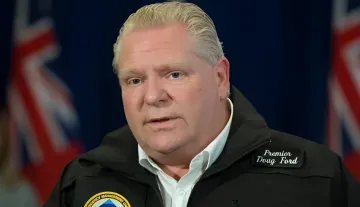


Washington and Ottawa spent several days trying to reach an agreement on customs policy, but no deal was struck. As a result, the White House announced the imposition of 50% tariffs on a wide range of Canadian imports, which, according to the outlet, take effect on August 21, 2026. A list of goods subject to the new tariffs has already been published, and it turned out to be significantly broader than the three categories initially named.
Legal basis and Washington's logic
According to the U.S. Trade Representative (USTR), the new tariffs are being imposed under Section 338 of the U.S. Tariff Act of 1930. This provision, the agency says, allows the president to set tariffs of up to 50% on imports from a foreign country in response to unequal taxation or discriminatory trade measures. The White House argues that Canadian policy creates unfavorable conditions for American trade compared to goods from other countries.
Automobiles, alcohol, and dairy products
One of the main categories is automobiles and auto parts: the U.S. administration states that Canada applies unjustified and discriminatory measures to American automotive products. Another major category turned out to be dairy products — Washington demanded that Ottawa change its quotas so that U.S. producers gain broader market access, and accused Canada of offering better terms to other foreign countries. The 50% tariff covers, in particular, milk, cream, whey, caseinates, lactose, and cheese-making ingredients. Alcohol became a separate item: last year, several Canadian provinces banned the sale of American spirits in response to the tariffs, some of the restrictions remain in effect to this day, and Prime Minister Mark Carney has called for their repeal to facilitate negotiations.
The list covers hundreds of goods
The broadest consequence of the new tariffs is that they extend far beyond the three main categories. The list includes hundreds of other items: agricultural products, including seeds, foodstuffs, and baking mixes; textiles and clothing; cosmetics; furniture and home goods; electronics and equipment; diamonds; toys; and a number of other categories. At the same time, the new tariffs do not cancel the existing U.S. tariffs on Canadian steel, aluminum, and lumber, and Washington stated that this time it will not make exceptions for goods covered by the USMCA agreement.
Contradictory data
There is a notable inconsistency in the timeline of events. On August 19, Donald Trump postponed the introduction of the 50% tariffs by three days, explaining that, in his words, the U.S. and Canada had already reached an agreement, and the document only needed final approval. However, in the following days no compromise was finalized, the talks collapsed, and the tariffs took effect on August 21. Thus, the public statement about a "reached agreement" did not match the actual outcome of the negotiations, creating a discrepancy between White House rhetoric and the real result.
Ottawa's reaction
Canada did not stand by: in Ottawa, officials stated that the response to the American tariffs would be mirror-like and "dollar for dollar." Reports indicate that retaliatory tariffs on Canadian imports worth approximately 20 billion dollars are being prepared. Thus, after the failure of the negotiations, the trade confrontation between the two largest North American economies, linked by the USMCA agreement, is entering a new, more acute phase.