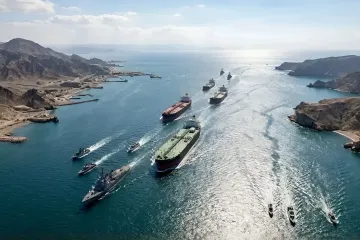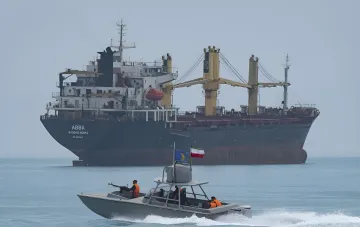
US military forces struck Iran's Larak Island, located near the strategic Strait of Hormuz. According to a US official, Iranian forces on the island were preparing to launch mines into the strait. This is the first US strike on Iran in the past month, sharply raising the temperature of regional tensions against the backdrop of ongoing diplomatic efforts to unblock a key global shipping route.
What Happened on Larak Island
US Central Command (CENTCOM) spokesperson Captain Tim Hawkins said that American forces attacked two Iranian launchers on the island. On the Iranian side, the semi-official Fars News agency reported local residents' accounts of an explosion near Larak Island on Sunday. Thus, the fact of the strike is confirmed by both American and Iranian sources, although the sides describe the details and objectives of the attack differently.
Tehran's Reaction and Threats of Retaliation
The Islamic Revolutionary Guard Corps (IRGC) vowed retaliation on Sunday, blaming the "American-Zionist enemy" for the attack on Larak Island. According to the Iranian side, the strike injured Iranian military personnel and civilians. In a statement to state broadcaster IRIB, the IRGC spokesperson called the Trump administration's actions a "strategic and fatal mistake." Earlier, on Tuesday, President Trump stated that Iran had been warned: any ship or boat laying new mines would be "immediately and systematically destroyed," and, according to an official, US forces are closely monitoring the area and ready to protect the free flow of trade through this waterway artery.
Strait of Hormuz: Mine Clearance and Economic Pressure
Last week, US Central Command completed the clearance of international shipping routes in the strait. Meanwhile, according to Bloomberg, the global economy is largely ignoring Washington's new threats and continues to trade with Iran: the US attempt to mount an "economic offensive" has proven largely ineffective due to China's position and allies' reluctance to sever trade ties. At the same time, Qatar is in talks with Iran over unblocking the Strait of Hormuz — Tehran has agreed to draw up a list of conditions for restoring normal vessel traffic.
Contradictory Data
The sides' statements contain a number of inconsistencies. First, according to the US version, the strike was directed exclusively at military launchers, whereas the IRGC claims there were civilian casualties — there is no independent confirmation of the scale of the casualties in the provided sources. Second, President Trump had spoken of the strait being fully cleared of mines, yet, according to Bloomberg, the Strait of Hormuz is likely still mined. These discrepancies make the picture of the situation incomplete and require further verification.
Diplomatic Efforts and Prospects
Despite the escalation, the diplomatic channel remains open: Qatar's talks with Tehran and Iran's willingness to put forward conditions for unblocking the strait point to an attempt to reduce risks to global trade. Nevertheless, the IRGC's promise of a retaliatory strike and the contradictory data on the state of the minefield keep the risk of further escalation high in one of the world's most important shipping corridors.