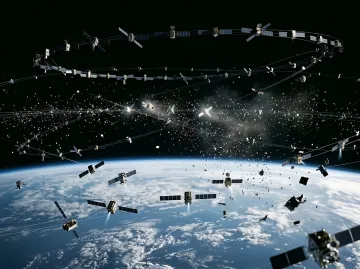
Amid a growing crisis of space debris threatening the safety of future missions, the United States is taking a decisive step towards creating an orbital logistics industry. The Space Development Agency (SDA) and the Defense Innovation Unit (DIU) of the U.S. Department of Defense have officially announced the launch of the first phase of the "Deorbit-as-a-Service" (DaaS) program.
First Investments in Space Cleanup
Under this initiative, three leading private companies — Firefly Aerospace, D-Orbit, and Catalyst Space — have received grants totaling $8.4 million. These funds will be directed towards the preliminary design and development of systems capable of approaching defunct spacecraft, capturing them, and safely deorbiting them to ensure a controlled descent into the atmosphere. As reported by Ixbt.com, this phase is critical for verifying the economic and technical viability of the concept.
From One-off Missions to Scalable Services
The traditional approach to spacecraft disposal assumed that every satellite must be designed with the capability to deorbit itself at the end of its service life. However, this is not always technically feasible or economically viable. The new DaaS model offers a revolutionary shift: operators will be able to order deorbiting services from specialized companies after their primary mission is complete. This approach will significantly reduce design costs and allow for a focus on the scalability of solutions.
Technology Selection and Future Demonstrations
Each of the selected teams proposes unique engineering solutions to accomplish the task. Following the preliminary review phase, the SDA and DIU will select the most promising technologies for demonstration directly in space. The final selection will depend on the technical maturity of the systems, mission concepts, established timelines, and costs. This process will lay the foundation for a completely new space market where orbital cleanup services become an industry standard.
Conflicting Data
While official information confirms the start of the program and the allocation of funds, there are disagreements regarding the implementation timeline and specific technical parameters of future missions. Some experts point out that $8.4 million is merely seed capital for research, and actual demonstration flights may be delayed until 2028–2029. Other sources suggest that the first test missions could be conducted as early as 2027. For now, exact dates have not been announced, creating uncertainty in assessing the program's development pace.