US Vice President JD Vance refused to name a specific timeline for the end of the military campaign against Iran, answering journalists' questions on the matter evasively. In his words, the question of when the fighting will end effectively boils down to when Tehran will stop shelling ships, and on that question, he admitted, he has no answer. “You'll have to ask the Iranians,” Vance said, thereby shifting responsibility for defining the horizon of the conflict onto the Iranian side.
“Ask the Iranians”: Vance Names No Timeline
The statement came against the backdrop of the question of the campaign's duration becoming one of the most acute issues in public discourse in Washington. The Donald Trump administration had previously given significantly shorter estimates of the conflict's length, but the actual timeline has proven far more protracted. The vice president named no specific date for the end of operations, limiting himself to noting that the decision depends on Iran's actions.
From Four Weeks to Six Months
As CNN notes, the US administration initially spoke of an estimated four to six weeks of fighting. However, by the time of Vance's statement, about six months had already passed since the start of the campaign, which began in late March. Thus, the actual duration of the conflict has far exceeded the White House's initial forecasts, intensifying pressure on the administration to outline a clear schedule for ending operations.
“This Is Not a War”: The Vice President's Position
Vance himself, however, stated that he does not consider the current conflict a war in the full sense of the word. In his words, the main combat operations were completed roughly six weeks after the campaign began in late March. Nevertheless, American service members continued to come under attack after that period, including the recent deaths of four military personnel. This creates a notable contradiction between the official rhetoric of “the end of major operations” and the reality of ongoing fighting.
Operations in the Strait of Hormuz
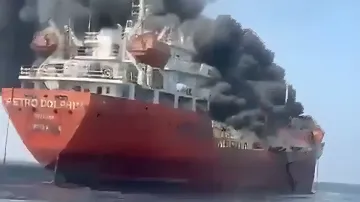
Against the backdrop of the absence of clear timelines for ending the conflict, US military forces continue operations in the area of the Strait of Hormuz. According to US officials, during the latest escalation, US forces struck nearly 60 military targets in Iran and escorted 40 commercial oil tankers through the strait. American forces also attacked Iranian radar systems to make it harder for Tehran to track ship movements. According to Axios, the US struck more than 100 Iranian targets, weakening the threat in the Strait of Hormuz; in the words of one official, this is part of a new “tanker for tanker” policy approved by Donald Trump. CNN notes that these operations may continue, as Iran, by US military assessment, is capable of restoring part of its military capabilities after the initial strikes.
Contradictory Data
There are notable inconsistencies in the parties' statements and in the timeline estimates. On the one hand, the Trump administration initially named a horizon of four to six weeks, and Vance claims that the main combat operations were completed roughly six weeks after the campaign began in late March and that he does not consider the current situation a war. On the other hand, the actual conflict has lasted about six months, American forces continue to suffer losses (four service members recently died), and operations in the Strait of Hormuz are not ceasing. Moreover, some Russian media outlets (for example, mk.ru) characterize what is happening as an “economic war” against Iran, whereas in the American discourse the emphasis is placed on military operations. Differences in terminology and in timeline estimates make the picture of the conflict ambiguous.
The Oil Market and Trump's Position
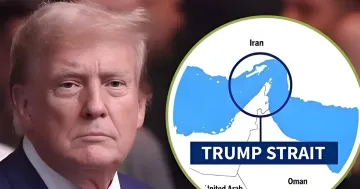
The oil market reacts sharply to the continuation of mutual shelling: oil prices continue to rise almost every day. US President Donald Trump stated the day before that he does not expect the current campaign to continue for long, but he too named no specific timeline for its end. Moreover, in his words, reaching an agreement with Iran is no longer a priority for him, since the current control over the Strait of Hormuz suits him better. As a result, the US administration has still not presented a public schedule for ending military operations, despite earlier estimates of a significantly shorter conflict duration.