The Ukrainian market for fresh vegetables, fruits and berries during the week ending 23 September 2026 showed a mixed price trend. According to EastFruit monitoring data cited by RBC-Ukraine, the plant produce segment recorded both notable increases and significant declines. As summer crops gradually give way to autumn ones, consumers are facing a reshuffling of the price list: some items are rising in price against a backdrop of shrinking supply, while others are falling thanks to the active arrival of the new harvest and seasonal oversupply.
Vegetables: salad becomes the main outlier in price increases
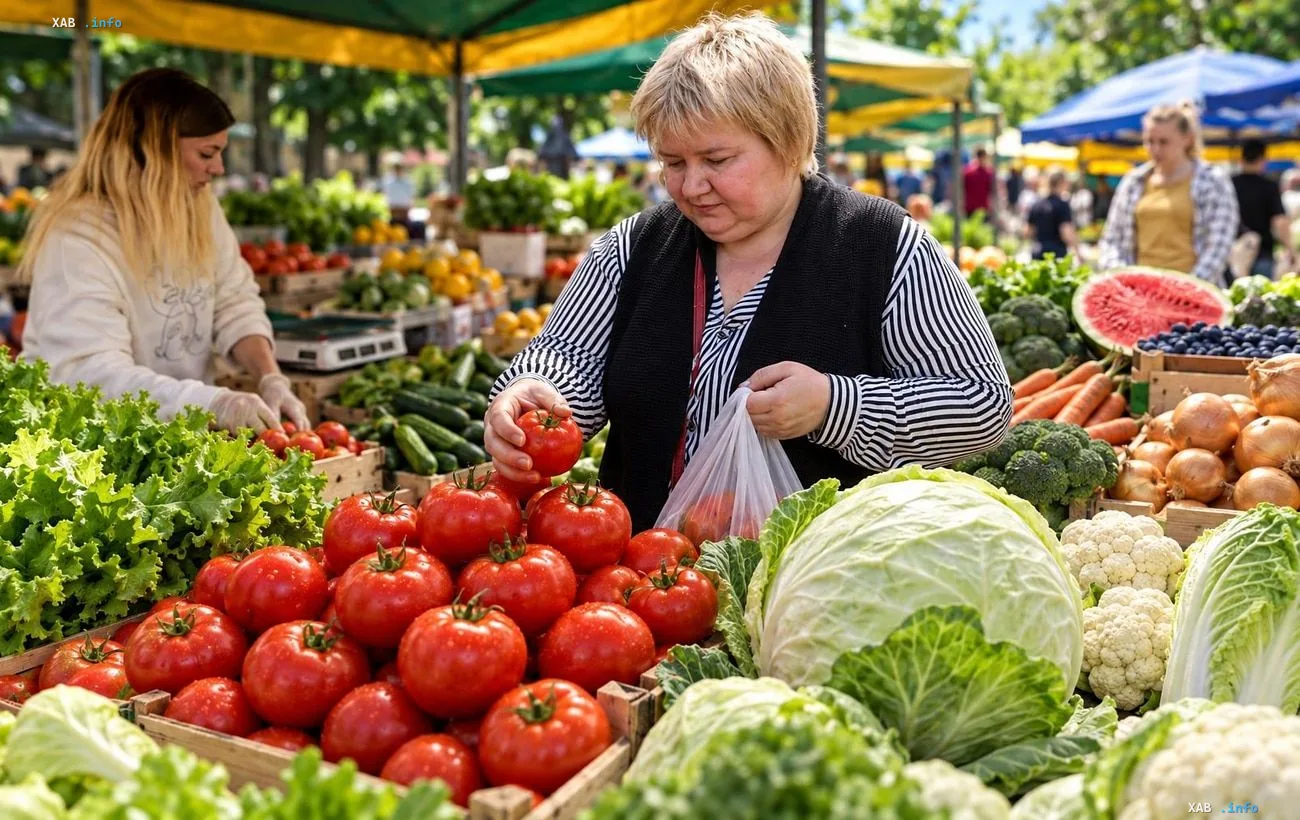
The sharpest weekly jump among vegetables was recorded for salad: its price rose from 80–100 hryvnia to 145–155 hryvnia per kilogram, an increase of around 50–60%. In the broader context of the week, RBC-Ukraine notes that white cabbage and tomatoes also rose in price most noticeably, although specific numerical ranges for these items are not provided in the EastFruit review for this period. At the same time, the market saw more offers of cabbage and a larger number of potato sellers, while cauliflower and Chinese cabbage returned to the top sellers.
Vegetables: seasonal price drops for broccoli, carrots and onions
A significant part of the vegetable assortment, by contrast, became cheaper. Broccoli fell from 65–85 to 55–65 hryvnia per kilogram, carrots — from 12–15 to 10–15 hryvnia, onions — from 14–16 to 12–16 hryvnia. Cucumbers dropped from 35–60 to 30–55 hryvnia, sweet peppers — from 33–60 to 30–60 hryvnia, and hot peppers — from 80–130 to 75–125 hryvnia. Potatoes held steady at the previous level of 11–13 hryvnia per kilogram, zucchini cost 30–35 hryvnia, and garlic — 60–170 hryvnia. Among herbs, parsley became cheaper, falling from 175–185 to 150–170 hryvnia, while dill (175–185 hryvnia) and green onions (95–105 hryvnia) remained unchanged in price.
Fruits and berries: blueberries and watermelon lose value
In the fruit and berry segment as well, a mixed trend emerged. Blueberries became cheaper, falling from 260–400 to 230–350 hryvnia per kilogram, pears — from 30–60 to 25–60 hryvnia, and nectarines — from 90–130 to 80–110 hryvnia. Watermelon, which traditionally loses value by the end of summer and the start of autumn, dropped from 10–20 to 10–12 hryvnia per kilogram. Apples showed an expansion of the upper range: from 16–35 to 16–40 hryvnia. Grapes, by contrast, narrowed their price spread — from 50–140 to 60–120 hryvnia. Oranges, lemons, bananas, kiwi and pomegranates did not change in price over the week. The market saw more pears, grapes and persimmons, while the number of plum and watermelon sellers decreased.
Autumn outlook: what will happen to prices next
As RBC-Ukraine emphasizes, in August some vegetables became cheaper thanks to the active arrival of the new harvest. However, in autumn this factor will weaken. Experts expect that prices for cabbage, potatoes, onions, carrots and beets will be determined by stocks and storage losses, while tomatoes, cucumbers and peppers may rise noticeably in price due to the shrinking supply of summer crops. Sellers are already noting that there is less pepper on the market, while tomatoes remain the most in-demand product of the week.
Contradictory data
In the introductory part of the review, RBC-Ukraine states that "cabbage and tomatoes rose in price most noticeably," however in the detailed EastFruit data it is salad that showed the maximum weekly increase — from 80–100 to 145–155 hryvnia per kilogram. Specific numerical ranges for cabbage and tomatoes are not provided in this material, which makes it impossible to unambiguously confirm or refute the claim of their leading price increase. Thus, depending on which criterion is used — the absolute size of the increase or the relative growth within the category — the leader in price increases may be considered either salad or cabbage/tomatoes. Both versions coexist in the same source without an additional explanatory framework.