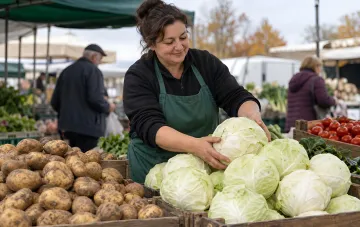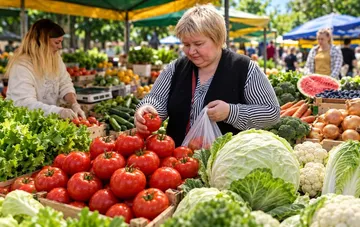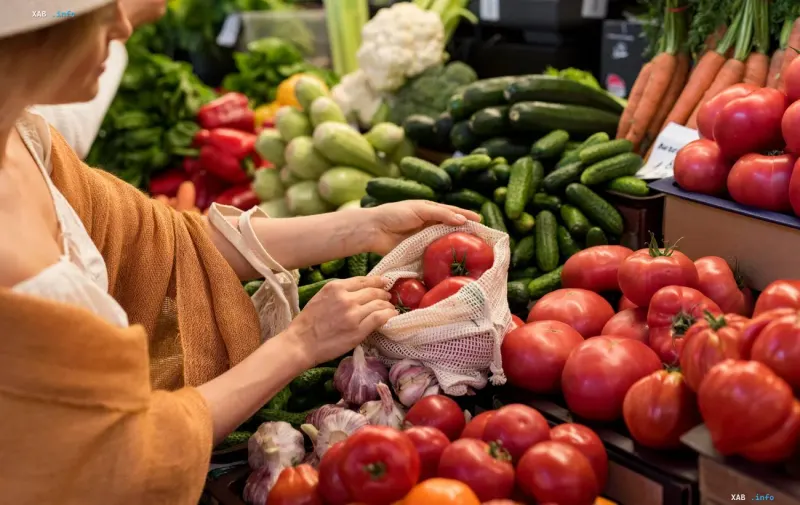
Last week, the Ukrainian market for fresh vegetables and fruits showed mixed price dynamics: some items surged in price, while others, conversely, became more affordable. According to data from the EastFruit monitoring platform, cited by RBC-Ukraine, the sharpest jump among vegetables was recorded for broccoli, while in the fruit and berry segment, the leaders in price increases were garden strawberries and blueberries. At the same time, shoppers could rejoice at a noticeable drop in the cost of green onions, pears, plums, and imported lemons.
Vegetable segment: broccoli and greens in demand, zucchini and eggplant getting cheaper
Among vegetables, the most significant change over the week was recorded for broccoli: if a week earlier it was sold at 45–55 hryvnias per kilogram, the range is now 65–85 hryvnias, representing an increase of 20–30 hryvnias, or roughly 40–50% depending on the point of purchase. The introduction to the overview also mentions price increases for dill and parsley, however, specific numerical ranges for these items are not provided in the available data. At the same time, a number of vegetables became cheaper: napa cabbage dropped from 48–55 to 35–50 hryvnias per kg, zucchini from 33–37 to 30–35 hryvnias, and eggplant from 40–45 to 35–45 hryvnias. A particularly sharp decline was recorded for green onions: their price fell from 175–185 to 95–105 hryvnias per kilogram, which effectively means an almost twofold price drop in a single week.
Fruit and berry market: strawberries and blueberries hit record highs
The most notable changes last week occurred precisely in the fruit and berry segment. Garden strawberries rose from 140–160 to 250–320 hryvnias per kilogram — an increase of 110–160 hryvnias, making it one of the most expensive berries on the market. The price of blueberries changed even more significantly: the range expanded from 190–230 to 260–400 hryvnias per kg, with the upper limit nearly doubling compared to the previous week. Such jumps are typical for the end of the berry harvest season, when supply shrinks while consumer demand remains high. Grapes last week were sold at 50–140 hryvnias per kg, compared to 60–110 hryvnias a week earlier, indicating a widening price range and the appearance of both more affordable and more premium lots.
What got cheaper: apples, pears, plums, and imported citrus
There are also positive signals for shoppers. Apples have started to get cheaper: their price fell from 16–40 to 16–35 hryvnias per kilogram, while pears became even more noticeably cheaper — from 45–70 to 30–60 hryvnias per kg. Plums also became more affordable: the range shifted from 18–50 to 15–35 hryvnias. Among imported fruits, lemons got cheaper — from 100–120 to 70–95 hryvnias per kilogram. Oranges and bananas kept their previous prices: 50–130 and 60–70 hryvnias per kg, respectively. Potatoes, remaining a staple product, did not change in cost — 11–13 hryvnias per kg. Head cabbage costs 18–22 hryvnias, carrots 12–15, cauliflower 40–45, and garlic 60–170 hryvnias per kilogram.
Contradictory data
The provided materials contain several points requiring clarification. First, the introductory part of the overview points to price increases for dill and parsley, however, specific numerical price ranges for these items are not given in the detailed statistics — readers cannot independently verify the scale of the change. Second, melon is described as a cheaper item (from 25–30 to 20–35 hryvnias), yet the actual dynamics are ambiguous: the lower bound of the range fell from 25 to 20 hryvnias, while the upper bound rose from 30 to 35. In other words, the price spread widened, and one can speak of an unambiguous price drop only for part of the supply. Third, blueberries, whose price rose from 190–230 to 260–400 hryvnias, show not merely a price increase but a substantial widening of the spread, which may indicate the heterogeneity of lots (different varieties, ripeness levels, imports and local harvest) rather than a linear rise in cost.
Trading activity: potatoes in demand, tomatoes in supply
Despite the mixed price changes, potatoes were the most in-demand item among participants of the EastFruit trading platform last week. Other borscht-set vegetables — beets, carrots, cabbage, and onions — were also actively purchased. At the same time, the largest number of sales listings fell to tomatoes, whose supply continues to grow, which may in the future put downward pressure on their retail prices. Among fruits, apples remain the leader in supply volume, although sellers offered them somewhat less frequently than a week earlier. Previously, RBC-Ukraine reported on how prices for staple products in Ukrainian supermarkets changed after the weekend: eggs, vegetable oil, and certain types of bread rose the most in price, while the cost of most other items in the chains remained stable. A price increase for onions was separately noted due to high demand from wholesalers and retail chains against a limited supply of quality produce.