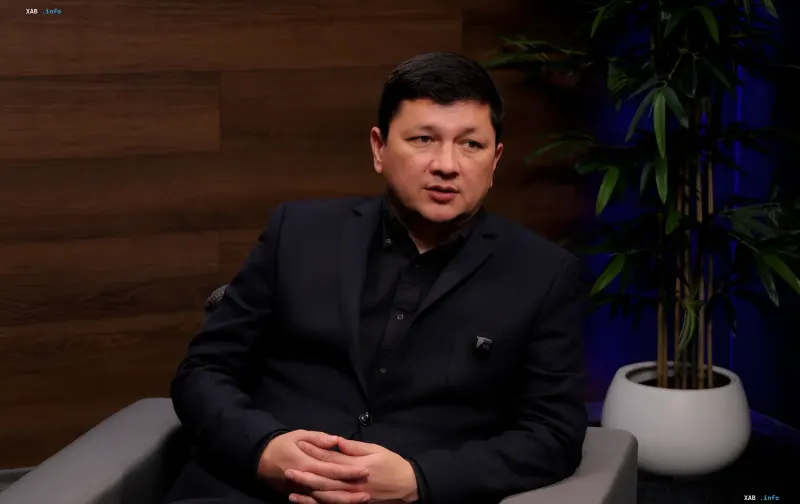
After five years of the active phase of the war, Ukraine is facing a large-scale challenge that goes far beyond military strategy: the return of hundreds of thousands of service members to civilian life. We are talking not only about medical and psychological rehabilitation, but also about employment, housing issues, education, and adaptation to a society that has changed significantly during their service. In an interview with RBC-Ukraine, Minister for Veterans Affairs Vitaliy Kim explained why military personnel on crutches asking for money can still be seen on the streets of Ukrainian cities, what systemic gaps the audit of veteran programs revealed, and how the ministry plans to rebuild the support mechanism for those who have given years to service.
The problem is not the lack of programs, but the lack of information
Kim acknowledges that the situation of veterans ending up on the street is not isolated cases, but a systemic problem rooted in an information gap. "People do not know about the existence of assistance programs and where to apply. This is actually not the military's problem, but ours. We must bring this information to them," the minister stated. According to him, many veterans have already been successfully removed from the streets, but the process is ongoing: as service ends or injuries are sustained, new people find themselves in vulnerable positions. Kim emphasizes that helping a civilian requires the veteran's consent, as well as the physical presence of a specialist capable of assessing the situation on the spot and directing the person to the appropriate structure—a state program, a public organization, or the Ministry of Social Policy.
The American model as a benchmark: 45 thousand public organizations
As a positive example, the minister cited the experience of the United States, where, according to his data, about 45 thousand public organizations work with veterans. Many of these are small structures of two or three people who take veterans home, dress them, shoe them, and help them find jobs in cases where the state cannot cope on its own. Kim expressed hope that Ukraine will eventually build a similar multi-tiered system in which state institutions and civil society complement each other. The ministry's strategy, he said, is to start work with the most vulnerable category—those who "do not know, do not know how, do not understand, and need help."
The "single window" is not ready yet: why it is not being launched
One of the ministry's key projects is the creation of a so-called "single window"—a centralized mechanism through which a veteran or their representative could receive a full range of services and consultations. However, Kim stated bluntly that the launch of this service is not planned yet. "I don't want to open it so that people later say: 90% works, and the rest doesn't. We are refining the routes so that the system works fully," the minister explained. According to him, not all services, procedures, and interdepartmental processes are aligned yet, and launching a "semi-working" mechanism would cause reputational damage and reduce trust in the institution as a whole.
From Mykolaiv to Kyiv: "social responsibility, not an elevator"
Vitaliy Kim came to the post of minister from the position of head of the Mykolaiv Regional State Administration, where, in his own words, a stable team was formed and working processes were built during his leadership. He characterizes the move to Kyiv not as a "social elevator," but as "social responsibility." "I don't expect gratitude. On the contrary, I understood there would be a certain amount of negativity, but someone has to do it," he noted. Kim acknowledges that there is no ministry for veterans affairs in the world whose work would be evaluated exclusively positively: "You can solve 90% of issues, but 10% will still remain that you cannot solve."
Should the minister be a veteran? The question of caste and professionalism
Kim's appointment sparked a public debate: some citizens and experts expressed the opinion that the Ministry for Veterans Affairs should be headed by a veteran himself. The minister did not reject the idea itself, but did not agree that it is mandatory. "Veteran policy for me did not start with this position, but back in the Mykolaiv region, where it was part of our work," he explained. At the same time, he pointed out that in his immediate team of six people, four are veterans. Kim drew a parallel with medicine: "Not every doctor should be the Minister of Health. But that is actually how it works." In his conviction, the issue comes down to public administration in any sphere, rather than the formal status of the leader.
Kyiv and the region: two different levels of governance
Speaking about the differences between working in the regional administration and the ministry, Kim noted that at the regional level, the logic is simple: "There is a task, you solve it, and you are responsible for it. There are specific people and a specific result." In Kyiv, however, he said, the process is fundamentally different—it is constant interaction between the legislative and executive authorities, the Office of the President, and a wide range of interested structures, where every decision is communicated and agreed upon at several levels. It is this multi-level nature, according to the minister, that determines the pace and character of reforms in veteran policy at the national level.