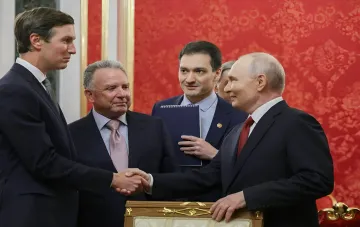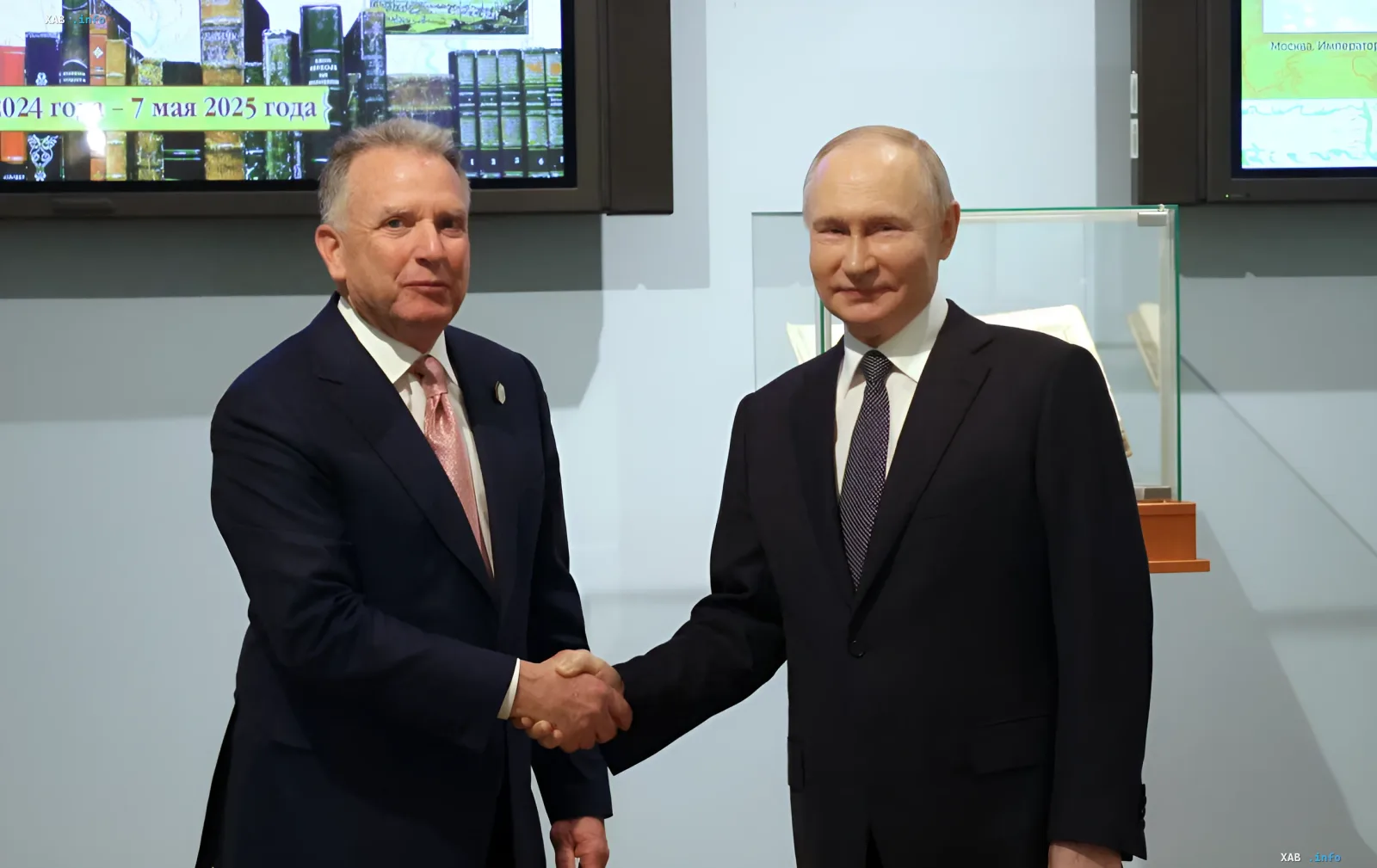
On Saturday, September 5, Russian President Vladimir Putin met in Moscow with special envoys of U.S. President Donald Trump, Steve Witkoff and Jared Kushner. According to Axios journalist Barak Ravid and Reuters correspondent Steve Holland, as cited by RBC-Ukraine, the main topic of the conversation was "President Trump's program for establishing peace in the Russian-Ukrainian war." Both sides reportedly discussed "substantive plans for further steps," which, participants expect, will be announced in the coming weeks.
Composition of the U.S. delegation: not just Witkoff and Kushner
As an unnamed White House representative clarified, the Russian trip included, in addition to Witkoff and Kushner, representatives of the National Security Council, the State Department, and the U.S. Department of the Treasury. Their task is to work out specific proposals for ending the war. At the same time, according to the same source, the Treasury representative did not take part in the direct conversation with Putin: the acting head of the Treasury's sanctions office, Jean Lang, joined the delegation but held a preparatory meeting with Putin's envoy Kirill Dmitriev and was not present at the talks with the Russian leader.
What they discussed: the peace plan and "productive" steps
In Barak Ravid's wording, the meeting was aimed at advancing Trump's peace initiative, and the sides expressed hope for "equally productive" contacts the following day, September 6, already on Ukrainian territory. This indicates that the Moscow round was seen as a preparatory stage of a broader diplomatic sequence, in which, after Moscow, the U.S. delegation was to continue its work in Kyiv.
Next step — Kyiv
The move of the American negotiators to the Ukrainian capital was also confirmed by Russian media, citing Putin's words: according to them, after Moscow, Witkoff and Kushner would head to Kyiv. Thus, the "Moscow — Kyiv" format became a key element of the diplomatic roadmap that, according to participants' statements, is planned to be detailed in the coming weeks.
The sanctions track: the role of the Treasury and Dmitriev
A separate, likely sanctions-related track of the negotiations was reflected in the fact that it was the Treasury's sanctions representative, Jean Lang, who worked with Kirill Dmitriev rather than with Putin. It is possible that the center of their conversation was U.S. sanctions against Russia and possible mechanisms for their review within the framework of a peace settlement. This nuance underscores the multi-level nature of the delegation: the political track with Putin and the economic-sanctions track with his envoy ran in parallel.
Contradictory data
There are discrepancies in the details in open sources. First, the outlet life.ru reports that Witkoff and Kushner left the Kremlin "after three hours of talks" with Putin, whereas the original Axios and Reuters posts do not specify the length of the meeting — the three-hour figure has not yet been confirmed by independent sources. Second, in a number of retellings the composition of the delegation is presented as "Witkoff and Kushner met with Putin," which may create the impression that the entire delegation (including the Treasury) took part in the conversation with the Russian leader; meanwhile, the original source explicitly clarifies that the Treasury representative did not meet with Putin but worked with Dmitriev. These inconsistencies in the timing and in the description of the composition should be taken into account when citing.