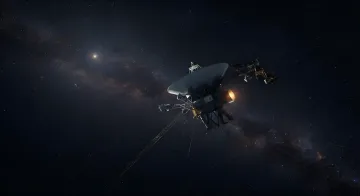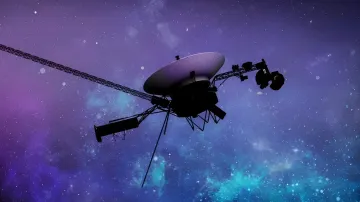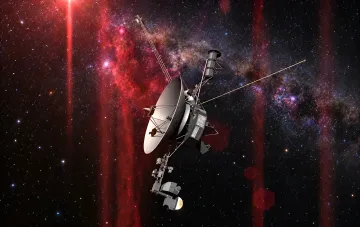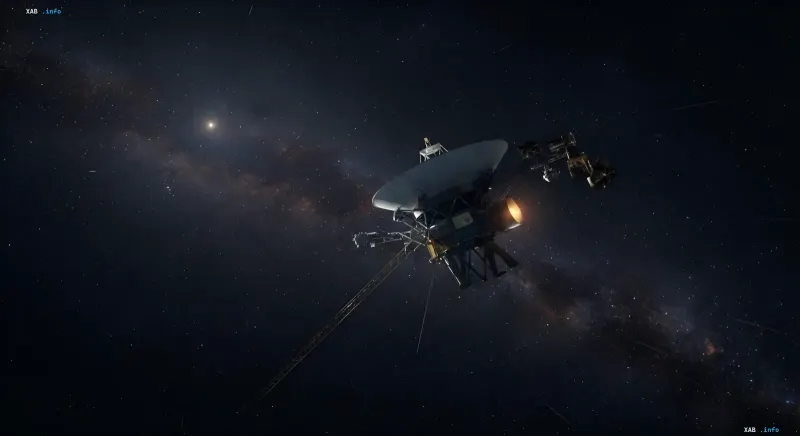
The interplanetary spacecraft Voyager-1, one of the farthest human-made objects, has stopped transmitting scientific data back to Earth. According to information reported by CNN citing probe status updates, the cause was an onboard computer malfunction. NASA specialists detected the problem on November 14, 2026. Since then, the spacecraft has been sending only a carrier radio signal—confirming that communication with the probe remains active, but containing no useful scientific information.
What Exactly Failed
According to engineers' preliminary assessments, the glitch affected the onboard computer responsible for collecting and processing data from scientific instruments. This specific unit converts sensor signals into useful telemetry, which is then received by ground stations. The exact cause of the failure has not yet been named, and the mission team is operating in diagnostic mode while trying to restore normal operations.
Power-Saving Mode and Two Working Instruments
To conserve Voyager-1's limited onboard power supply, only two of its ten scientific instruments are currently operational. Such load reduction is a standard measure for a spacecraft operating in deep space for nearly half a century, helping to extend its lifespan. Nevertheless, even in this mode, the probe is unable to transmit scientific results, making the current glitch particularly critical for the mission.
Why a Response Might Take Two Days
Restoring communication with the spacecraft takes time, constrained by the physics of distance itself. A signal sent from Earth needs significant time to reach Voyager-1, and then return with a response. According to experts, establishing contact and receiving confirmation from the probe can take about two days. This means that even a successful command to restart or switch systems will only yield results after a long waiting period.
Historical Context: The First Light-Day Out
Voyager-1 was launched in September 1977 to explore the outer planets of the Solar System and interstellar space. The spacecraft made history as the first human-made object to distance itself from Earth by one light-day—approximately 25.9 billion kilometers. Since then, it has continued to drift through interstellar space, remaining a unique source of data on the environment far beyond the Solar System, and its current failure deprives science of one of the last such sources.
The NASA team continues attempts to "revive" data transmission. The outcome will not be known until the signal from Earth and the return signal from the probe traverse the colossal distance back and forth. Until then, Voyager-1 remains in space as a silent, yet technically connected messenger of humanity.