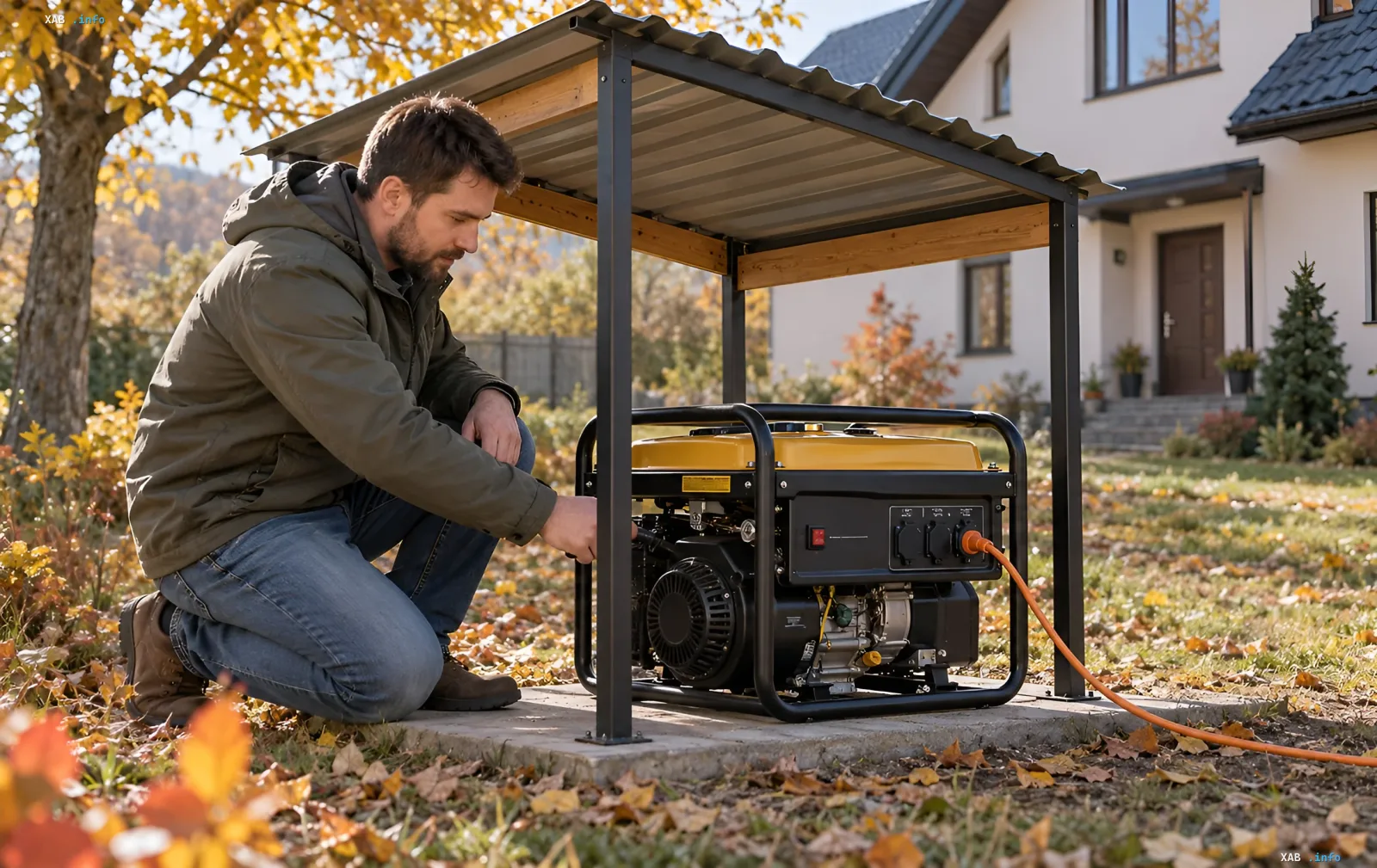
Amid modern energy challenges and unstable power supplies, standalone fuel generators have become a familiar fixture in both private households and urban environments. However, operating petrol and diesel units requires strict compliance with fire safety regulations, sanitary standards, and legal restrictions. In 2026, regulatory authorities are paying special attention to where and how such units are installed, as negligence can lead not only to tragic consequences but also to severe fines imposed by the state.
Basic Rules for Placement and Safe Installation of Generators
For the safe operation of a portable fuel generator, you must choose exclusively open-air locations outdoors. According to recommendations from the State Emergency Service of Ukraine (SES), the distance from a working device to doors, windows, and ventilation openings of residential buildings must be at least 6 meters. The Civil Protection Directorate of the Mykolaiv City Council also confirms these requirements, adding that a similar distance must be maintained regarding parked cars and adjacent structures. An exception is made only for blank, solid non-combustible walls without windows, near which the unit may be placed at a distance of 1 meter or more, provided it does not contradict the specific model's technical passport.
Categorical Ban on Installation in Residential Premises and Balconies
It is strictly prohibited to run generators inside residential apartments, stairwells, basements, garages, or even on open balconies of multi-story buildings. Internal combustion engines emit deadly carbon monoxide, which is colorless and odorless but can cause severe poisoning or death within minutes. Open windows or vents on a balcony do not solve the ventilation problem. Furthermore, Kyiv City Council recommendations explicitly ban placing such equipment on emergency evacuation routes. Experts from specialized agencies strongly recommend additionally installing standalone carbon monoxide detectors in residential premises to provide timely warnings of danger.
Legal Liability and Fines for Rule Violations
Violation of established operating standards, urban landscaping rules, or noise regulations can result in administrative liability. The Code of Ukraine on Administrative Offenses provides for various types of sanctions. For instance, for violating fire and technological safety requirements under Article 175 of the Code, citizens face a fine ranging from 1,700 to 3,400 hryvnias, while officials and individual entrepreneurs face fines from 3,400 to 5,100 hryvnias. For non-compliance with landscaping rules (Article 152), fines range from 340 to 1,360 hryvnias for citizens and 850 to 1,700 hryvnias for businesses.
Regulatory Exceptions, Noise Levels, and Quiet Hours
A separate block of issues concerns compliance with noise levels during nighttime hours and in residential areas. Article 182 of the Administrative Offenses Code establishes liability for noise violations, yet specialized laws and clarifications from the Ministry of Health contain important exceptions. The operation of equipment ensuring the livelihood of buildings during emergencies or blackouts does not automatically constitute grounds for a fine, provided the owner has taken comprehensive measures to reduce noise penetration. Moreover, under martial law and for six months after its termination, generators may be operated without obtaining special permits for pollutant emissions into the atmosphere, except for units that form an integral part of real estate objects.