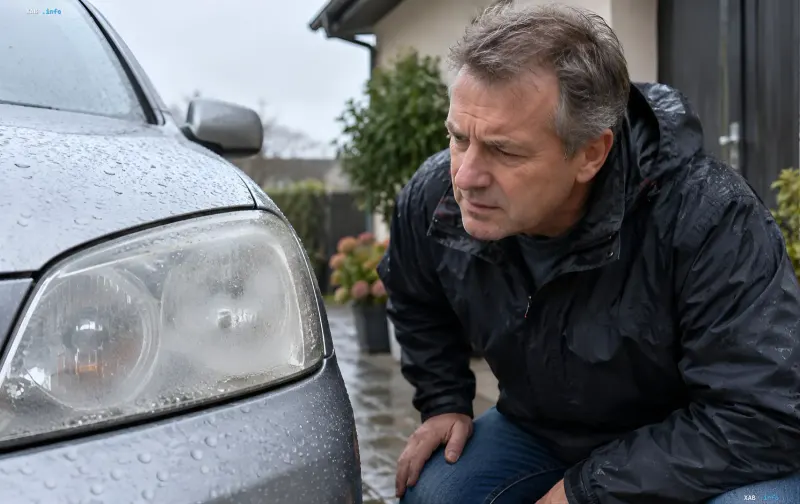
A white "mist" on the inner surface of a headlight after rain, a car wash, or a sudden cold snap is one of the most common driver complaints. In the overwhelming majority of cases, this is not a malfunction, but normal physics: moisture appears and disappears on its own. However, if droplets or standing water accumulate inside, the problem can no longer be ignored. We break down why headlights fog up, how to distinguish safe condensation from real damage, and what DIY maintenance actions are permissible versus strictly prohibited.
Why Modern Headlights Are Not Airtight
The core reason for fogging lies in their design. Modern car headlights are not completely sealed: they feature ventilation channels or valves that equalize the pressure inside the housing. Air flows in and out through these vents. When moist air contacts the cold optical surface, condensation forms. This is precisely why fog most often appears after rain, a wash, or rapid temperature shifts—it is standard operating behavior for the ventilation system, not a sign of failure.
When "Mist" Is Normal
As automotive optics manufacturer HELLA explains, light mist usually disappears after a drive: the headlight warms up during operation, and the moisture gradually evaporates. A Volkswagen technical bulletin states that with normal condensation, the surface should clear after about 30 minutes of light operation; the exact time depends on the headlight design and weather conditions. If there is only light mist inside without large droplets or puddles, the headlight generally requires no intervention—simply turning on the lights and letting the optics run is enough.
Self-Diagnosis: What to Check First
If a headlight begins to fog up regularly after a bulb replacement or other maintenance, the first step is to inspect the rear cover: it must be installed flush and tightly closed, with the rubber seal neither skewed, torn, nor out of its seating groove. Next, check the ventilation channels or rubber tubes on the housing to ensure they are not clogged with dirt, leaves, or insects. Drivers on the Car Talk automotive forum are also advised to inspect the rubber vent tube, as debris can accumulate inside, blocking normal air circulation and trapping moisture.
How to Properly Dry Out the Optics
If the headlight design permits, the rear dust cover can be removed for drying. Several models feature a standard procedure: the cover is removed, the car is left in a ventilated area, and the lights are turned on for the duration specified in the manual. For example, a Kia bulletin for certain models recommends drying for 30 minutes with the engine running and headlights on; afterwards, the cover must be reinstalled. It is important not to apply this method blindly: if the headlight design does not support such servicing, it is best to limit checks to external elements to avoid compromising the optics' protection.
When It's Time to Visit a Service Center
There are several signals that moisture is entering due to damage: standing water inside, condensation that constantly returns after drying, and noticeably dimming light. In such cases, inspect the housing for cracks, joints between the lens and housing, the rear cover, seals, and ventilation—precisely the areas HELLA recommends checking when diagnosing headlights with excessive moisture. If there is standing water inside, it is wiser to visit a service center, as sealing or replacing the damaged component may be necessary. Unaddressed moisture eventually oxidizes contacts, ruins the reflector, and reduces light output, ultimately leading to the replacement of the entire optical assembly.
What NOT to Do
Experts emphasize a number of prohibited actions. Do not heat the headlight with a heat gun, as this can damage the plastic, seals, and internal components. Do not apply silicone or sealant blindly; you must first find the point of water ingress rather than simply sealing all seams. Do not drill extra holes, as this ruins the optics' protection against dust and water. And never leave the headlight open after drying, since dust and moisture will enter through an unsealed cover. The main takeaway: light mist is not a critical issue, but if water appears inside or condensation constantly returns, it is vital to fix the root cause rather than just temporarily drying the optics.