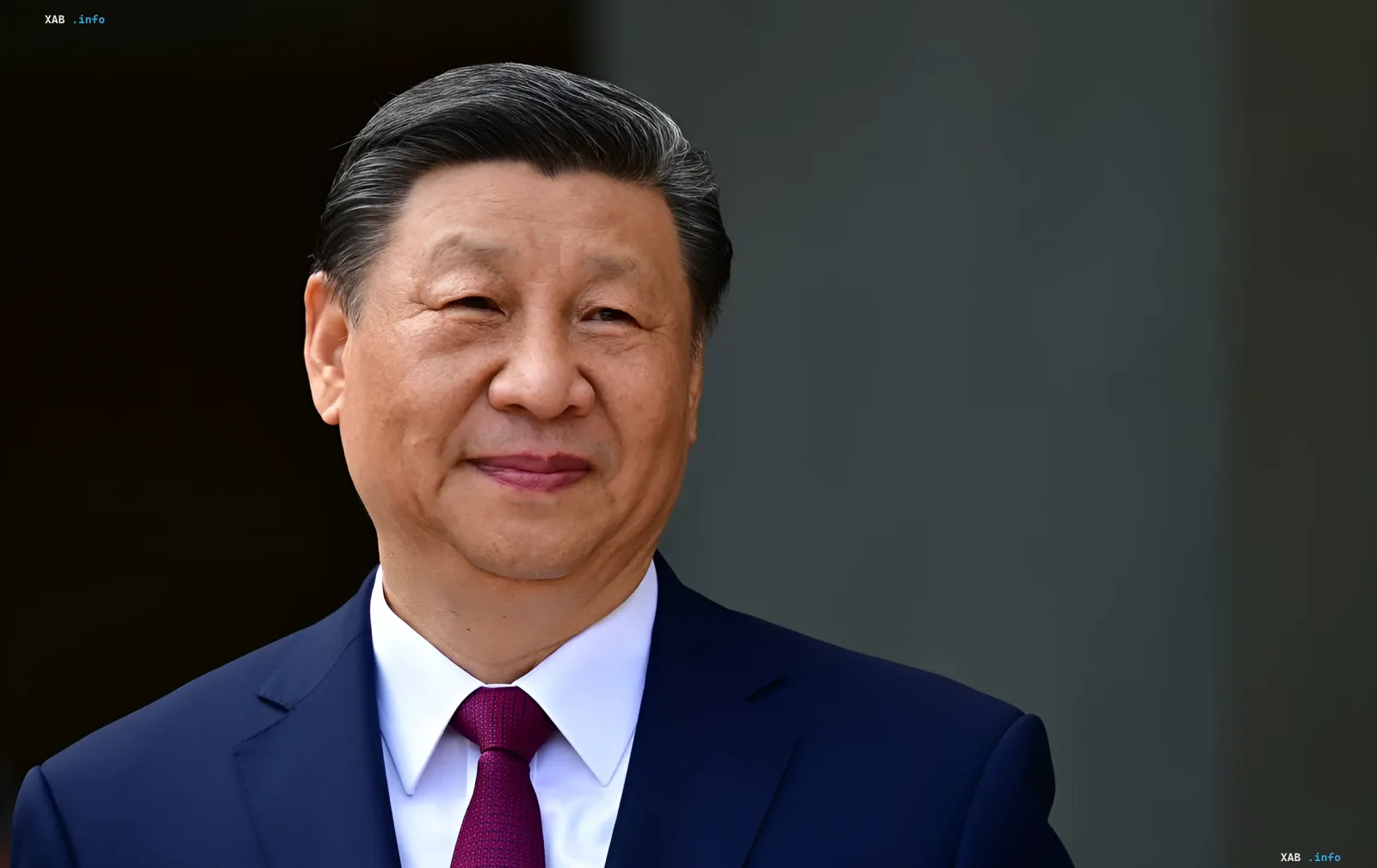
At the meeting of the Council of Heads of State of the Shanghai Cooperation Organisation (SCO), the leader of the People's Republic of China, Xi Jinping, delivered a statement in which Beijing signalled its readiness to take a more active part in the peaceful settlement of three of the world's largest international conflicts — in Ukraine, the Middle East, and Afghanistan. According to RBC-Ukraine, the Chinese leader stressed that the country intends to strengthen communication and coordination with all parties involved in these crises, adopting an approach aimed at eliminating both the symptoms and the root causes of the problems.
The 'from symptoms to causes' approach: what exactly Beijing proposed
In his speech, Xi Jinping set out the methodological framework for China's involvement in the settlement: 'On international and regional hotspots such as Ukraine, the Middle East, and Afghanistan, China is ready to strengthen communication and coordination with all parties, adhering to an approach aimed at eliminating both the symptoms and the causes of the problem, and to contribute to a political settlement.' Thus, Beijing is not merely declaring diplomatic mediation, but a comprehensive strategy that is to address both the immediate consequences of the conflicts and their structural preconditions. The statement was made on the SCO platform, which underscores the linkage of China's initiative to a format in which China, Russia, and a number of Asian states play a key role.
Visit to the US and skipping the UN General Assembly: diplomatic balance
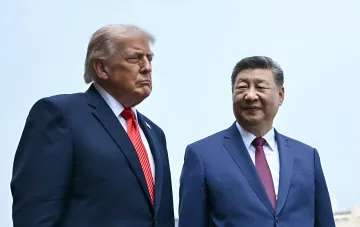
In parallel with the statement on a peaceful settlement at the SCO, it was announced that Xi Jinping will visit the United States for the first time in 11 years. A meeting with US President Donald Trump is scheduled for 24 September in Washington. At the same time, the Chinese leader will skip the UN General Assembly, to which world leaders will converge for a week. This combination — a personal meeting with Trump while absent from the main multilateral platform — indicates that Beijing intends to conduct key negotiations in a bilateral format rather than a multilateral one. For Ukraine and other parties to the conflict, this means that the channel of communication with China will run primarily through bilateral and regional formats, rather than through the UN.
New Delhi's position: Modi's call to end the 'endless war'
On the sidelines of the same SCO summit, Indian Prime Minister Narendra Modi, during a meeting with Vladimir Putin, called for a transition from an 'endless war' to a cessation of hostilities. According to the Indian prime minister, every day of war 'pushes humanity back', while every step towards peace 'restores hope'. Modi's statement, delivered in the same venue as Xi Jinping's speech, paints a picture in which, within the SCO framework, several major powers are simultaneously putting forward de-escalation initiatives, even though their emphases and addressees differ.
Contradictory data
In the provided fact-checking sources (RBC-Ukraine, Mail.ru, Vesti.az, Rosbalt), the key facts of Xi Jinping's statement — the list of three conflicts, the wording of the 'symptoms and causes' approach, and the linkage to the SCO — are presented consistently and contain no discrepancies in dates or figures. At the same time, there is a semantic inconsistency in Beijing's diplomatic behaviour: on the one hand, China declares its readiness to coordinate a peaceful settlement on Ukraine and other conflicts, while on the other, its leader is skipping the UN General Assembly, which has traditionally been the main platform for multilateral peace initiatives, and shifting the emphasis to a bilateral meeting with Trump. This is not a factual contradiction in figures or dates, but it raises the question of how consistent China's position is in choosing institutional formats for peace negotiations.
Context and significance for Kyiv
For Ukraine, Xi Jinping's statement is important for several reasons. First, China has for the first time explicitly listed Ukraine among the 'hotspots' on which Beijing is ready to coordinate efforts. Second, the linkage of the initiative to the SCO means that Chinese diplomacy will be conducted in close alignment with the Russian position within this alliance. Third, the timing coinciding with the visit to Washington and the meeting with Trump opens a window for Kyiv and its allies to attempt to synchronise pressure on Beijing through both channels — via the SCO and via US–PRC bilateral relations. The outcome will depend on which format — multilateral or bilateral — proves more effective in advancing a political settlement.