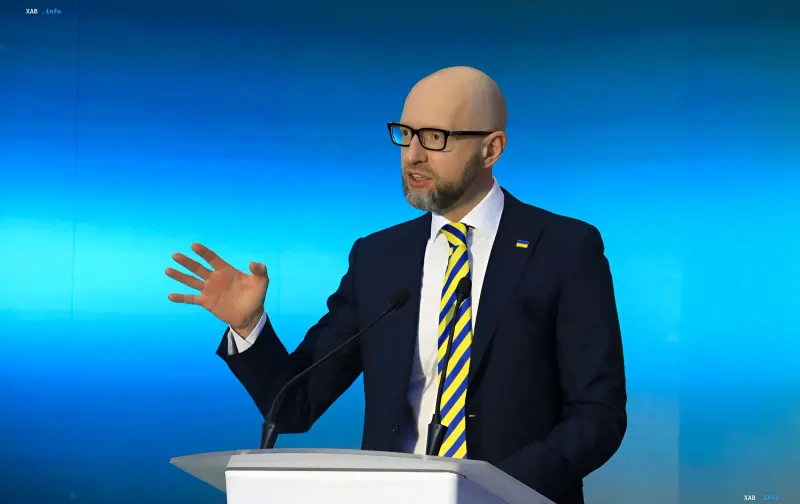
Former Ukrainian Prime Minister Arseniy Yatsenyuk, in the RBC-Ukraine special project 'Ukraine: 35 Years of Independence,' said that the scenario of the early dissolution of parliament that Volodymyr Zelensky implemented in 2019 was first used by Petro Poroshenko back in 2014. According to the former head of the Cabinet, it was then that Poroshenko became the first president to carry out an 'early reset' of the Verkhovna Rada, using the collapse of the coalition as a tool for snap elections.
Summer of 2014: the country on the brink of financial collapse
Yatsenyuk recalled that in the summer of 2014 he personally went to the Verkhovna Rada to persuade the people's deputies to vote for a package of laws necessary to obtain financial assistance from the International Monetary Fund. 'They gave us pennies, twisting our legs and necks to make us get them. And yet I had to feed the country: there was no money to pay for gas, no money to pay for electricity and pensions, the gold and foreign exchange reserves had been looted, the budget was empty, the army needed funding, and the war had begun,' the former prime minister described the situation. In his words, the government at that time was operating under conditions of an acute shortage of funds against the backdrop of the war that had started in the east of the country.
'What is going on in the Kosmach?!'
Instead of voting on the critically important reforms in parliament, according to Yatsenyuk, political chaos began. The heads of the 'UDAR' faction Vitali Klitschko and 'Svoboda' Oleh Tyahnybok, as he claims, 'were running before each other with statements' about leaving the coalition. Yatsenyuk stated outright in the interview that Poroshenko himself was behind this: 'And it turned out that my beloved Petro Oleksiyovych quietly called them behind closed doors so that they would leave the coalition and so that early parliamentary elections could be declared.' Thus, according to the former prime minister, the collapse of the coalition was not a spontaneous political decision by the factions, but a pre-planned maneuver by the head of state.
Timeline: from the collapse of the coalition to snap elections
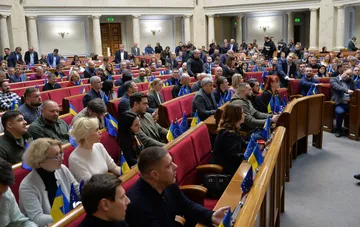
As the publication reminds, in July 2014 the collapse of the 'European Choice' coalition in the Verkhovna Rada of the VII convocation formally opened the way for President Petro Poroshenko to dissolve parliament. The snap elections to the Verkhovna Rada were held on October 26, 2014. It is precisely this mechanism — the artificial destruction of the coalition majority followed by the dissolution of the Rada and the appointment of early elections — that Yatsenyuk calls the 'first' in Ukraine's recent history, foreshadowing the similar scenario of 2019.
Contradictory data
It should be noted that Yatsenyuk's version of Poroshenko's direct personal involvement in organizing the factions' exit from the coalition is his personal testimony. In public statements in 2014, Poroshenko and his entourage explained the dissolution of parliament as a necessity for a 'political reset' and the will of the factions themselves. Neither Klitschko nor Tyahnybok publicly confirmed during that period the fact of a 'quiet meeting' with the president behind closed doors for the purpose of a coordinated exit from the coalition. Thus, Yatsenyuk's direct indication of a specific mechanism of Poroshenko's influence remains his interpretation of events, although the fact of the coalition's collapse and the subsequent early elections is documented.
Context: 'The Wall' and the information war against the government
In the same interview, Yatsenyuk also talked about his main mistake during the implementation of the 'Wall' project on the border with Russia. In his words, he failed to foresee the power of the information machine and the discreditation campaigns against his government. Moreover, the former head of the Cabinet admitted that many Ukrainians took the name of the 'Wall' project too literally, which further complicated its promotion in public opinion.