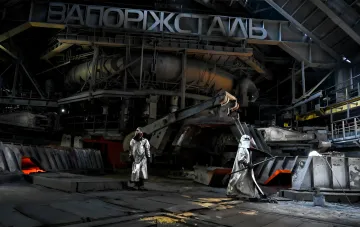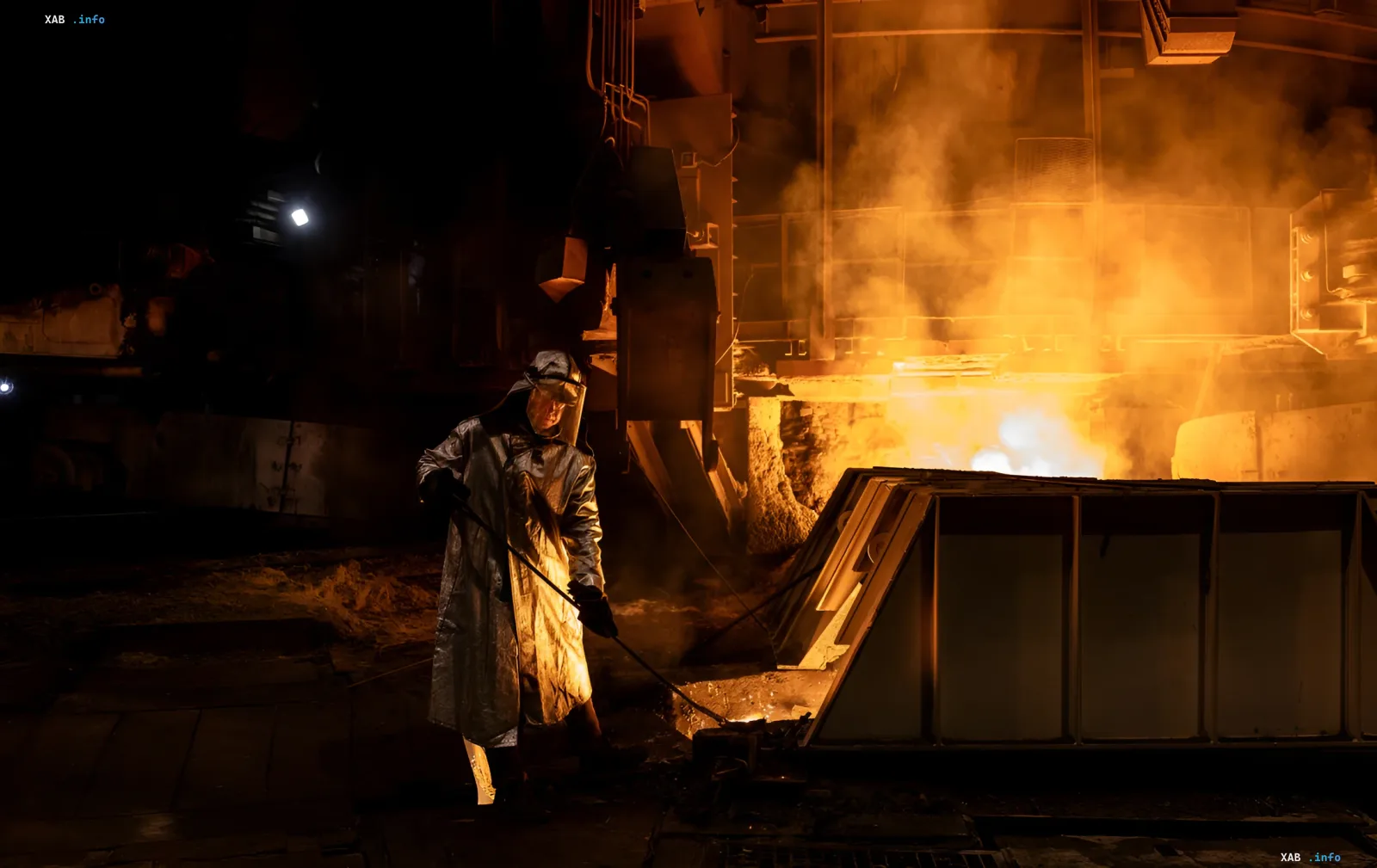
On August 27, Russian forces delivered another missile strike on the Zaporizhstal enterprise, with five missiles hitting the facility. The plant was forced to halt operations, and the timeline for its recovery remains unknown at this time. This was reported by Musa Magomedov, head of the Subcommittee on Industrial Policy of the Verkhovna Rada Committee on Economic Development, in his Facebook post, as cited by RBC-Ukraine, TSN, Korrespondent, and UNIAN.
Strike on Zaporizhstal and production shutdown
According to Magomedov, the attack is not the first of its kind during the war and has dealt a serious blow to one of the key enterprises of Ukraine's mining and metallurgical complex. Zaporizhstal was forced to cease operations following the preliminary strike, and the exact timeline for restoring production has not yet been determined. The MP emphasized that Russian shelling is just one of several factors simultaneously pressuring the industry, and that the combined effect of these threats poses a risk to the entire metallurgical sector, not to individual enterprises.
Port blockade and decline in ore mining
In addition to direct strikes on enterprises, a critical factor has been the blockade of the ports of Greater Odesa, which has halted mining at the Southern Mining and Processing Plant. According to Magomedov's estimates, production at other Kryvyi Rih mining and processing plants may be around 30% below the 2025 annual average by the end of August. At the same time, as the MP noted, there is currently no full-fledged alternative to maritime logistics for transporting large volumes of ore and metal products.
Higher logistics costs and exhaustion of internal reserves
An additional blow to product costs has been the 30% increase in freight tariffs by Ukrzaliznytsia (Ukrainian Railways). As a result, the share of railway expenses in the cost of metallurgical products has already grown two- to threefold. "After several years of war, enterprises have virtually exhausted their internal reserves and cannot indefinitely absorb new costs themselves," Magomedov stated. He warned that if logistics are getting more expensive at the same time, export opportunities are being closed, new restrictions are being introduced, and enterprises are under daily attack, then "soon there will simply be no one left to support."
Potential losses: $1 billion in exports and 17 billion hryvnias in the budget
The MP estimated the potential losses from the ongoing crisis at approximately one billion dollars in exports and more than 17 billion hryvnias in budget revenues. For context: over five years, the largest metallurgical enterprises paid more than 200 billion hryvnias (about $6.2 billion) in taxes and fees, and by the end of 2024, tax payments by four metallurgical companies accounted for 1.6% of revenues to budgets of all levels. Magomedov emphasized that preserving the industry matters for the entire economy, since metallurgy provides jobs, exports, foreign currency earnings, taxes, and the economic foundation of industrial cities.
Call for urgent action by the Cabinet of Ministers
"By spring, Ukraine could be left without metallurgy. This is a real prospect if the government does not act urgently," Magomedov stated. In his words, the situation requires not meetings but a package of specific decisions by the Cabinet of Ministers. The state of the mining and metallurgical complex has already been discussed at a meeting of the relevant committee with government participation, and the next discussion is to take place at a meeting chaired by the Prime Minister. The MP concluded his appeal with a warning: "Because by spring it may turn out that there is nothing left to save."