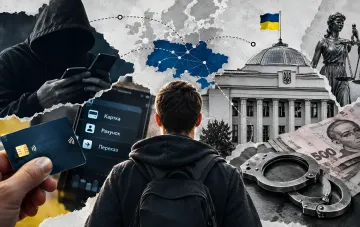
Ukraine is preparing to strengthen penalties for organizing fraudulent call centers, as well as for schemes involving bank cards and so-called “drops.” This was announced by President Volodymyr Zelensky, who reported that two corresponding bills have been submitted to the Verkhovna Rada, according to RBC-Ukraine.
Two Bills: From Low-Level Executives to the Owners of “Offices”
According to the head of state, the first document provides for “clear and strict” liability for the activities of fraudulent call centers, which are referred to as “offices” in law enforcement practice. The key difference is that the punishment will extend not only to low-level executives but also to the organizers of the schemes, the owners of the call centers, and those who profit from them. Zelensky emphasized that it is the organizers who should bear the most severe responsibility.
“Drops” and Banking Algorithms: What Will Change for Citizens
The second bill, according to the president, introduces enhanced liability for organizing fraudulent schemes involving banking instruments, including the use of so-called “drops” — individuals whose accounts and payment cards are used to launder illegal money. The document also provides for updating banking algorithms to more effectively protect customers’ funds and block the use of accounts for tax evasion or money laundering.
European Vector: Implementing EU Standards
Zelensky noted that the bill is aimed at implementing European Union legal standards in Ukraine, which, according to him, is provided for by agreements with partners. Thus, the strengthening of liability for fraudulent schemes involving bank accounts and payment instruments is tied to fulfilling obligations to European institutions.
Context: Raids on “Offices” and the Money 24/7 Case
As the outlet recalls, last month police across the country were inspecting the infrastructure of fraudulent call centers, whose employees lured people onto fake investment platforms and gained access to their accounts. In addition, law enforcement recently notified the organizer of the Money 24/7 fraud network of suspicion; the network had been posing as a chain of exchange offices and a crypto-asset exchange service. Against this backdrop, the initiative to tighten legislation appears a logical continuation of the law enforcement campaign.