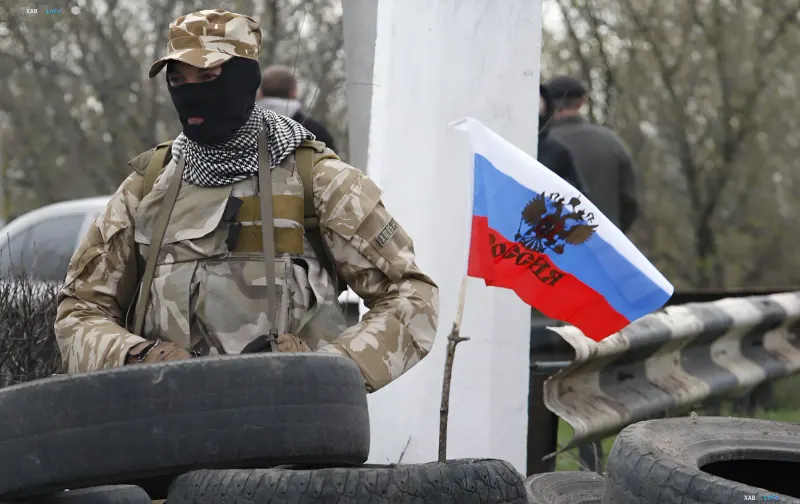
The Federal Security Service of Russia (FSB) has officially announced the abolition of the border zone regime on sections separating Russian regions from temporarily occupied Ukrainian territories. The special service has prepared draft orders that will declare previous regulatory acts governing entry and exit into border areas void. This decision affects the Rostov and Voronezh regions, as well as the Crimean Peninsula.
Change of Logic: From Border Control to "Internal" Borders
Prior to the abolition of the regime, travel from Russia into the territories of the Donetsk, Luhansk, Zaporizhzhia, and Kherson regions, which are under the control of occupying authorities, was practically indistinguishable from crossing a state border, with the exception of formal procedures. Now, Moscow intends to shift the border zone directly to the line of the external borders of the captured territories. In the documents of Russian security forces, the liquidation of internal control is explained by the so-called "accession" of Ukrainian regions to the Russian Federation, which, in their opinion, makes them internal administrative units.
Regime Specifics in Crimea and on the Islands
The situation in Crimea has its own nuances. The occupying special service plans to lift the border regime "within the limits of the Black Sea islands belonging to the Russian Federation." According to new plans, the local FSB administration will receive the authority to independently determine places and times of entry, as well as establish advance signs. This indicates an attempt to create a flexible control system that formally removes restrictions but, in fact, leaves the security forces with the right to selective access.
Kyiv's Position: Refusal of Territorial Concessions
Ukrainian President Volodymyr Zelenskyy has repeatedly emphasized that Russia will not win the war and will not be able to force Ukraine to leave its territories. According to him, Moscow is trying to impose the withdrawal of the Ukrainian Armed Forces (AFU) from the Donbas and Luhansk regions as its own achievement; however, Kyiv will not make concessions that threaten the security of the entire state. The official position of Kyiv remains unchanged: any attempts to legitimize the occupation through administrative reforms in the Russian Federation do not change the factual status of the territories.
Public Opinion and Sociological Data
The position of the country's leadership is shared by the majority of citizens. According to current sociological research conducted in 2026, fewer and fewer Ukrainians are ready for territorial concessions in the east, even in exchange for international security guarantees. For the majority of society, the transfer of Donbas to the control of the aggressor is a categorically unacceptable condition. Public consensus in Ukraine demonstrates a high degree of readiness to continue resistance to any attempts of annexation.