Between 15 September and the night of 16 September 2026, the Ukrainian Defence Forces carried out a series of strikes on Russian military facilities in the temporarily occupied territories. According to an official statement by the General Staff of the Armed Forces of Ukraine (AFU), the targets included aviation equipment, drone storage and launch sites, drone command posts, ammunition depots, fuel and lubricant storage bases, and technical reconnaissance posts. This was reported on 16 September by RBC-Ukraine, UNIAN and Krym.Realii, citing a General Staff publication.
Strike on an Su-24 at Saki airfield
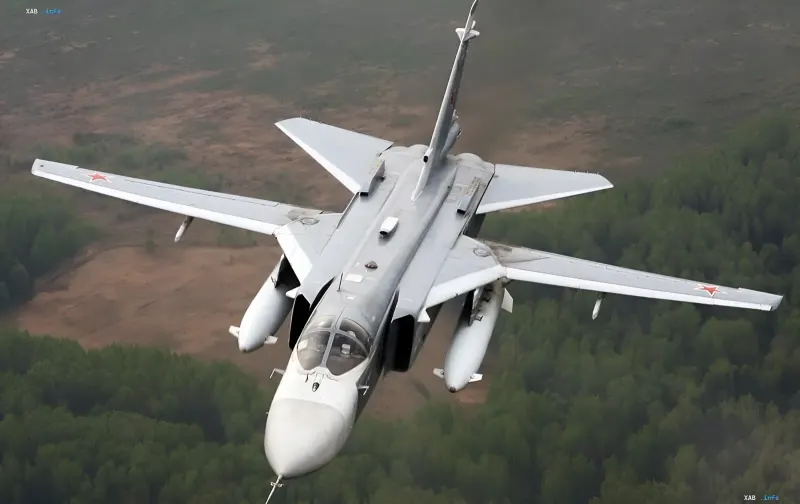
Among the most notable targets, according to the AFU General Staff, was the Saki airfield on the temporarily occupied Crimean peninsula. There, Ukrainian command reported that a Russian Su-24 bomber was hit. The General Staff clarified that the extent of damage to the aircraft was still being determined at the time the statement was published. Saki airfield has historically been used to host tactical aviation and helicopter units, which makes any confirmed strike on equipment stationed there a significant event for assessing the state of the Russian air grouping in the region.
Strikes on drone infrastructure and command posts
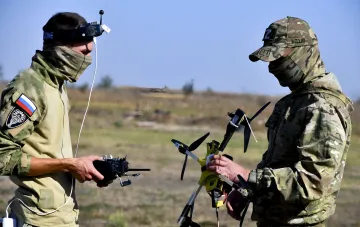
In the Donetsk area, Ukrainian units struck a facility that, according to the General Staff, was used for storing, preparing and launching the enemy's attack drones. In addition, drone command posts of the Russian occupation forces were hit in Staryi Mlynivka and Pokrovsk in Donetsk Oblast, as well as in Pokrovsk in Zaporizhzhia Oblast. Thus, the strikes affected both the "factory" part of drone logistics — the sites where drones are assembled and prepared — and the "command" part — the flight-control nodes. In parallel, an ammunition depot was hit in Dovzhansk in Luhansk Oblast, and fuel and lubricant storage bases were struck in Rovenky in Luhansk Oblast and Berdiansk in Zaporizhzhia Oblast, indicating an attempt to simultaneously weaken the firepower and logistical support of Russian units.
"Grenadier" reconnaissance posts in Crimea
A separate block in the General Staff's statement refers to the striking of "Grenadier" technical reconnaissance posts in the settlements of Suvorovo and Rysovoe on the temporarily occupied Crimean peninsula. The "Grenadier" system is an electronic intelligence complex designed to detect and determine the coordinates of the enemy's communications and command systems. Its destruction, by the logic of Ukrainian command, reduces the Russian forces' ability to conduct signals interception and coordinate actions at the tactical level in the front-line zone.
Contradictory data
The wording of various Ukrainian media outlets and the General Staff itself contains a notable discrepancy in assessing the outcome of the strike on the Su-24. The official text of the General Staff's statement uses the word "hit," and the extent of damage is explicitly stated as "being determined." Meanwhile, the headline of UNIAN's 16 September publication contains the phrasing "shot down an Su-24," which implies the destruction of the aircraft. RBC-Ukraine and Krym.Realii, for their part, stick to a more cautious wording — "hit." At the time of preparing this article, no independent visual confirmation of the destruction or damage of the bomber from open sources has been presented, and the final classification of the incident remains with Ukrainian command.
Context: Operation "Vivaldi" and the overall situation
The series of strikes on the rear facilities of the Russian adversary is taking place against the backdrop of previously reported initial results of Operation "Vivaldi" to liberate Donetsk Oblast. According to Ukrainian military data, during this operation camouflaged Russian servicemen were eliminated and a bridgehead was created for further advance. The totality of strikes on aviation, drone infrastructure, fuel supply and reconnaissance systems reported by the General Staff on 16 September fits into the overall picture of attempts to simultaneously weaken both the forward edge and the deep logistics and command-and-reconnaissance nodes of the Russian grouping in the occupied territories.