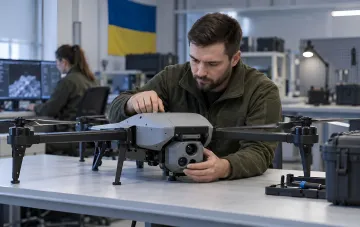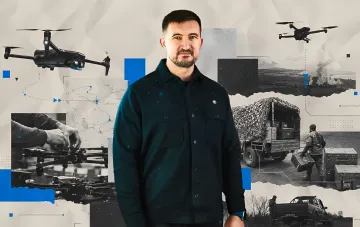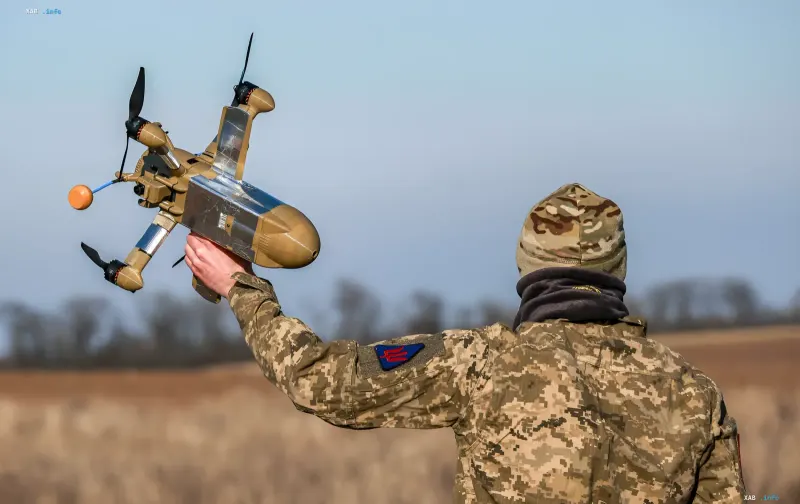
On August 18, 2026, the Ukrainian defense industry and unmanned system operators reached a new milestone in the fight against mass attacks by enemy kamikaze drones. If just two years ago intercepting "Shaheds" relied solely on human reaction, today the front lines are actively implementing systems with artificial intelligence elements capable of independently capturing and destroying targets.
From visual search to automatic capture
According to the latest data published by RBC-Ukraine, modern unmanned aerial vehicles (UAVs) are already equipped with systems that help the operator not just search, but automatically capture and hold a hostile target in the sky. Experts note that the use of AI tools in destroying kamikaze drones allows reducing the human factor and error to zero, ensuring a guaranteed result in critically short timeframes.
In the past, the process looked different: the operator received data on the approximate area, altitude, and speed of the target, flew to that sector, and began a visual search. Electronic systems only narrowed the search zone, but the final stage — identification, closing in, and the attack run — remained with the human. Today, algorithms take over the routine part of the work, tracking thermal signatures and flight trajectories, which is especially important during wave attacks.
Technological breakthrough: from Brave1 to TAF Kolibri-10
The development of interception technologies is happening at a rapid pace. A bright example is the activities of the company Brave1, which recently held a large-scale online event, Demo Day, dedicated to updating FPV drones. At the event, more than 50 manufacturers presented new technological solutions and spare parts designed to increase the effectiveness of operators on the front.
Special attention is paid to the codification and standardization of solutions. The Ministry of Defense of Ukraine has officially codified the high-speed interceptor TAF Kolibri-10. This device, capable of effectively countering fast targets, is now available for purchase through the DOT-Chain Defence system. This opens access to advanced air defense means for territorial defense and volunteer formations, which were previously limited in access to complex equipment.
Contradictory data: speed vs. effectiveness
Despite successes in automation, the situation on the battlefield remains complex. In materials from Western media, specifically The Telegraph, there is information that Russia has begun using modified jet versions of "Shaheds" that fly at higher speeds. According to sources, Ukrainian interceptors, even with AI, sometimes cannot keep up with these accelerated targets, creating new challenges for air defense systems.
However, Ukrainian sources, including a statement by Minister of Digital Transformation Mykhailo Fedorov, optimistically assess the testing of new autonomous interceptors. Fedorov reported successful tests of drones capable of shooting down "Shaheds" with almost no human intervention. Thus, there is a gap between the tactical difficulties described in Western analytical reviews and the development successes declared by Ukrainian developers.
The future of autonomous defense
The transition to autonomous interception systems is not just a technical update, but a paradigm shift in conducting air warfare. In conditions where the enemy attacks with hundreds of drones simultaneously, human reaction becomes a "bottleneck." AI systems allow processing thousands of data points per second, highlighting targets from the background and managing a swarm of interceptors.
By August 2026, Ukraine is at the stage of actively implementing these technologies. Operators now act as supervisors of algorithms, intervening in the process only in exceptional cases. This allows maintaining concentration and reducing stress levels, while simultaneously increasing the density and accuracy of fire against aerial targets.