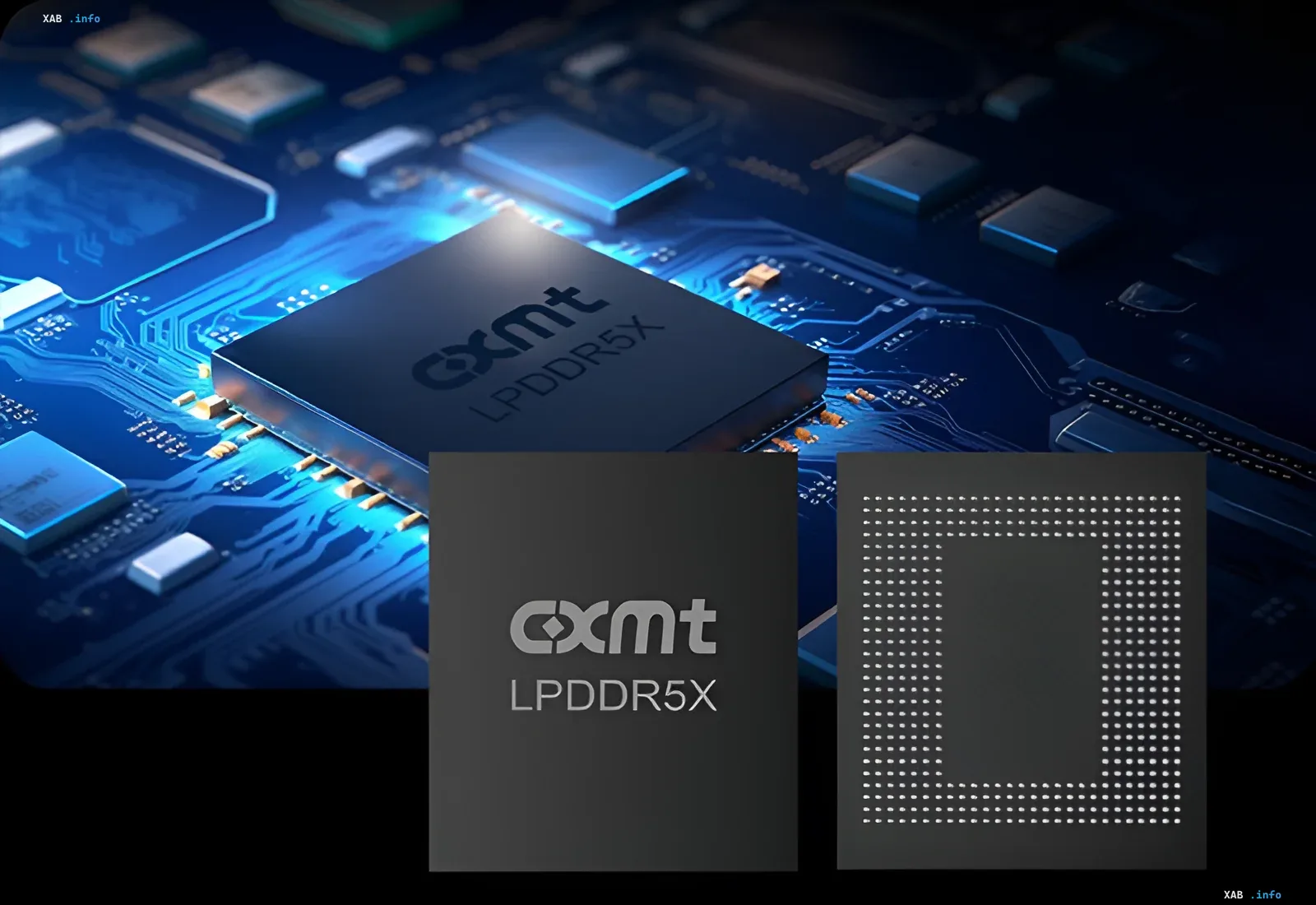
Amidst rising geopolitical tensions and a drive to reduce costs, Apple, according to The Wall Street Journal, has begun actively testing memory chips produced by the Chinese company CXMT (ChangXin Memory Technologies). This initiative aims to potentially integrate Chinese LPDDR5X chips into future generations of iPhone smartphones and MacBook laptops sold in China. This decision marks a significant step in Tim Cook's team's attempt to diversify supply chains, although it is fraught with serious legal and technical risks.
Legal Risks and the Need for US Approval
The key obstacle to implementing this plan is US legislation. Apple is well aware that purchasing components from a Chinese manufacturer under Washington's close scrutiny is impossible without explicit permission from American authorities. According to interviewed lawyers, current regulations do not prohibit the purchase of standard memory chips that do not require deep customization for a specific client. Nevertheless, Apple seeks official approval from the current administration as insurance against possible abrupt changes in trade policy or shifts in the mood of the US President.
Economic Viability and Competition with Samsung
The main driver of Apple's interest in CXMT is potential savings. The Chinese manufacturer offers lower product costs, which could significantly reduce the cost of devices. However, the economic picture is not so clear: at the moment, CXMT's products do not appear more attractive in price on general terms compared to products from Western competitors such as Samsung or SK Hynix. Furthermore, using memory that lags behind the basic specifications of Western giants' products will require Apple engineers to significantly adapt the architecture of their devices.
Contradictory Data
While The Wall Street Journal and several other sources report on the start of testing and negotiations, analytical reports (specifically materials published on msn.com) point to possible failures of Apple's strategy. According to alternative data, the gap in deep ultraviolet lithography (DUV) technology costs between CXMT and market leaders is so large that CXMT cannot offer competitive prices, effectively blocking the success of Apple's "gambit." There is a version that Apple's attempts to change suppliers could result in financial losses for iPhone end-users, as Chinese memory may be less efficient or require more expensive integration.
Production Capacity Issues
Even assuming agreements are reached and permits obtained, Apple will face a shortage problem. CXMT currently has no free production capacity to meet the required supply volumes for the current year. The company prioritizes its main Chinese clients. CXMT's current partners, such as HP Inc. and Acer, which already use this memory in devices for markets outside the US, have received only minimal volumes and expect quota increases only next year. CXMT's new production lines will not start operations before 2028, making scaling supplies for Apple in the short term practically impossible.
CXMT Market Prospects
Despite the difficulties, CXMT is showing impressive growth dynamics. In the first quarter of the current year, the company's revenue increased more than eight times year-on-year. It currently ranks fourth in the world by revenue, controlling about 7% of the memory market. Analysts predict that in the foreseeable future, CXMT will enter the top three global memory manufacturers. However, for Apple, integrating this partner remains a complex task, balancing between savings, technological compromises, and geopolitical risks.