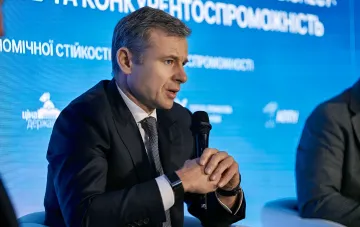
Ukraine's largest steel plant, ArcelorMittal Kryvyi Rih, was forced to suspend production in the autumn of 2025 following a series of massive attacks. The equipment has been switched to cold idle mode, some employees have been put on downtime, and the company has publicly stated that it does not plan to leave the Ukrainian market and is ready to resume operations after the full-scale war ends. However, the halted enterprise continues to face a significant tax burden, which, according to businesses and some members of parliament, should be reviewed by the state during the conservation period. This was discussed in an RBC-Ukraine article titled "The plant isn't working, but the taxes remain: what the state can do for ArcelorMittal" by Anatoliy Kinakh, President of the Ukrainian Union of Industrialists and Entrepreneurs (USUIE), and Dmytro Kysylevskyi, Deputy Chairman of the Parliamentary Committee on Economic Development.
Tax Without Revenue: The Structural Problem of Conservation
When an enterprise is not working and generating no revenue, it is nevertheless required to pay a number of taxes that are not tied to production performance. First and foremost is the land tax, the amount of which is determined by the area and cadastral value of the land plots, rather than the volume of steel smelting. According to Kinakh, maintaining the company's obligation to pay these fees exacerbates the crisis into which the metallurgical group has fallen. "If we are interested in resuming production, the state should not increase financial pressure on the enterprise when it has lost the ability to generate income," emphasized the head of the USUIE. Kysylevskyi framed the problem as an open question: "How is a company with no income going to pay significant tax amounts?"
Kryvyi Rih's Budgetary Knot
The problem is not limited solely to the financial situation of the plant itself. The land tax that ArcelorMittal Kryvyi Rih paid to the city budget constitutes a significant share of Kryvyi Rih's municipal budget revenue structure. Any reduction or complete absence of these revenues creates a deficit for the local community, which is already bearing the burden of military actions. That is why local authorities initiated a dialogue with members of parliament, trying to find a mechanism where the interests of the city and the interests of the halted enterprise do not come into direct conflict.
Salaries During Downtime: The "Fulcrum" Program and Its Limitations
In addition to taxes, the halted plant continues to incur labor costs for its employees without having sources to cover these expenses. For such cases, Ukraine operates the "Fulcrum" program, which provides for business compensation of the payroll fund when production is stopped as a result of military actions. The State Employment Center, which oversees the program, confirmed to RBC-Ukraine that ArcelorMittal Kryvyi Rih can take advantage of this measure. However, the instrument has a strict time limitation: payments are made only for a period of up to three to six months. For a plant whose downtime, according to the company's estimates, could last until the end of the full-scale war, this period is categorically insufficient.
Special Conditions for Strategic-Scale Enterprises
To date, Ukraine lacks a state support program for cases where the timeframe for business resumption is indefinite. Kysylevskyi believes that for enterprises of ArcelorMittal Kryvyi Rih's scale, discussing separate support conditions is possible and advisable. The USUIE, in turn, proposes that the government provide wage compensation for those workers whose qualifications will be critically important during the upcoming restart of the plant. According to the trade unions' logic, this will preserve the plant's personnel potential and reduce the time required to restart after security restrictions are lifted.
The Context of the Shutdown: From Attacks to Cold Idling
The decision to halt operations was made against the backdrop of a series of massive attacks on industrial facilities. On September 25, 2025, ArcelorMittal Kryvyi Rih made a public statement that it could not safely and stably resume operations, and informed the government accordingly. On October 10, the plant clarified that resuming production would subject workers to unacceptable risk, prompting the company to decide against restarting the production process, while the equipment was put into cold idle mode. At the same time, representatives of the international group emphasized that they do not plan to abandon their business in Ukraine and are ready to consider resuming production after the full-scale war ends. Thus, the state faces the task of building an economic model that will preserve both the enterprise and its human potential for an indefinite, but potentially long, period of downtime.