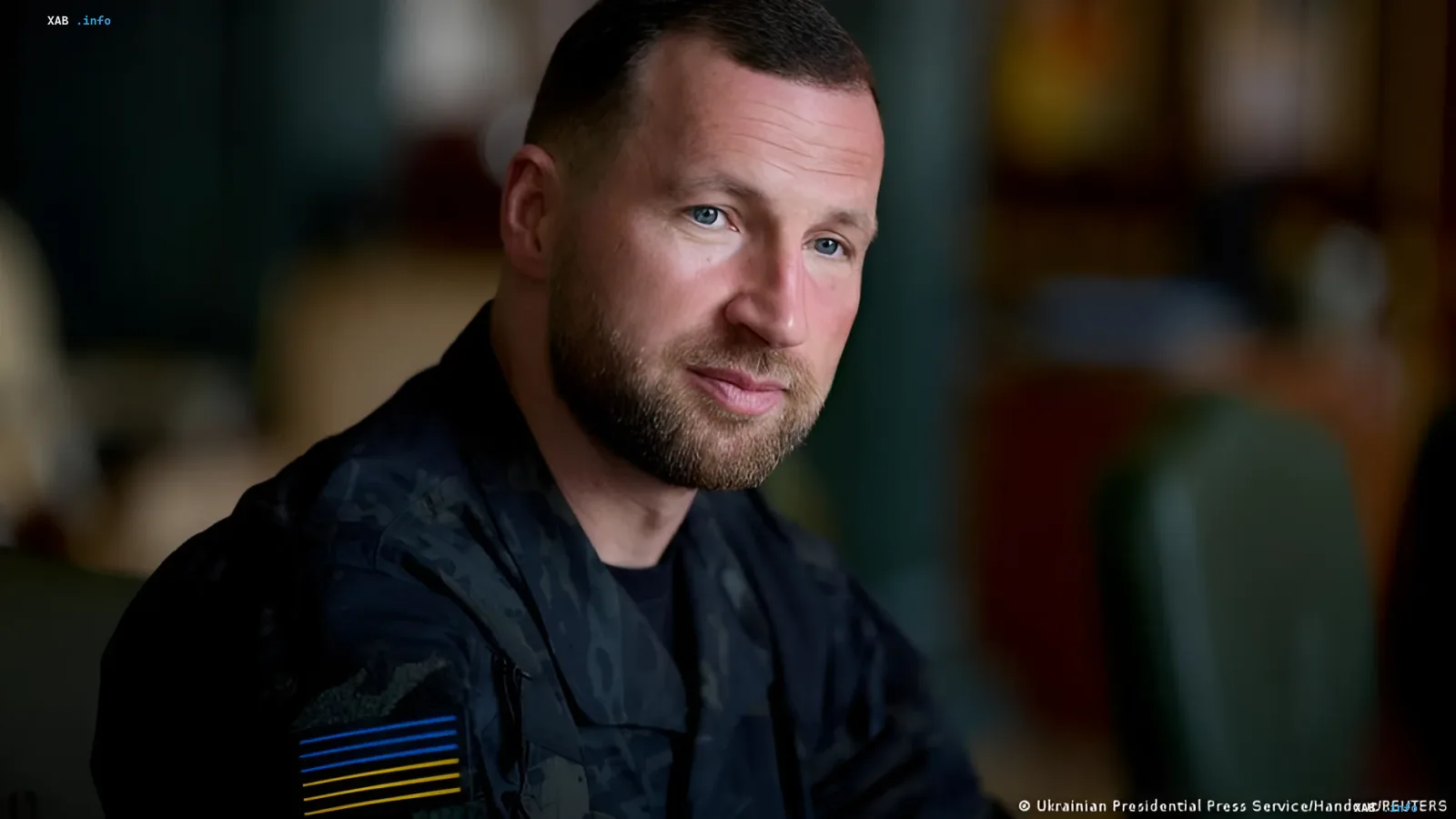
One of the most resonant personnel changes in recent times has occurred in the Ukrainian government. Following the resignation of Mykhailo Fedorov, whose dismissal sparked a wave of protests in Kyiv and other cities, President Volodymyr Zelenskyy appointed Major General Evgeniy Khmara as the Acting Minister of Defense. This decision, made on July 16, radically changes the vector of management for the defense department.
Portrait of the new minister: from special forces to the cabinet
Evgeniy Khmara is a figure whose career is inextricably linked to combat operations. Since 2011, he has served in the SBU's Center for Special Operations "A". His combat path began with the liberation of the Kyiv region after the start of the full-scale invasion, after which he fought in the Donetsk region. In 2022, Khmara led the famous operation to liberate Snake Island.
In 2023, he headed the elite "A" unit and received the rank of Brigadier General, and in June 2024, he became a Major General. Since January 2026, he has temporarily led the Security Service of Ukraine following the resignation of Vasyl Maliuk. For his merits, he is a full cavalier of the Order of Bohdan Khmelnytsky and has been awarded the Order "For Courage" of the III degree.
Strategy: from digitalization to "technological strikes"
Volodymyr Zelenskyy, in his address on social media, emphasized that Khmara was chosen due to his "unprecedented experience in conducting technological strike operations." The President stated that this is exactly what Ukraine's defense must focus on to force Russia into diplomacy.
Presidential advisor Dmytro Litvin clarified that the volume of Khmara's tasks will be identical to what Mykhailo Fedorov performed. However, experts see a paradigm shift in this. Military expert Ivan Stupak notes that Khmara is a person who spends 95% of his time at the front or near the front line. This makes him maximally professional in military affairs, but raises questions about his ability to replace Fedorov in the role of a digitalization visionary.
Stupak predicts that under the new minister, the number of "breakthrough" projects related to cooperation with Silicon Valley or companies like Palantir may decrease. "Drones will fly, deep strikes will happen, but something new, breakthrough... I think there will be less," the expert believes.
Political landscape and logic of the appointment
Political science candidate Igor Reytarovych sees in this decision an attempt to change the logic of the department's work. "If the previous head had more managerial experience, now it will be more military," notes the associate professor at Taras Shevchenko National University of Kyiv.
In the opinion of the political scientist, the main goal of Khmara's appointment was to improve interaction between the Ministry of Defense and the Commander-in-Chief of the Armed Forces of Ukraine, Oleksandr Syrsky. "This is an attempt to better establish cooperation... Basically to solve the problem of conflict between the ministry and the military command," explains Reytarovych.
Nevertheless, experts warn that the functions of the Ministry of Defense go far beyond military planning. Questions arise about how the change in leadership will affect the system of defense procurement and broad state policy. Ahead of Khmara is not only command but also the need to undergo the approval procedure in parliament.