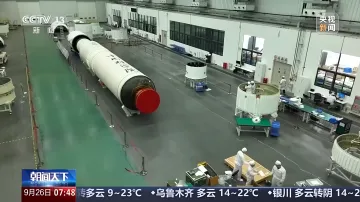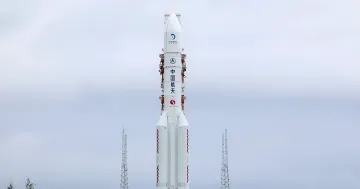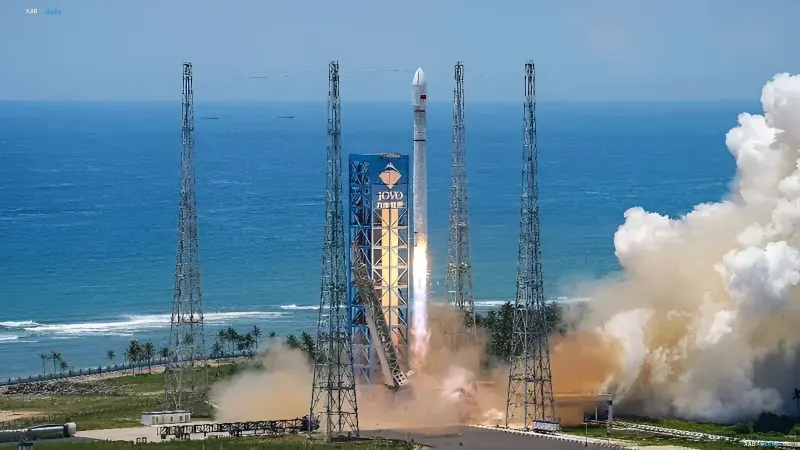
China's space program has demonstrated high resilience and the ability to recover quickly following a recent incident. Less than a week after the failure of the Long March 7A launch vehicle, which exploded in mid-air 80 seconds after liftoff, the PRC has returned to active launches. Between August 16 and 17, 2026, two successful launches were carried out from different spaceports, confirming the operational readiness of the infrastructure and preparedness to fulfill key strategic tasks.
Restoring the Rhythm: Two Launches in 24 Hours
The first in the series of recovery launches was the Long March 12 rocket, which lifted off on August 16 from the commercial Wenchang Spaceport on Hainan Island. This launch sent an important signal to the commercial sector, as the rocket successfully deployed a cluster of 24 satellites into Low Earth Orbit (LEO) for the Chinese satellite internet constellation. The success of the operation confirmed that the Long March 7A incident did not paralyze the Hainan spaceport, which serves as a key hub for commercial and civilian launches.
The very next day, on August 17, a two-stage Long March 2C rocket launched from the Taiyuan Spaceport in Shanxi Province. This launch marked the 664th mission in the history of the Long March rocket family. Aboard was an Earth Observation Satellite (EOS) built for the UAE National Center for Space Science and Technology. The spacecraft is designed to collect data necessary for environmental monitoring, natural resource management, and sustainable development tasks, highlighting China's growing role in international space cooperation.
Chang'e 7 Lunar Program: Schedule Maintained
The most critical aspect of the aftermath of the August 11 explosion was the fate of the Chang'e 7 mission. This mission is a key element of China's lunar program, involving the delivery of a lander, a lunar rover, and a scout rover to search for signs of water. Initially, there were concerns that the launch vehicle explosion might lead to the postponement of such a vital mission.
However, according to the latest data, the launch of the Chang'e 7 mission will take place according to the original schedule next Sunday, August 23, 2026. This decision indicates that the Long March 7A accident did not reveal systemic issues threatening other types of launch vehicles used for lunar missions. Chinese specialists managed to isolate the incident and continue preparations for one of the most ambitious projects in the modern history of lunar exploration.
Strategic Significance and International Context
The speed with which China restored its launch tempo holds significant strategic importance. Amidst growing competition in space, where private companies and government programs of the US and other countries play a key role, the ability to quickly return to work after a failure demonstrates the maturity of China's space industry. The successful launches of the Long March 12 and Long March 2C not only confirm the reliability of domestic rockets but also strengthen China's position as a reliable partner for international space projects, such as cooperation with the UAE.
Furthermore, the continuation of work on the Chang'e 7 mission underscores China's commitment to its long-term plans for lunar exploration. The search for signs of water and the study of the lunar surface are important steps for future manned missions and the creation of a lunar base. The success of these projects could become the foundation for a new era in the history of space exploration.