Cheesecake has long ceased to be a dessert that requires complex techniques, a water bath, or imported varieties of cheese. Based on Styler's (RBC-Ukraine) materials, Evgeny Klopottenko's proven recipe is built on familiar cottage cheese, and the key to its delicate texture lies in two simple things: a smoothly blended cottage cheese mixture and patience while cooling the finished dessert. The Styler editorial team additionally tested a compact version of the same base for a smaller pan, replacing sour cream and sugar with sweetened condensed milk and adding nuts. Below are both approaches, broken down step by step.
Shortcrust Cookie Base: The Starting Layer
Start with the preparation: take the butter out of the refrigerator in advance so it softens to room temperature, and preheat the oven to 180 degrees. While the butter warms up, crush the shortcrust cookies in a blender into crumbs, transfer them to a bowl, add 30 g of sugar and 50 g of soft butter, and mix until smooth. Line a 20 cm diameter pan with parchment paper on the bottom and grease the sides with butter, then spread the base evenly across the bottom. Bake it for 10 minutes at 180 degrees, then remove and let it cool slightly.
Delicate Cottage Cheese Filling and Two-Stage Baking
While the base cools, prepare the filling: blend the cottage cheese, eggs, sour cream, sugar, and vanilla sugar in a blender until smooth and delicate, then add the flour and gently mix with a spatula. Pour the cottage cheese filling over the baked base and place it in the oven for 10 minutes at 180 degrees — using convection or top-and-bottom heating. Then reduce the temperature to 120 degrees and bake for another 30 minutes or so. Doneness is determined visually: the top lightly browns, and the filling pulls slightly away from the sides of the pan.
Compact Version with Condensed Milk and Nuts
If 700 g of cottage cheese seems like too much, the recipe scales down easily. For a reduced portion, the Styler editorial team uses roughly 45–50 g of shortcrust cookies, 14–15 g of butter, and 8–9 g of sugar for the base. In the filling, sour cream and sugar are replaced with sweetened condensed milk, so no separate sugar is added — the condensed milk is sweet enough on its own and gives the mixture a distinct caramel note. Blend the cottage cheese, egg, sweetened condensed milk, and vanilla sugar until smooth, add the flour, and, if desired, a crushed nut mix (the tested version used almonds and cashews, but any nuts will work). Baking follows the same scheme: 10 minutes at 180 degrees, then about 30 minutes at 120 degrees.
Texture and Serving Secrets
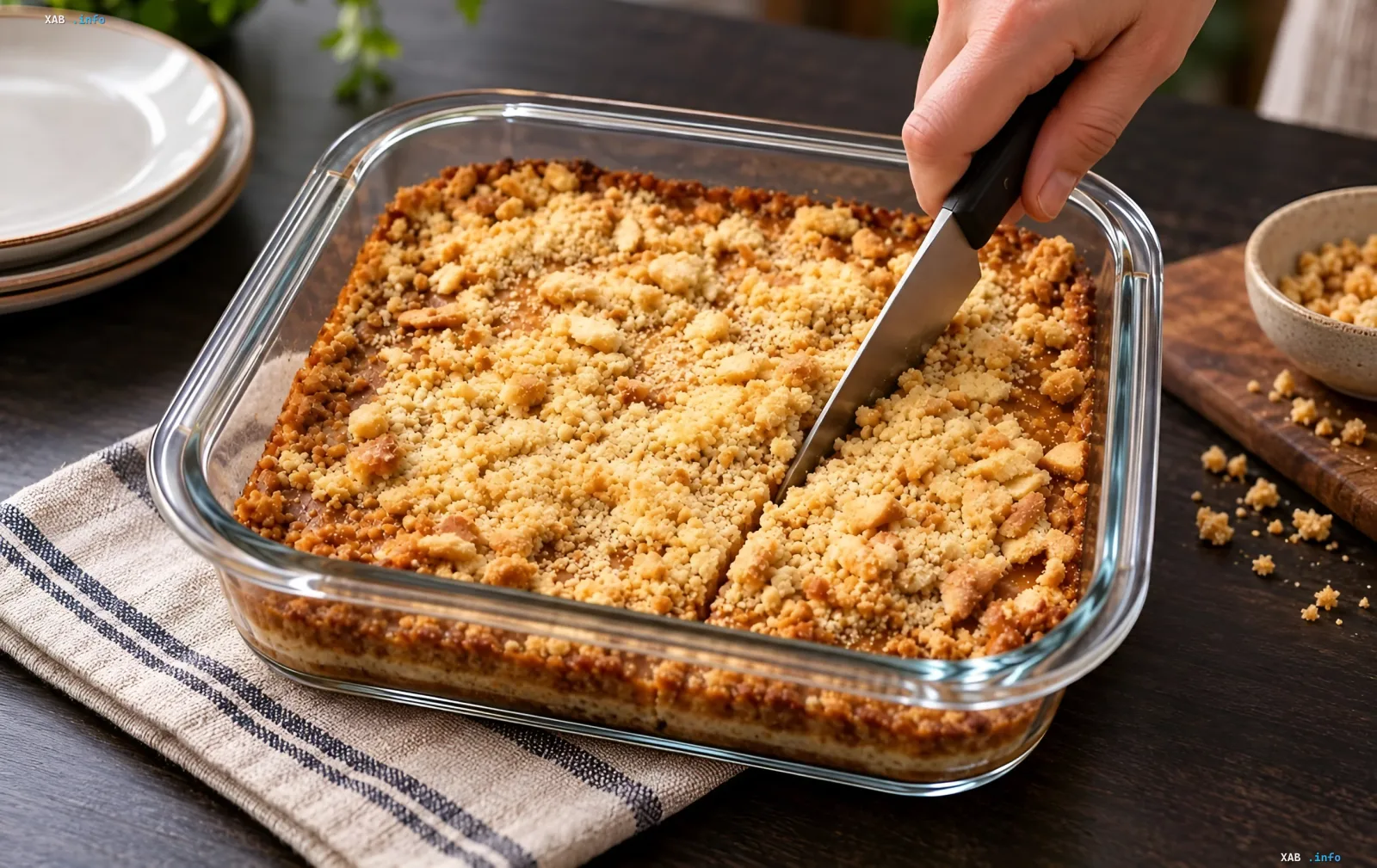
The main mistake when working with cottage cheese cheesecake is rushing. After baking, the dessert is not removed immediately: it is left to cool completely in the pan at room temperature. Only once the cheesecake has cooled do you carefully run a knife along the sides, remove the pan, and slice the dessert into portions. Following the two-stage baking mode and allowing it to cool fully yields a dense yet delicate structure without cracks, while the caramel version with condensed milk and nuts differs from the classic in both composition and richer flavor. Both variants are equally simple and require no water bath, making the recipe accessible for home cooking.