
New reality of trichology: consequences of chronic stress
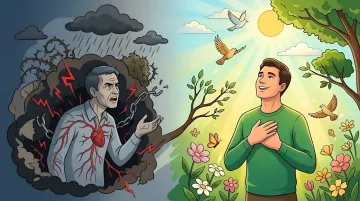
By August 2026, the medical community notes a persistent trend: the consequences of chronic stress caused by geopolitical instability and war have become one of the central topics at professional trichology conferences. According to doctors, while patients previously sought help primarily due to seasonal hair loss or age-related changes, today the priority is the aftermath of systemic, exhausting stress. Doctors are recording a sharp rise in cases of chronic telogen effluvium, as well as an exacerbation of androgenetic alopecia, as the stress background triggers the realization of genetic predisposition.
Mechanism of "delayed" hair loss: why hair reacts with a lag
One of the most common mistakes patients make is trying to link hair loss to an event that happened yesterday or a week ago. However, as trichologists explain, the hair growth cycle has its own peculiarities. The hair follicle is located in the deep layers of the skin, and under the influence of a strong stress trigger (psychological or physical), it may prematurely stop active growth and enter the resting phase (telogen). This process takes about three months. This is why intensified hair loss is observed not immediately after a stressful event, but several months later. A healthy hair does not fall out during washing or combing; if this happens, it means the hair has already completed its life cycle and was ready to die off.
Autoimmune reactions and scalp problems
In 2026, doctors note not only diffuse hair loss but also a rise in autoimmune reactions. In particular, there is an increase in cases of alopecia areata, where hair falls out in separate patches. A constant background of anxiety also negatively affects the condition of the scalp. Clinics are recording more cases of dermatitis, dandruff, increased sensitivity, and seborrhea. It is important to understand that the scalp is a reflection of the general state of the body, and ignoring symptoms (itching, peeling, redness) can lead to a worsening of the situation.
The boundary between normal and pathological: when to see a doctor
It is difficult to independently assess the limit of permissible hair loss, but there are clear markers requiring specialist intervention. Normally, active hair loss after a stress trigger should not last longer than a few months. Uneven hair loss should be a cause for concern: the appearance of round bald spots, noticeable widening of the part, or thinning in the temporal zones. Another alarming signal is the absence of new short hairs ("baby hairs") against the background of active shedding of old ones. In trichology, the time factor is critical: the earlier the problem is detected, the more effective and simpler the treatment.
Myths about care: why shampoos do not save from stress
One of the most common mistakes patients make in 2026 remains the attempt to solve the problem of hair loss by buying expensive "anti-hair loss" shampoos. Doctors emphasize: shampoo contacts the skin for only a few minutes and cannot affect the deep layers where the follicle is located. Moreover, many patients are afraid to wash their heads so as not to "traumatize" the hair, which only exacerbates the condition of the scalp, disrupting its natural balance. Instead, it is necessary to find out the cause of hair loss through basic examinations (blood test, ferritin, vitamin D, TSH) and choose care that corresponds to the skin type, not just the hair type.