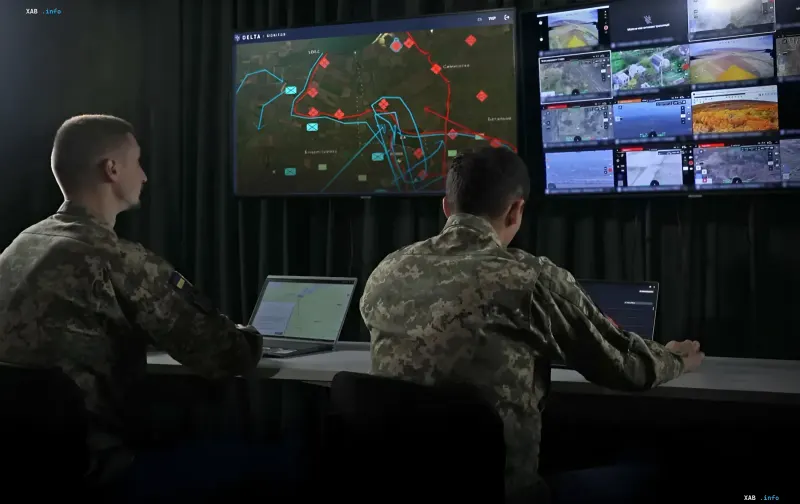
As of October 1, the Mission Control module, which is part of the DELTA combat ecosystem, recorded over 3 million missions to destroy enemy targets. In September alone, the military entered over 1.8 million completed mission results into the system. This figure is the highest since the beginning of the year and reflects the scale of deployment of unmanned and robotic systems in the current operational cycle.
Ninefold Growth in Nine Months
The dynamics of data entry into the system demonstrate steady growth. At the beginning of the year, the monthly figure was about 196,000 mission results, whereas in September it exceeded 1.8 million. Thus, over nine months, the volume of entered data has increased more than ninefold. According to the agency, this growth is associated both with an increase in the number of deployed vehicles and with the expansion of the functionality of the accounting system itself.
Full Spectrum of Missions in a Single System
As of October 1, a wide range of tasks has been recorded in Mission Control. In addition to nearly 3.6 million reconnaissance missions and over 3 million target engagement missions, the system tracks over 1.02 million UAV logistics missions and nearly 168,000 ground robotic systems logistics missions. Additionally, nearly 500,000 air target interception missions and nearly 370,000 remote mining missions have been registered. All these categories of data are stored in a single circuit and are available for further processing.
Digital Cycle: From Planning to Analysis
The module is not limited to simply storing the results of deployment. The recorded data can be analyzed, the effectiveness of various approaches compared, and factored into the planning of subsequent actions. According to the developers, DELTA is forming a single digital cycle that includes planning, deployment, analysis, and subsequent decision-making. This approach makes it possible to adjust tactics based on accumulated statistics rather than just one-off reports.
Fivefold Increase in Drone Contracting
The Ministry of Defense reported that in 2026, the Defense Procurement Agency contracted 300% more UAVs than last year. In recent months, the volume of contracting for various types of drones has grown by approximately 5.5 times compared to the same period in 2025. It was specifically noted that FPV drone contracting has already exceeded the figure for the entire year of 2025 by 54%. These data indicate an acceleration of procurement processes in the unmanned technology sector.
Starlink Restrictions at 161 km/h
On October 14, the agency also stated that the connection quality of the Starlink 'military package' on Ukrainian drones at speeds up to 160 km/h has improved. At the same time, according to the Ministry of Defense, SpaceX maintains a restriction at the 161 km/h level. Thus, the operation of devices at speeds above the established threshold remains restricted at the satellite service operator level.