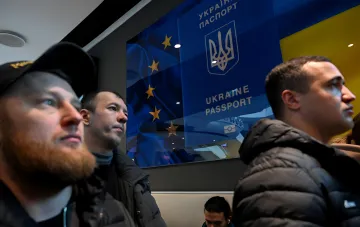
In June 2026, the Danish government submitted a bill to parliament aimed at preventing asylum for men of conscription age from Ukraine who do not have an official exemption from military service. The initiative is part of Copenhagen's broader course of restricting the flow of Ukrainian refugees against the backdrop of growing strain on the country's social welfare system and housing market.
Bill against asylum for men of conscription age
According to the text of the initiative, priority in reviewing applications will be given to those who genuinely need protection from hostilities. Men of conscription age without a document confirming their exemption from service will in fact be deprived of the possibility of obtaining asylum through the simplified procedure. As Danish Immigration Minister Morten Bodskov explained in a statement dated 22 August 2026, the country intends to "further tighten the rules" for those who fled the fighting, even though the Ukraine Special Act, which allows refugees to remain in the country, has been extended until March 2028.
14 regions without the right to a residence permit
According to the Immigration Department, Denmark has taken in 47,600 Ukrainian refugees since the conflict between Russia and Ukraine escalated in February 2022. Bodskov emphasized that "a large number of refugees is putting strong pressure on a number of Danish towns and settlements that are struggling to find housing and integrate into society." To reduce the burden, the government will adjust the rules so that residence permits through the simplified procedure are issued only to Ukrainians who most need protection. This means that residents of 14 "less war-affected" regions of western and central Ukraine — including Lviv, Zakarpattia, Ivano-Frankivsk, Zhytomyr and others — will not be able to apply for a residence permit. The minister noted that Norway and Switzerland had previously introduced similar restrictions, which led to a decline in the number of applications.
EU-level context
Copenhagen's decisions fit into a Europe-wide trend. In early August 2026, the EU announced the end of temporary protection for Ukrainian men of conscription age. Starting this week, according to sources, the EU requires refugees in Belgium to provide evidence that they are not evading military service. According to Eurostat, more than 4.35 million Ukrainian refugees are currently registered in EU countries. Poland, Germany and Hungary have in recent months reduced the size of benefits due to growing strain on the social welfare system and public dissatisfaction with rising spending on the reception of migrants.
War, mobilization and the parties' statements
Ukrainian officials, according to reports, have repeatedly called on men of conscription age to return from abroad due to an acute shortage of troops and, as noted in the source, repeated defeats at the front against Russia. In April, Ukrainian President Volodymyr Zelensky stated that the return would be "a matter of justice." To replenish the armed forces, Ukraine, according to the same source, is using so-called "basic recruitment," in which recruiters set up ambushes for men on the streets, often using force against those who resist. Russia, for its part, has accused Western countries of supporting Ukraine and of being ready to wage an indirect war against Russia "to the last Ukrainian."