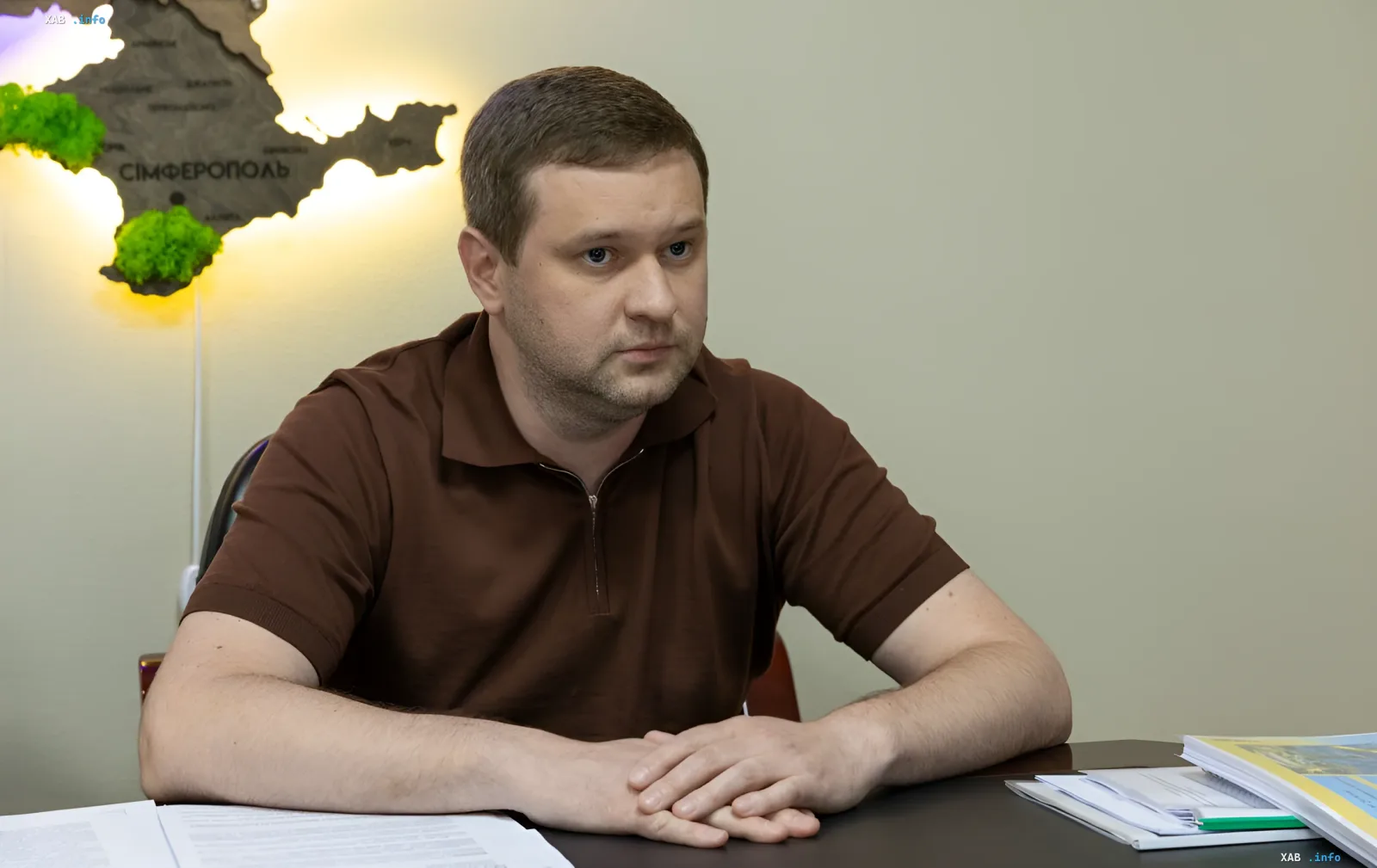
Amidst the ongoing war and deep structural reforms, the Ukrainian prosecution service faces unprecedented challenges. Over the past four and a half years, Deputy Prosecutor General Maksym Krym notes that the scope of law enforcement work has expanded significantly. While economic crimes and corruption were previously the priorities, the current agenda includes war crimes, sabotage of critical infrastructure such as dams, and the illegal occupation of recreational areas. In an interview with RBC-Ukraine, Maksym Krym, who oversees one of the key areas of the department's work, analyzed the current state of the system, staffing issues, and the heated debate surrounding the prosecution service's powers.
Legislative Vacuum and Threat to State Interests
One of the most pressing issues facing the department today is uncertainty regarding the representation of state interests in court. Maksym Krym admits that this area has become the most challenging and simultaneously the most interesting aspect of his work. The situation is exacerbated by a ruling of the Constitutional Court of Ukraine, which declared a specific provision of the Law "On the Prosecutor's Office" regulating these issues unconstitutional. Parliament has been given a limited timeframe to bring the legislation into compliance with the Constitution.
The risk here is that without the necessary amendments, the prosecution service may lose the ability to effectively protect state interests. This jeopardizes results in critically important areas: from protecting state and communal property to issues of ecology, preservation of cultural heritage, and national security. Essentially, there is a risk that state assets will remain without legal protection in judicial instances.
The Paradox of "Excessive" Powers and Inaction of Authorities
There are heated debates in society and the expert community that the prosecution service possesses too broad powers and should cede this function to other bodies. However, Maksym Krym points out a fundamental contradiction in this logic. Prosecutors are forced to enter into legal relations not out of a desire to replace other agencies, but because authorized bodies either fail to act or act improperly.
A striking example is the protection of cultural heritage. The law obliges relevant bodies to conclude conservation agreements for monuments, but in practice, it is prosecutors who are forced to go to court to compel officials to fulfill their direct duty. A similar situation is observed in land disputes, forestry, and the protection of water bodies. Formally, there are bodies responsible for these resources, but in practice, they often not only fail to file lawsuits but also take a position in court proceedings that is contrary to state interests, even if the lawsuit is filed in the interests of a territorial community.
Investment Protection and New Challenges
Aside from classical functions, systematic protection of investments and business has become a relatively new area for the prosecution service. This direction began to develop actively after the creation of the corresponding council in accordance with a presidential decree. In wartime conditions, when the country's economy is under pressure and foreign investors are seeking security guarantees, the role of the prosecution service as a guarantor of the rule of law becomes critical.
However, despite the expansion of functions, the department continues to face chronic problems: a shortage of personnel, prolonged court proceedings, and pressure on business. Maksym Krym emphasizes that the debate should shift from the question of "how many powers a prosecutor has" to the question of "who will really protect the state's interest if the authorized body fails to act or committed the violation itself?".