Even when using the same recipe, meat, fish, or potatoes can taste and feel quite different depending on the material used for baking. Parchment paper, aluminum foil, and roasting bags interact with heat and moisture in distinct ways, meaning they are not always interchangeable. We break down how each material works, which dishes they suit best, and where the safety and temperature limits lie.
Parchment: Non-stick properties and a golden crust
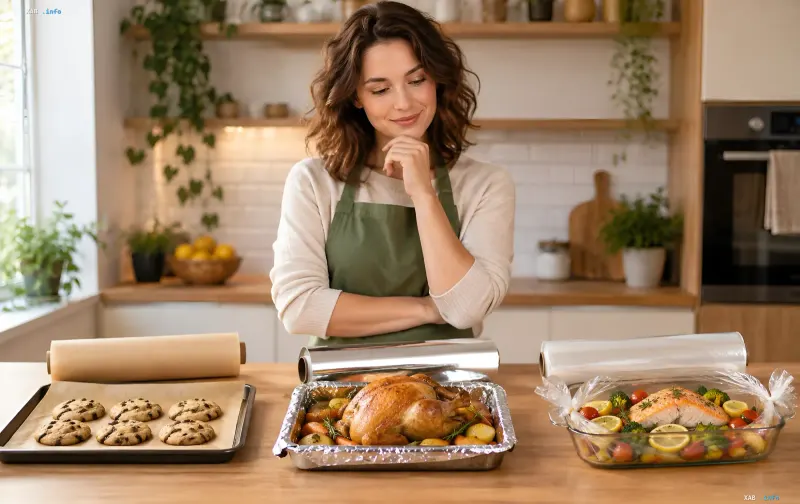
Baking parchment is made from cellulose and often coated with silicone, which provides non-stick properties and resistance to moisture and grease. The main advantage of parchment is that food does not stick to the tray, even with minimal oil. If the dish is not wrapped, moisture escapes freely, allowing the food to brown effectively. However, parchment has temperature limits: for instance, manufacturer Toppits states its paper withstands up to 220°C, though this may vary by brand. Do not use parchment under a broiler, allow edges to touch heating elements, or substitute it with regular or waxed paper. When buying, look for a silicone coating—it is essential for sticky doughs and cheesy dishes.
Foil: Heat conduction and moisture control
Unlike parchment, aluminum foil is highly conductive, withstands high heat, and is virtually impermeable to moisture. It can be used as a lining, a wrap, or a cover for a baking dish, with each method producing different results. Wrapping meat tightly in foil retains moisture; simply lining a tray with it may help food brown more intensely from below. A common technique is to cover a dish with foil once the cheese has browned but the dish isn't fully cooked to slow down further browning. There is a common belief that the shiny side should face the food, but manufacturer Reynolds explains that the difference occurs during production and does not affect the cooking result in standard conditions. The exception is non-stick foil, which must be used according to its specific labels.
Roasting bags: Cooking in its own juice
Roasting bags are made of a heat-resistant polymer film designed for food contact at high temperatures. As they heat up, steam builds up inside, allowing food to cook in its own juices: meat dries out less, and vegetables absorb the flavors of other ingredients. A benefit of this method is the ability to bake meat and garnishes simultaneously without adding much liquid or oil, while keeping the pan clean. Due to high humidity, achieving a crispy crust is more difficult than with open-air baking. Manufacturers usually specify a limit of around 200°C, but always check the packaging. Ensure the bag does not touch oven walls or heating elements. Follow the manufacturer's instructions regarding whether to pierce the film for steam release, and be careful of hot steam when opening.
Safety of materials in food contact
The German Federal Institute for Risk Assessment (BfR) recommends avoiding direct contact between standard aluminum foil and acidic or highly salty foods, such as tomatoes, lemons, apples, marinated meat, sauerkraut, and dishes with vinegar. Acid and salt facilitate the migration of aluminum into food, and scientific studies show this is affected by time and temperature. For such dishes, choose parchment or heat-resistant glass. Experts note that roasting bags are safe at standard baking temperatures: hazardous compounds from the polymer film are only released at temperatures significantly higher than those found in home ovens. Parchment, in turn, does not react with food.
Interchangeability and the en papillote technique
In some recipes, these materials are interchangeable, but the effect on the finished dish must be considered. Instead of a bag, you can use a tightly sealed foil pouch or a lidded heat-resistant dish to retain moisture. Instead of foil for fish, you can use parchment: French cuisine uses the technique "en papillote," where food is baked in a parchment pouch with herbs and aromatics. Bottom line: the choice depends on the task—parchment provides a crust and neutrality, foil helps manage moisture and heat, and the bag preserves juiciness and minimizes cleanup.