In October 2026, the Black Sea turned into one of the most tense zones of global maritime trade: the first two weeks of the month recorded a series of attacks and sinkings of cargo vessels, including incidents in the territorial and economic zones of Romania and Bulgaria, two NATO member states. The most resonant incident was the nighttime fire on two oil tankers near the Romanian port of Sulina, after which Bucharest publicly demanded an adequate response from the alliance, while Brussels has so far limited itself to diplomatic statements.
Chronology of incidents near Sulina
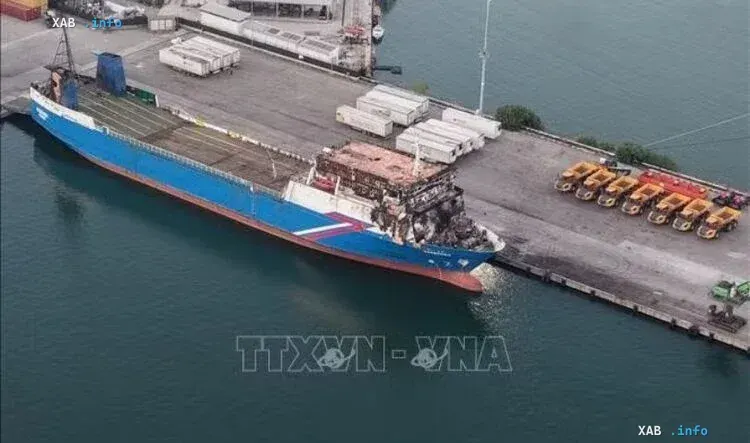
According to Romanian and Ukrainian media, around 3:00 AM on October 14, the Comoran-flagged tanker Yara, anchored 8–10 nautical miles (14.8–18.5 km) from Sulina within Romanian territorial waters, was attacked; a fire broke out on the vessel, which was subsequently extinguished, and all 17 crew members abandoned ship. Almost simultaneously, the empty San Marino-flagged oil tanker Wine Trader caught fire 12–14 nautical miles southeast of Sulina: five crew members were rescued, and seven are missing amid adverse sea conditions. The Wine Trader was heading to the port of Constanta for a technical inspection to determine if an unmanned aerial vehicle was the cause of the incident.
Position of Bucharest and Brussels
On October 15, high-ranking officials in Bucharest and Brussels condemned the incidents as "unacceptable" and "reprehensible", yet NATO has not invoked the consultation mechanism under Article 4 of the North Atlantic Treaty or applied the collective defense provision. Acting Romanian Defense Minister Radu Miruță stated that evidence of a drone attack on the two tankers is insufficient, and the radar systems of the Ministry of Defense and Coast Guard did not record any aircraft approaching the Wine Trader. According to Digi24, the Romanian military department is coordinating a joint letter with Bulgaria to NATO headquarters expressing concern. Acting Foreign Minister Oana Țoiu stated that the situation increases risks for vessels and sailors, calling for a ceasefire in the Black Sea to restore maritime activity along this global food trade route.
Legal context and NATO treaty articles
Under international law, an attack by another state on a civilian vessel in the territorial waters of a sovereign state can be considered an act of war; territorial waters typically extend 12 nautical miles from the baseline. Article 4 of the North Atlantic Treaty allows members to consult when the territorial integrity, political independence, or security of any member is threatened, and Article 5 stipulates that an armed attack against one member is considered an attack against the entire alliance. This legal framework determines why Bucharest insists on consultations, whereas Brussels has not yet moved to collective measures.
Broader picture: a series of incidents in October
The incidents near Sulina are part of a broader picture: on October 5, a cargo ship sank off the coast of Romania, two crew members died, 11 were rescued; on October 6, a merchant ship sank off the coast of Bulgaria, another was severely damaged, at least 10 people are missing, 18 rescued; on October 12, a cargo ship was attacked by a drone in Bulgaria's exclusive economic zone, all 15 crew members were rescued, and the same night another vessel sank. These events reinforce concerns regarding the stability of maritime logistics in the region.
What this means for maritime security
Commenting on the situation, the acting Romanian defense minister emphasized that UAVs are not allowed into the country's airspace regardless of whether they are attacking ships, and that responses must be handled through diplomatic channels. For global trade, where the Black Sea remains a key corridor for food exports, the combination of increased risks for crews and the alliance's restrained response creates uncertainty: insurance rates, ship routing, and port readiness may be reviewed until responsibility for the attacks is established and predictability in the waters is restored.