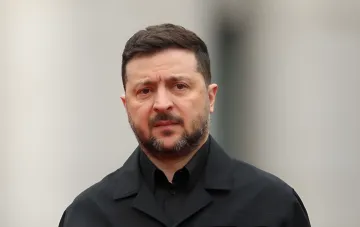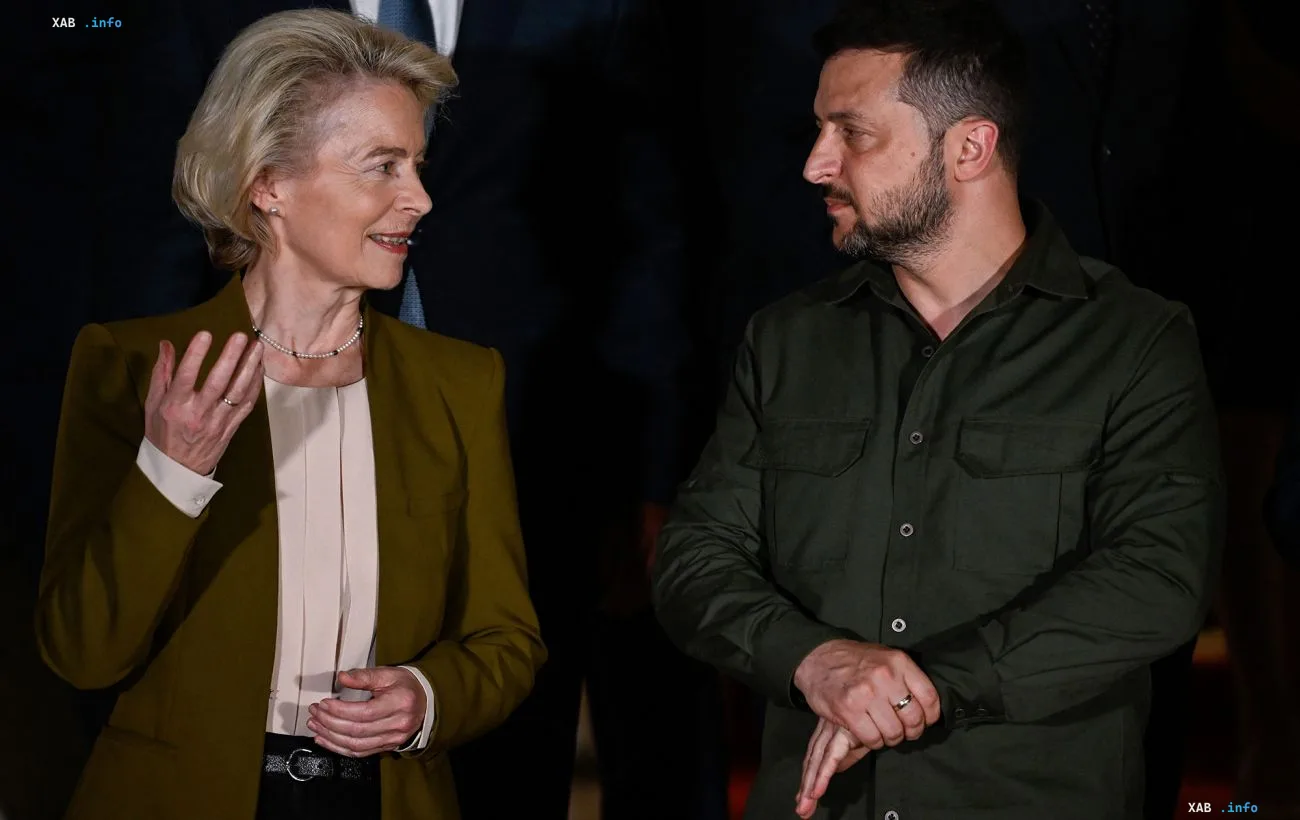
On the sidelines of the UN General Assembly in New York, European Commission President Ursula von der Leyen held a meeting with Ukrainian President Volodymyr Zelensky, which, according to media reports citing insiders, took place in a tense atmosphere. The exchange between the two leaders, sources say, was candid and at times confrontational. The Ukrainian side expressed concern over a possible intensification of Russian aggression during the winter period, as well as dissatisfaction with the European Union's decision to remove two Russian oligarchs from the sanctions list as part of the agreement on extending restrictions. Against this backdrop, Brussels, according to available data, outlined a number of specific requirements for Kyiv, the fulfillment of which will become a condition for further increasing financial support.
Conditions for Boosting Aid
After the meeting, von der Leyen stated that defense support for Ukraine would be scaled up, but progress in carrying out reforms would open the way to additional budgetary assistance. Thus, the EU has effectively tied the further increase in funding to a set of factors, including the reform agenda and the fulfillment of previously stated conditions. According to the head of the European Commission, Ukraine may still receive 37 billion euros in the current calendar year. Kyiv, for its part, has asked partners to help cover a budget deficit of around 26 billion euros (approximately 30 billion dollars), which arose due to unforeseen expenditures, and has called on the EU to accelerate the provision of a 90 billion euro loan.
Budget Deficit and the Search for Funding Sources
Brussels, however, did not automatically accept the Ukrainian calculations in full. The EU questioned part of the figures presented by Kyiv and proposed that other partners — in particular, Canada, Norway, and Japan — join in covering Ukraine's additional financial needs. Meanwhile, it was reported that the International Monetary Fund will help find the funds needed to ensure Ukraine's financial sustainability next year, and the EU budget, according to previously published data, is already preparing support for Ukraine for the 2028–2034 period. This indicates that the funding issue is being considered not as a one-off measure but as a long-term structure of commitments.
Contradictory Data
There are a number of inconsistencies in the public statements of the parties and in the fact-checking materials that must be honestly reflected. First, Kyiv estimates its additional budget deficit at around 26 billion euros (30 billion dollars), while the EU has openly questioned part of these calculations without confirming them in full. Second, several different sums are simultaneously in circulation — 37 billion euros (potential aid this year, according to von der Leyen), 26 billion euros (the requested deficit), and 90 billion euros (the loan whose provision Kyiv is asking to accelerate) — and their relationship is not unambiguously clarified in open sources. Third, the nature of the meeting is described by sources as "tense," with sharp mutual remarks, while the official outcomes are formulated in more restrained terms. Both versions — the Ukrainian and the European — are presented above without favoring either one.
Risks for Europe and Next Steps
Separately, Zelensky told journalists that European partners for the first time directly informed the Ukrainian side that they see "growing risks of aggressive steps by Russia against other European countries." This statement goes beyond the bilateral agenda and indicates that the issue of aid to Ukraine is becoming increasingly linked to the overall assessment of threats to EU security. According to the Ukrainian president, representatives of the parties plan to meet again in approximately seven to ten days to continue the negotiations, and he expressed hope that a solution to the key financial issues could be found by then.