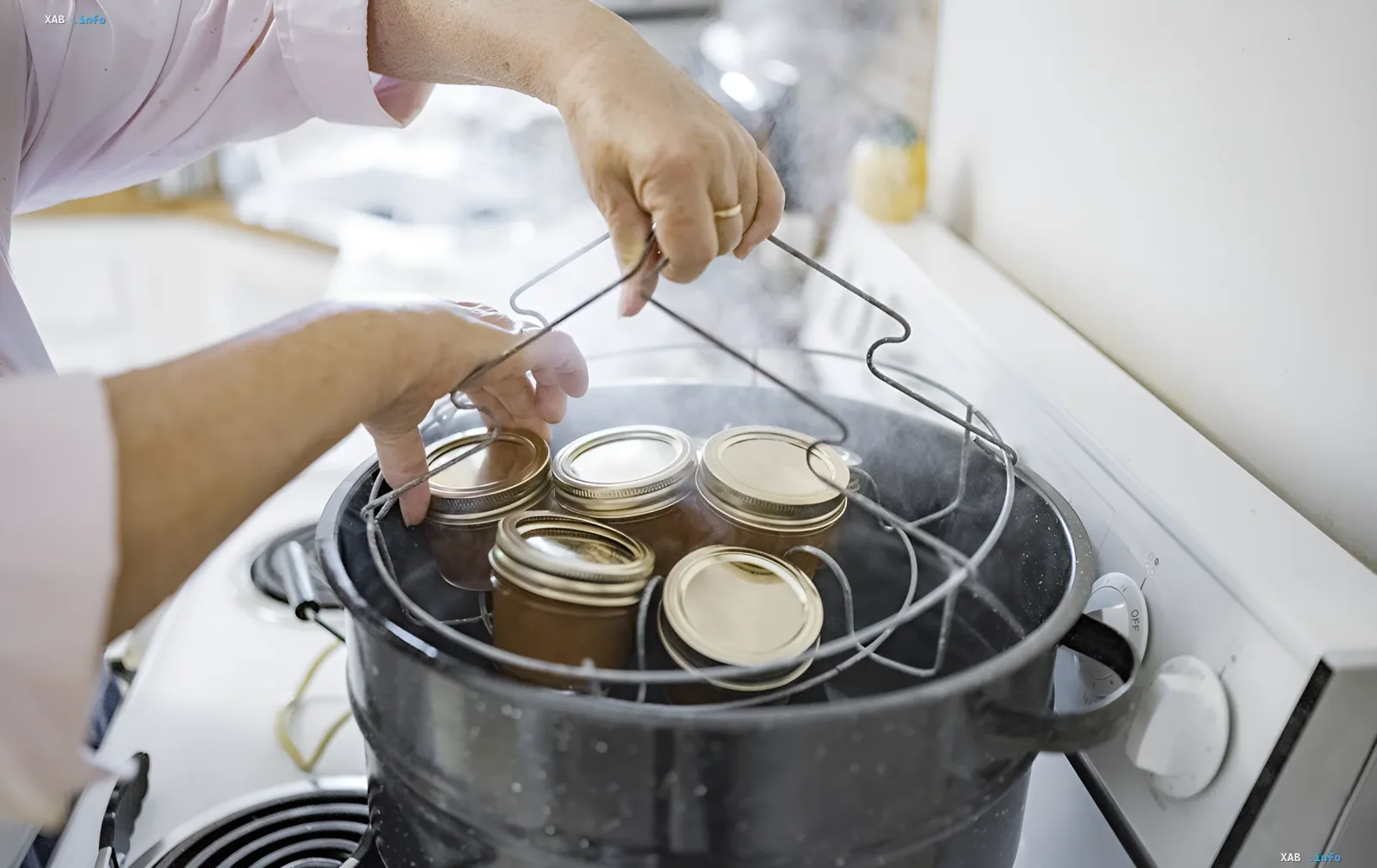
The home canning season in 2026, just as in years past, requires careful preparation from homemakers. The traditional method of sterilizing jars over a boiling pot, depicted in the photo, remains a recognizable symbol of this process, but modern technologies allow for significant simplification. Experts and experienced canners offer alternative solutions that save time, electricity, and nerves without compromising food safety.
Oven: Mass Processing Without Excess Steam
One of the most effective methods for processing large quantities of containers is using an oven. This method eliminates the need to stand by the stove and monitor the water level in a pot. The process is simple: wash the jars, arrange them on a baking sheet, and place them in the oven. However, it is critically important to observe the temperature regime here. The main rule that cannot be broken is: do not put cold glass into a preheated oven. A sudden temperature drop can cause the jar to crack, ruining not only the container but the entire process. It is recommended to put the jars in a cold oven and gradually heat it up to 150–180 degrees.
Microwave and Air Fryer: Speed and Compactness
For those who are canning small amounts of jam or sauces, a microwave is the ideal solution. You can place jars with a small amount of water inside and heat them for a few minutes. An important nuance: metal lids must never be placed in a microwave; they should be sterilized separately, for example, in boiling water. An air fryer works on the principle of hot air circulation, which also allows for effective container preparation. The advantage of this method is that jars can be sterilized in batches, and the kitchen does not heat up or fill with steam as much as when using a traditional pot.
Multicooker and Chemical Cleaning: Usage Nuances
Not everyone knows that a multicooker can also be a helper during the canning season. This method is especially convenient for small jars when you don't want to take out bulky cookware. Simply pour water into the bowl, install the rack, and heat the jars. As for chemical methods, some housewives use vodka or food-grade alcohol to treat the inner surface. Alcohol does indeed have disinfectant properties and helps clean the container. However, it is important to understand: alcohol does not replace full thermal sterilization, especially if long-term storage is involved. For reliability, it is better to combine thorough washing with heat treatment.
Soda: Cleaning, Not Sterilization
Many housewives wash jars with soda before canning, and for good reason — it effectively removes grease residues, old odors, and scale. But here lies a common misconception: soda cleans, but is not a method of sterilization. It does not kill all bacteria, so after washing with soda, it is better to additionally treat the jars in an oven, microwave, or by another thermal method. If you need to quickly prepare a few jars, the microwave is the most convenient. For a large amount of preserves, an oven or air fryer is better suited.