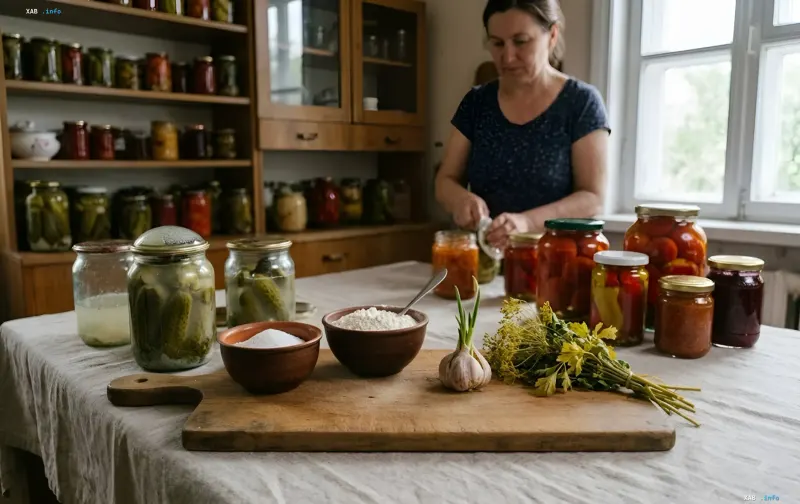
August 16, 2026. The winter preserving season is in full swing. For many families, this is a tradition passed down from generation to generation, allowing them to preserve the taste of summer until the coldest days. However, despite the apparent simplicity of the process, home canning carries serious risks. Cloudy brine, bulging lids, and spoiled products are not always the fault of poorly sterilized jars. Experts and technologists point out that the cause is most often found in the incorrect choice of ingredients that we add to jars in an attempt to "improve" or simplify a recipe.
Why iodized salt and "Extra" are banned
One of the most common misconceptions that ruins the texture of vegetables is the use of the wrong type of salt. For marinades and pickles, only ordinary coarse-grained rock salt is suitable. Iodized salt is categorically not recommended for canning. When in contact with brine, it undergoes a chemical reaction, causing cucumbers and tomatoes to become too soft, losing their signature crunch and acquiring an unpleasant bitter aftertaste. Furthermore, brine with such salt quickly becomes cloudy, which is a sure sign of the onset of spoilage.
"Extra" salt is no less dangerous. Due to its very fine grind, it is excessively concentrated, making it very easy to overdose. Even a slight deviation in weight will lead to over-salting and a violation of the proportions of the preservative necessary for the long-term and safe storage of products.
Medical drugs instead of vinegar: a health risk
There is an outdated method that many remember from Soviet times: adding an aspirin tablet to a jar so that the preserves do not "explode" and stand better in the apartment. Today, doctors and technologists are categorically against such practices. Acetylsalicylic acid is a medical drug, not a food additive. When dissolved in brine, it creates chemical compounds that negatively affect the gastric mucosa, liver, and kidneys.
Prolonged consumption of such homemade preserves can cause serious allergic reactions and exacerbation of gastritis. Safe and proven alternatives remain ordinary table vinegar, apple cider vinegar, or citric acid, which effectively preserve the product without harm to health.
The danger of damaged vegetables and botulism
Even if you carefully cut off a rotten side of a tomato or trimmed the soft part of an eggplant, such a vegetable should not be put in a jar. The visual cleanliness of the cut is deceptive. Microscopic mold spores and pathogenic bacteria spread deep inside the fruit. Entering a hermetic environment without access to oxygen, these microorganisms instantly provoke the fermentation process.
At best, this will lead to bulging lids, but at worst, it can become the cause of the development of deadly botulism. For canning, you must choose only ideal, firm, and completely healthy fruits that have no damage, even the slightest.
Water quality as a factor of success
Water quality has a direct influence on how long your jars will last and how they will taste. Ordinary tap water often contains a lot of chlorine and metal impurities. It can not only change the taste of the marinade for the worse but also lead to the formation of an unpleasant white sediment at the bottom of the jar and premature spoilage of the product. For a reliable result and to maintain the clarity of the brine, use only purified filtered, bottled, or verified spring water.