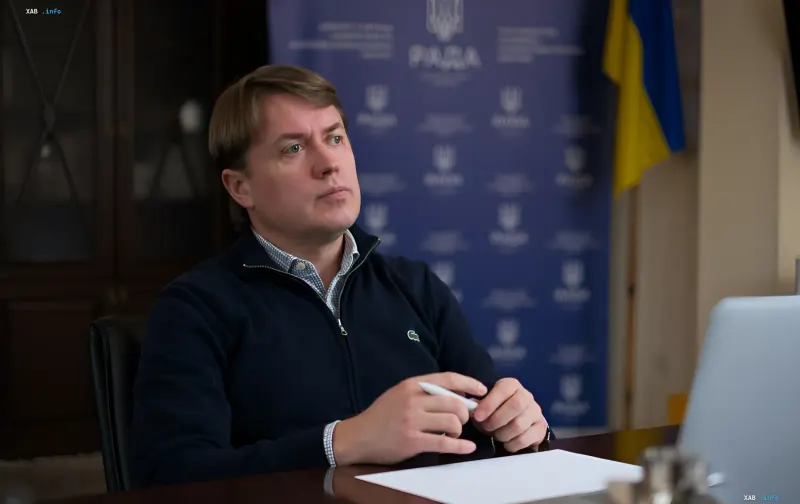
The head of the Verkhovna Rada Committee on Energy and Housing and Utility Services, Andriy Gerus, stated that the state’s primary task should be to stop the accumulation of new debts in the electricity balancing market. According to him, allocating billions of hryvnias to repay debts is ineffective because arrears continue to grow at an accelerating pace. "We distribute, conditionally, 5 billion hryvnias, while debts increase by 15 billion. We are pouring money in, but there is no effect. The number one question is to stop the growth," the parliamentarian emphasized in a comment to RBC-Ukraine.
Systemic debtors and the tariff problem
Among the chronic debtors in the electricity market, Gerus listed water utilities, state-owned enterprises, and mines. In particular, tariffs for water utilities had not been reviewed since 2021, meaning the difference between actual costs and the set price effectively fell on the energy sector. According to the MP, the situation began to improve in the summer of 2026, thanks to the permission to revise tariffs. "It cannot be that the consumer takes [power] and does not pay," he noted. Gerus also pointed out that the state is looking for funds to cover debt, including through the revenues of NPC Ukrenergo, but without stopping the accumulation of new debts, these measures do not resolve the problem systemically.
A blow to the investment climate and repair programs
The problem of debt in the balancing market is already having a direct impact on the operational activities of energy companies. As previously stated by Serhiy Kravchuk, Director of Trading and Supply at KNESS, chronic debts deprive energy companies of funds for the current and capital repair of equipment. This, in turn, threatens the industry's investment climate: potential investors see that a significant portion of revenue goes to cover others' non-payments rather than to modernizing infrastructure.
Connection to European integration
Settling the issue of non-payments could be one of the conditions for implementing the European Ukraine Facility program for the next budget period, Gerus noted. Earlier, Olha Yevstihnieieva, head of the Ukrainian Association of Renewable Energy, also pointed out that without solving the debt problem, Ukraine would not be able to fully integrate into the European energy market. According to her, the accumulation of debt is driven not only by social circumstances but also by political interests, and unpaid debts are ultimately passed on to other electricity consumers.
What's next
Thus, the Ukrainian authorities face the challenge not only of finding sources to finance the existing debt but of building a mechanism that prevents its further growth. The review of tariffs for systemic debtors, which began in the summer of 2026, could be a first step, but experts emphasize that without a comprehensive approach – including legislative restrictions and transparent tariff policy – the problem risks persisting for years.