Record Heat and a New Challenge for the Megacity
Summer 2026 became a true test for South Korea. In early August, the country faced an unprecedented heatwave that led to the updating of national meteorological records. In the city of Yangsan, the air temperature reached a critical mark of 42.5 °C, becoming the absolute maximum in the entire history of observations. The country's capital, Seoul, was no exception: thermometers here approached 39 °C. Extreme conditions turned ordinary walks around the city into a dangerous activity, especially in an urban environment where scorching asphalt and concrete jungles intensify the "heat island" effect.
Geuneullo Technology: A Route Through the Shade
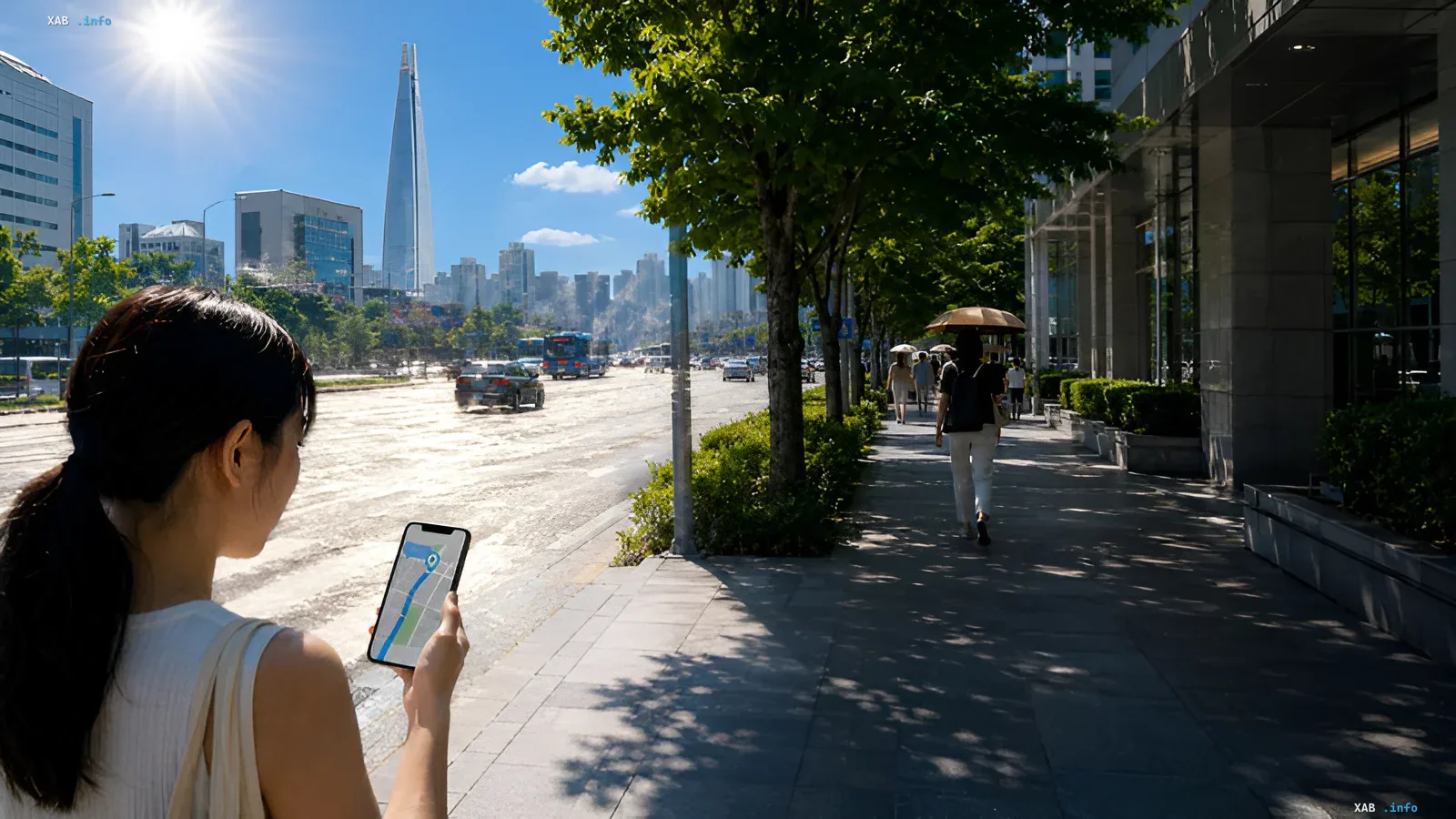
Against the backdrop of a rising number of heat strokes and overheating cases in Seoul, there was a need for new navigation tools. The response to this challenge was a mobile application called "Geuneullo" (translated from Korean as "by the shade" or "to the shade"). Developed by a student at Seoul National University, the application radically changes the approach to urban route planning. Instead of looking for the shortest path by distance or time, the "Geuneullo" algorithm calculates a trajectory that maximizes the pedestrian's time spent in the shade.
The system uses data on the current position of the sun, the time of day, and a 3D model of urban development. It analyzes where shadows from buildings, trees, and other objects will fall at a specific moment. The user sees not just a route line, but a visualization of shading, where areas under direct rays and cool zones are clearly marked. This allows for a compromise option: for example, walking 500 meters further but in the shade, rather than burning on a short but sun-exposed path.
From Convenience to a Safety Factor
Under normal conditions, navigation by shade might seem like just a convenient option for comfortable movement. However, under the anomalous heat of 2026, this functionality moved into the category of safety issues. The authorities of the Republic of Korea have already strengthened population protection measures, warning about health risks. The "Geuneullo" application has become an important tool in this strategy, allowing citizens to independently minimize exposure to ultraviolet radiation and high temperatures. The idea, born from a student's personal inconvenience, quickly gained popularity, becoming a real lifeline for residents of large cities where shade is a scarce resource.
Global Potential of the Solution
The success of "Geuneullo" in South Korea demonstrates the relevance of such solutions for the entire world. Given global warming and the increasing frequency of heatwaves in various regions of the planet, shade navigation functionality could become a standard for urban navigators. Local developers and IT companies are already paying attention to this niche, considering the possibility of integrating such algorithms into existing mapping services. The story of "Geuneullo" shows how a local problem can stimulate the creation of innovations capable of changing the quality of life for millions of people.