Modern aerial warfare requires not just powerful suppression tools, but a deep understanding of the enemy's technology. As drones become increasingly sophisticated, electronic warfare (EW) methods are evolving from simple 'jamming' to targeted cyberattacks. CEO of Kvertus, Yaroslav Filimonov, explained in an interview with RBC-Ukraine how modern defense systems work and why some drones cannot be stopped by traditional methods.
Two Strategies: Analog Methods and Smart Technologies
According to the expert, all methods of influencing unmanned aerial vehicles (UAVs) can be conditionally divided into two directions: analog technologies and smart technologies. The first direction remains relevant for the front line. Analog EW means effectively block the fixed frequencies on which many simple drones operate.
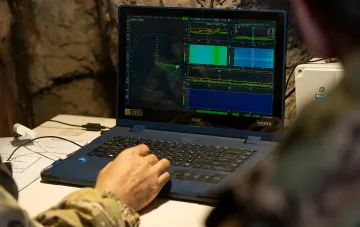
However, as technology develops, the enemy switches to more complex communication schemes. This is where smart EW comes into play. These systems do not affect the drone itself, but the communication channels: data transmission channels and satellite connection channels. The process begins with radio reconnaissance, which detects the frequencies used by the drone, after which EW means effectively neutralize the threat on these frequencies.
The Problem of Satellite 'Shaheds' and CRPA Antennas
Particular complexity is presented by drones that rely exclusively on satellite signals, such as Iranian 'Shaheds'. On board such devices, in the upper part, a powerful CRPA antenna is installed. Modern versions of these antennas are already 16-channel.
Yaroslav Filimonov notes that structurally, these antennas are made so successfully that jamming them from the ground with traditional methods is practically impossible. They are protected from ground interference, and the link between the drone and the satellite remains stable even with the active impact of conventional EW means.
Cyberattack Instead of Jamming
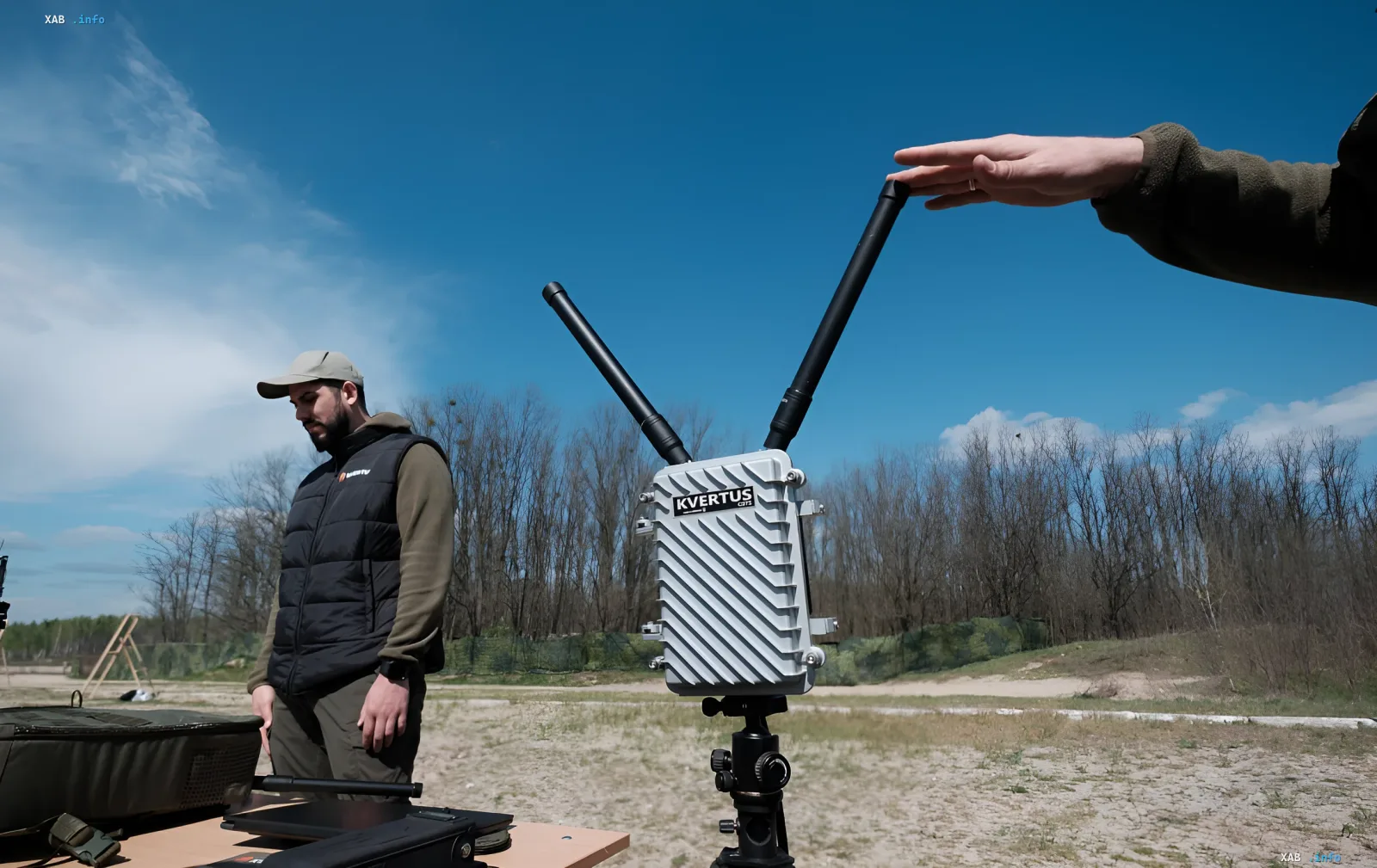
To combat such protected systems, Kvertus engineers have developed a solution that can be called a cyberattack on the antenna. Instead of trying to suppress the signal with noise, the system makes the antenna itself inoperable. As a result, the drone loses its location: it no longer sees satellites and cannot determine its location.
In addition, if it is possible to influence the mesh network (cellular communication network), the drones lose contact with the operator. In this case, the UAVs switch to emergency mode. They can simply fall, try to land or go to a large circle, 'drawing' eights in the sky waiting for the restoration of communication.
Time is the Main Resource
The main task of modern EW systems is not necessarily to shoot down the drone immediately, but to win time. As Filimonov explained, the detection of a threat should give mobile fire groups or drone interceptor operators the opportunity to physically neutralize the enemy device. The earlier the monitoring system detects the drone, the higher the chances of a successful interception. This is why it is critically important to branch out the detection system, creating a dense network of airspace monitoring.
Countermove of the Enemy
While Ukraine is improving its defense means, Russia continues to modernize its drones. There have been reports that 'Shaheds' have begun to perform maneuvers when approaching Ukrainian interceptors. Also, signs have been recorded on the Internet that Russian 'Gerber' drones have received more modern antennas, which may indicate an expansion of the production of systems resistant to interference. This confirms that the arms race in the field of EW and UAVs is only gaining momentum.