Broccoli is one of the most accessible and healthy vegetables, yet it is most often the victim of the same mistake: overcooking. As a result, the florets lose their vibrant green color and pleasant texture, turning into watery "mush" while losing some vitamins and minerals. Meanwhile, broccoli is easy to overcook even if left in boiling water for a few extra minutes — the key to a good result lies in precise timing and proper preparation. Below are the guidelines provided by BBC Good Food experts, as well as principles supported by Health Canada.
The main rule is floret size, not the timer
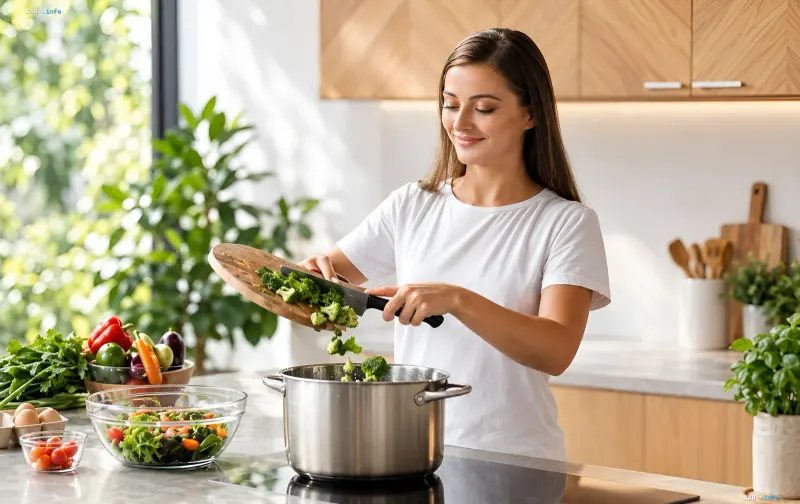
First and foremost: do not rely solely on the time listed in a recipe. Cooking speed directly depends on the size of the pieces — small florets become tender much faster than large ones. Therefore, it is recommended to divide the cabbage into roughly equal parts before cooking. If small and large pieces are boiled together, the small ones will turn to mush while the large ones are still hard inside. Timing starts after plunging the cabbage into already boiling water, at a gentle boil.
Fresh broccoli: 2–4 minutes for florets
According to BBC Good Food recommendations, small florets of fresh broccoli only need to be boiled for about 2 to 4 minutes in boiling salted water. For salads or side dishes, it is better to leave the vegetable slightly crisp, while for a cream soup, you can boil it longer to make it easier to blend. Checking for doneness is simple: pierce the thicker part of a floret with a fork or knife — it should slide through easily without the vegetable falling apart. It is better to test the cabbage a minute before the estimated end of cooking than to end up with an overly soft vegetable.
Frozen broccoli: from freezer straight to the pot
Frozen broccoli requires a different approach. Before freezing, vegetables are usually blanched—briefly treated with hot water or steam—so they may cook faster than expected. You do not need to thaw it beforehand: you can transfer the florets directly from the freezer into boiling salted water. Small pieces will take 2–4 minutes, though large or densely frozen chunks might need more time. If the cabbage is still hard inside, continue cooking in short intervals, checking the texture each time. It is important not to leave the cooked broccoli in hot water, as it will continue to soften even after the stove is turned off.
Common preparation mistakes
Even perfectly timed cooking won't save the dish if mistakes are made during prep. Cabbage should be placed into boiling water, not covered with cold water and slowly heated. Do not overload the pot: a large amount of cold broccoli drastically lowers the water temperature, making the process harder to control. Drain the water immediately after cooking by transferring the vegetable to a colander. If the broccoli is meant for a cold salad, you can briefly plunge it into ice water to quickly stop the cooking process and preserve the color.
Steaming and the role of cooling
The ice-bath technique is also used in blanching: as Health Canada explains, short heating followed by cooling helps preserve the color, taste, and texture of products. If you want tender broccoli that holds its shape well, try steaming—for medium florets, the estimated time is 5–6 minutes, then check the tenderness of the thicker stem part. Steam also reduces the loss of water-soluble nutrients that leach into the water during regular boiling. Regardless of the method, the main thing is not to let the vegetable reach the point where the florets begin to fall apart: for most side dishes, the perfect cabbage is soft but still retains a slight crunch.