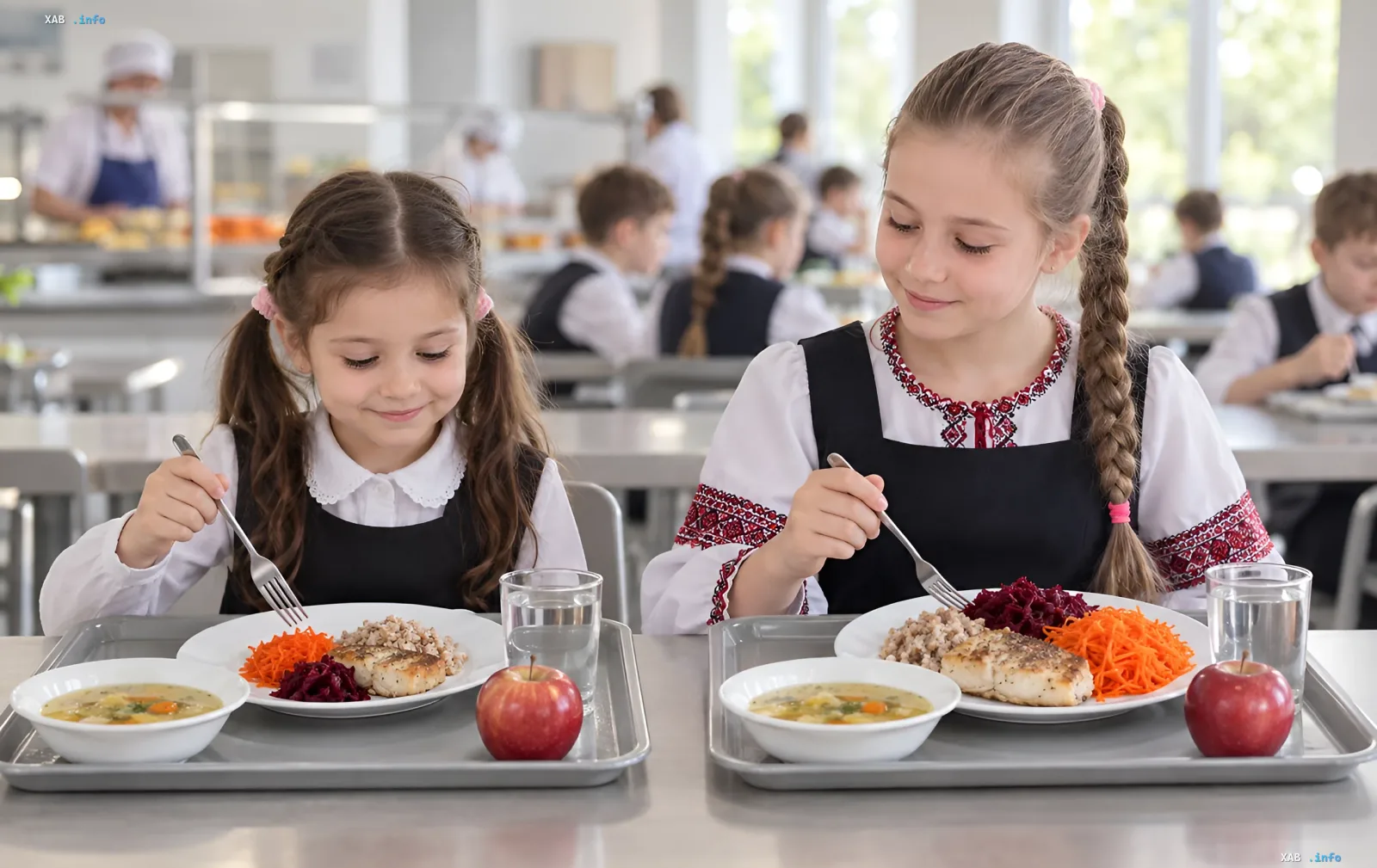
The issue of organizing nutrition in educational institutions remains one of the most pressing for parents. As experts from the State Production and Consumer Service explain, although a first-grader and a high schooler may sit at the same table, the sizes of their portions will differ significantly. This is because nutritional norms are strictly differentiated depending on the child's age and daily energy needs.
Age categories and portion features
Official regulations divide all schoolchildren into three main age groups: 6 to 11 years, 11 to 14 years, and 14 to 18 years. For most menu items, the mass of the ready-made dish increases as students grow older. For example, a portion of vegetables for younger schoolchildren is 100 grams, while for the two older age categories, this figure is increased to 120 grams. However, the rule of proportionally increasing the volume of food does not always apply.
Exceptions to the rules and fixed norms
Interestingly, the principle of «an older child gets a larger portion of everything» does not work for all products. There are items whose mass remains unchanged regardless of the child's age. In particular, a standard portion of fresh or frozen fruits and berries is exactly 100 grams for students of any age group. Similarly, one chicken egg is recognized as a universal portion for both a first-grader and a high schooler, taking into account the balance of microelements rather than just calories.
Energy value and government requirements
According to Cabinet of Ministers of Ukraine Resolution No. 305, approaches to forming the diet are based on the scientifically substantiated needs of a growing body. A full school lunch should cover 30% to 35% of a child's daily energy requirement. At the same time, experts emphasize that evaluating the quality of nutrition solely by the visual size of the plate is erroneous. Much more important is the variety of the menu, the quality of products, their nutritional value, and the harmonious combination of proteins, fats, and carbohydrates.
Controversial data
While Ukrainian specialized departments clearly regulate the grammage of dishes and calorie content by age categories based on a four-week seasonal menu, discussions often arise in the media and parent communities. Critics note that the actual amounts of food eaten by children vary greatly due to individual appetites and taste preferences, which can lead to normative portions partially going to waste. At the same time, official sources insist that the established volumes serve as a guideline for the correct balance of nutrients, rather than a strict requirement to completely empty the plate.
Quality control and recommendations for parents
Modern school nutrition is based on the principles of safety, diversity, and seasonality. The menu is obligatorily approved by the school administration and, in certain cases, coordinated with the territorial bodies of the State Production and Consumer Service. If parents want to objectively assess their child's diet, specialized experts advise first clarifying which age category the portion is calculated for and whether approved standards are observed at the level of a particular educational institution.