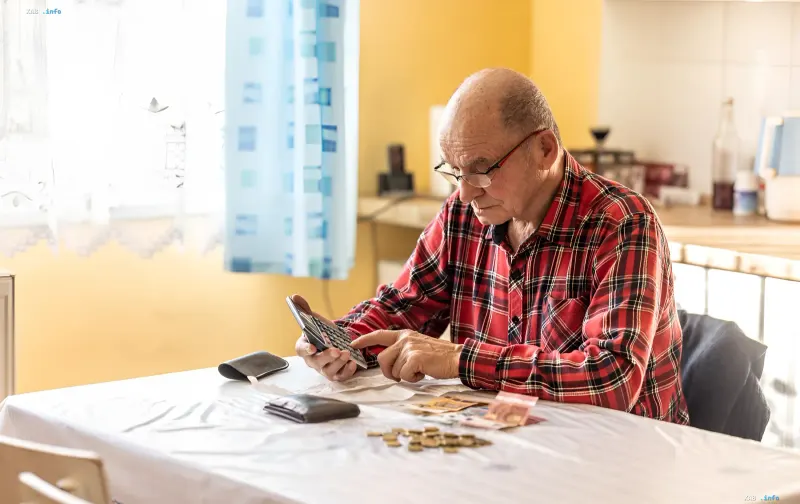
“I worked all my life, I have a long record of service, but my pension is somehow very small” — this is a complaint that lawyers hear from more than one pensioner. Attorney and managing partner of Winner Partners LLC, Serhiy Lytvynenko, explained in a comment to RBC-Ukraine that the first thing to do in such a situation is not to compare the amount with personal expectations, but to conduct a full audit of the pension file. In his words, the correctness of the pension calculation can be checked even without knowing the complex calculation formula: the key is to understand which documents and data the Pension Fund of Ukraine (PFU) used when forming the payment.
Three blocks that determine the pension amount
The lawyer identified three main blocks that most often affect the final amount of pension provision: the insurance record (length of service), earnings over a certain period, and other circumstances provided for by law. In practice, according to Lytvynenko, there are often situations where a person has documents about earnings that could affect the pension amount but were not fully taken into account by the fund. That is why a systematic cross-check of the pension file data with personal documents becomes the first and most important step.
Recalculation in 2026: what the law says
Article 42 of Law of Ukraine No. 1058-IV regulates the recalculation of pensions in connection with changes in the insurance record, earnings and other circumstances. The PFU carries out both mass and individual recalculations. In 2026, the recalculation of pensions for working pensioners is carried out in accordance with part four of Article 42 of the law and the Cabinet of Ministers of Ukraine resolution of February 25, 2026, No. 236. If a person continued to work after the pension was assigned and acquired additional insurance record, the payment may be recalculated taking this record into account, and under certain conditions — the new earnings as well.
A high salary after retirement is not always a plus
Lytvynenko emphasized an important nuance: “A high salary after retirement does not automatically mean that it will necessarily be beneficial to take into account during recalculation.” The PFU compares the indicators and chooses the option more favorable for the pensioner. Sometimes it is more reasonable to keep the pre-retirement earnings and increase the pension only due to the additional record. This means that the decision to file an application for recalculation taking new earnings into account should be made consciously, after assessing both scenarios in advance.
Audit of the pension file: where to start
The lawyer advised starting precisely with an audit of the pension file. To do this, it is necessary to obtain information about the recorded insurance record, the earnings indicators used and the coefficients applied. These data should be compared with the documents the pensioner has: employment records (labor books), earnings certificates, contracts. According to the lawyer, sometimes such a check shows that there are no grounds for increasing the pension, and the person understands why they receive exactly that amount. “You don't need to know the pension formula by heart to understand that it should be checked. You need to know your documents and understand exactly which data the Pension Fund used for the calculation,” Lytvynenko concluded.
Court is not the only and not the first step
Pension recalculation does not always involve going to court. In most cases, according to the lawyer, you first need to apply to the Pension Fund, correctly formulate the claim and provide the missing documents. If the PFU refuses to take into account the circumstances confirmed by law, the issue may move to the level of administrative appeal and judicial protection. “Before going to court, you should answer three key questions: what exactly the PFU took into account, what it did not take into account, and which specific provision of the law gives the person the right to a larger pension amount,” the lawyer noted.
Context: PFU expenses and alternative assistance
To understand the scale of the system, it is worth referring to fresh data: in August 2026, the Pension Fund directed almost 76 billion hryvnias to pension payments — more than the previous month. In addition, 3.2 billion hryvnias was spent on insurance payments and sick leave in August, and 11.2 billion hryvnias on social assistance. Separately, RBC-Ukraine reported that Ukrainians who lack the insurance record for an old-age pension can count on a separate monthly payment from the state: such social assistance is granted to people aged 65 and over with less than fifteen years of record, and its amount cannot be less than one hundred percent of the subsistence minimum.