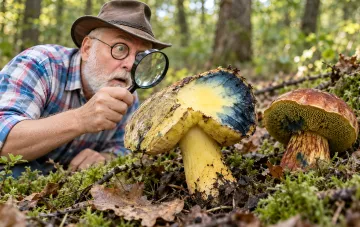
Autumn mushroom foraging is a favorite activity for many outdoor enthusiasts, but the subsequent home processing of the harvest from sand, pine needles, leaves, and soil often takes a significant amount of time. To significantly speed up this process and preserve the structure of the valuable product, it is important to know the specifics of working with each individual species: while some mushrooms only need to be gently wiped with a dry brush, others require a more thorough yet delicate approach and brief rinsing.
Specifics of cleaning porcini mushrooms and slippery jacks
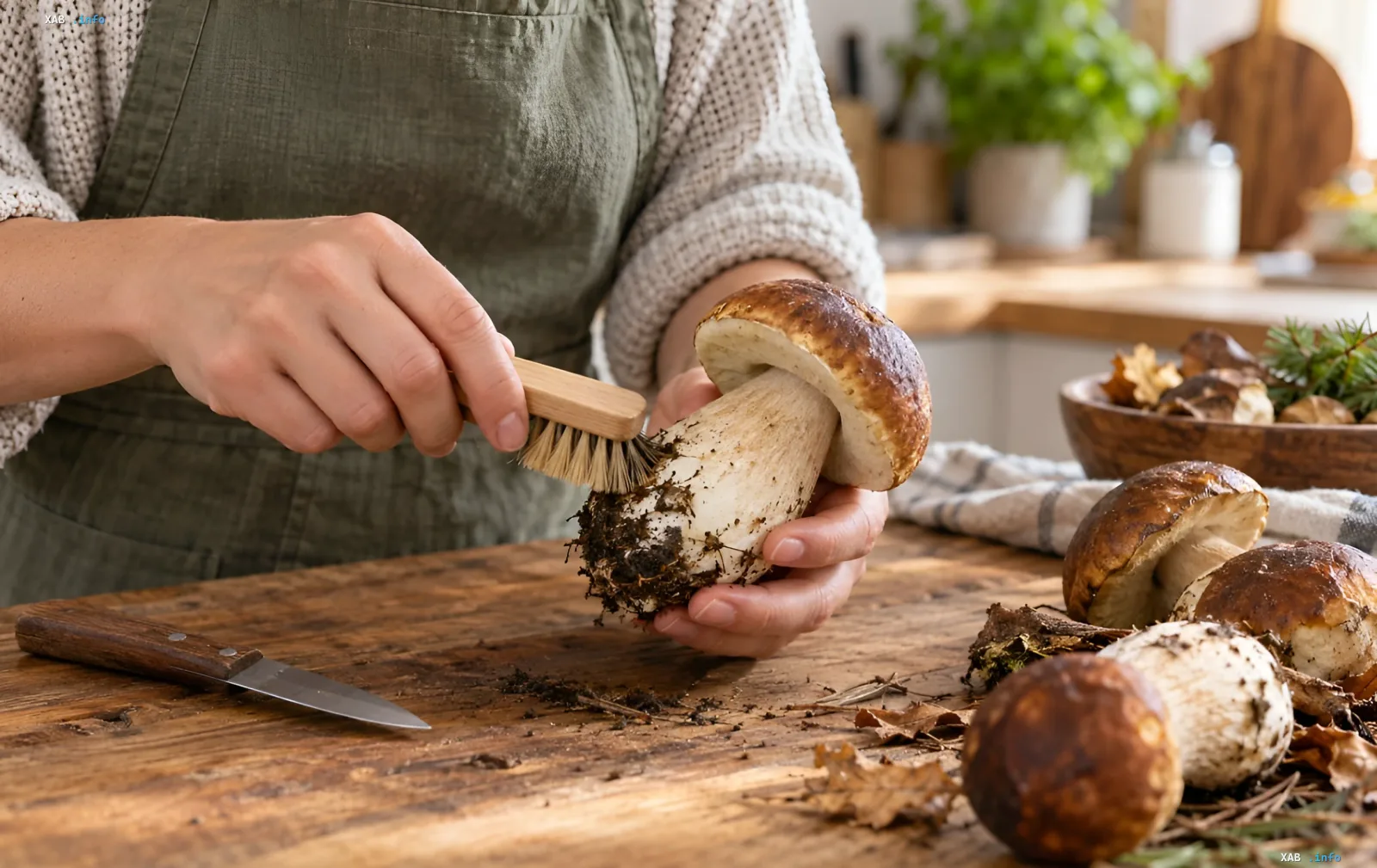
Porcini mushrooms have a dense flesh, so they generally do not need prolonged soaking in water. The cleaning process is best started from the bottom of the stalk, scraping away attached soil with a knife and cutting off contaminated parts. If needles or dry leaves remain on the surface, they can be easily removed with a small soft brush. It is enough to wipe the cap with a slightly damp cloth, and in case of heavy contamination, quick rinsing under cool running water followed by patting dry with a paper towel is acceptable. Remember that you do not need to peel the skin off every porcini mushroom if it is undamaged. In turn, slippery jacks have a characteristic slimy cap to which forest debris clings instantly. After removing major dirt with a knife, the skin of slippery jacks can be peeled off if it is heavily contaminated or damaged, though doing this for every single specimen is not strictly necessary.
Secrets of preparing chanterelles, honey mushrooms, and saffron milk caps
Chanterelles are often brought from the forest along with small twigs and sand that hides in the deep folds on the underside of the cap. First, the mushrooms are sorted by hand, the tips of the stalks are cut off, and the caps are treated with a soft brush. If you need to remove embedded sand, chanterelles are quickly rinsed in cold water and immediately thrown into a colander, avoiding long soaking that can ruin their texture. Honey mushrooms grow in dense groups, gathering wood residues and moss around them. It is more convenient to clean them in small portions, separating clusters and carefully inspecting the stalks before heat treatment. Saffron milk caps and other gilled mushrooms require increased attention to the underside of the caps; if they are planned for drying, it is preferable to use dry brushing, avoiding excess moisture.
Contradictory data
In matters of culinary processing of wild mushrooms, expert opinions and specialized agencies sometimes diverge. For example, traditional culinary approaches often allow for superficial washing of any mushrooms to remove soil particles, whereas specialized recommendations for preparation before drying insist exclusively on dry mechanical cleaning with a brush or cloth to avoid provoking premature spoilage of the raw material. In addition, the question of mandatory peeling of slippery jacks remains debatable: some cooks consider this an obligatory hygienic step, while other experts advise removing the upper layer only in case of severe damage or contamination of the fruit body.