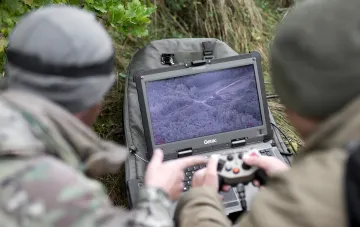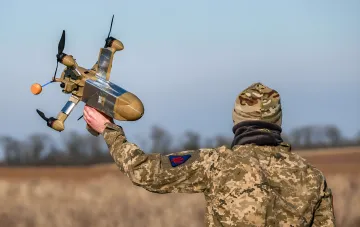
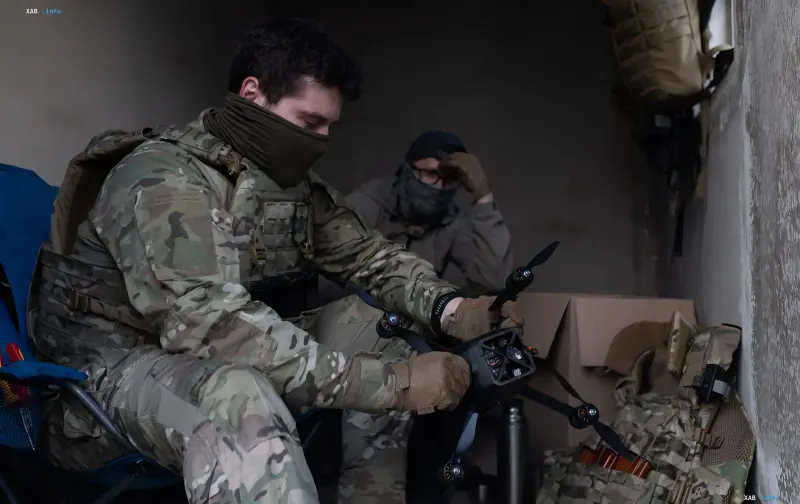
In the conditions of modern warfare, where unmanned systems have become one of the key tools of attack, the task of intercepting kamikaze drones like the "Shahed" remains one of the most difficult. As military experts and representatives of the defense industry note, successful interception of such targets requires a means capable of maintaining high speed for a long time. This requires a powerful powerplant, which in turn consumes a huge amount of energy — leading to rapid discharge of battery packs.
Technical limitations and development prospects
One possible solution is the use of jet interceptors. However, as experts emphasize, the creation of such systems is fraught with serious technical difficulties. Requirements for components, reliability and controllability are extremely high. At present, this direction is predominantly at the stage of scattered experiments, not mass implementation. Nevertheless, the potential of the technology is obvious, and work in this direction will continue.
Economic efficiency: drones vs missiles
When evaluating the effectiveness of interceptors, it is important to compare them not with the target — the Shahed kamikaze drone, the cost of which is relatively small — but with traditional air defense systems. As noted by TAF Industries, the cost of one missile for a classic air defense system can reach $4.5 million. Even more affordable options cost around a million. At the same time, the cost of one interceptor drone is incomparably lower, making it an economically viable solution for mass use.
Production capabilities and logistics
During the war, Ukrainian drone manufacturers have established an effective logistics system and fine-tuned mass production processes. Major market players already have experience in rapid development and scaling of solutions — in record time. This has become one of the key advantages when cooperating with international partners who invest in joint production abroad or support Ukrainian companies financially and technologically.
Contradictory data
There are discrepancies in estimates of the effectiveness of intercepting Shaheds. On the one hand, The Wall Street Journal (citing sources in the Ukrainian command) reports that Ukraine has learned to shoot down up to 97% of such drones. On the other hand, military experts and industry representatives emphasize that the task remains extremely difficult, and existing solutions have serious limitations in terms of range, flight time and cost. Thus, although statistics may indicate high efficiency, the real situation requires a more detailed analysis of the conditions of use and available resources.
International cooperation and new formats
Along with the development of its own solutions, Ukraine is integrating into global defense initiatives. Thus, the US Central Command is creating the first multinational formation of strike drones of all types called Falcon Strike. It combines air, surface and underwater unmanned systems of US partners, which opens up new opportunities for exchanging experience, technologies and resources. This could become a catalyst for the accelerated development of the Ukrainian drone industry.