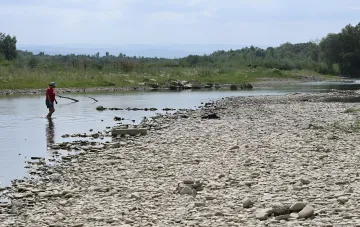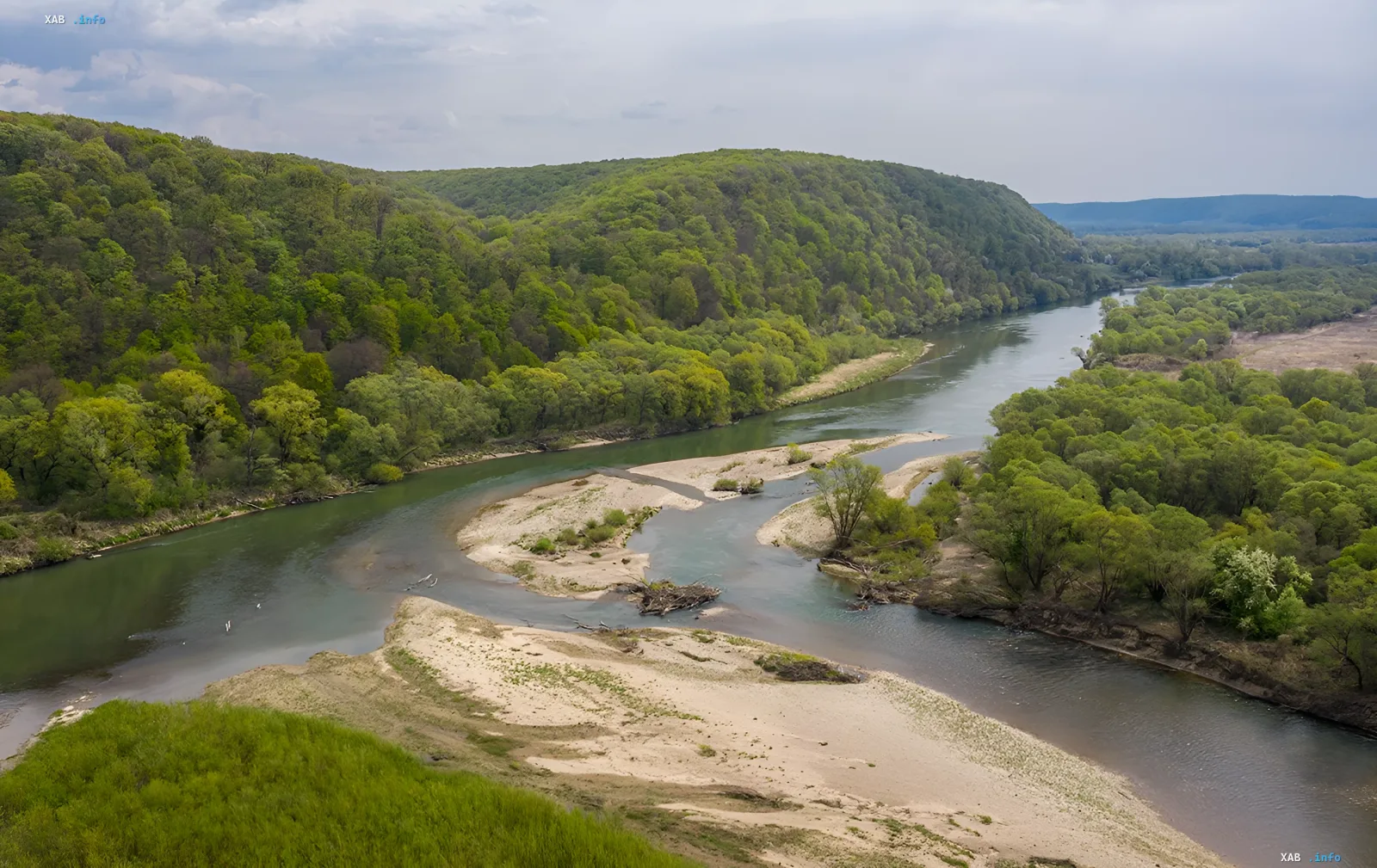
In the Dniester River basin, covering the territories of Ukraine, Moldova, and Transnistria, a critical hydrological situation has developed. According to the Ukrainian Hydrometeorological Center (UkrGMC), low water levels have been officially recorded on most rivers in the region, transitioning into a stage of hydrological drought. Experts warn that current water volume indicators are unprecedented throughout the history of meteorological observations.
Anti-records of low water and historical minimums
As of August 5, 2026, water levels on many sections of the Dniester have not only approached the lowest marks but have locally dropped below historical minimums. The situation is exacerbated by the fact that this year's spring flood was anomalously weak, and since April, the region has experienced a significant deficit of precipitation. As a result, the water volume of the rivers in the Dniester basin has been rapidly declining for several months.
UkrGMC specialists cite shocking figures: on the river section from the source to the city of Zaleshchiki (Chernivtsi region), the water volume is only 8–19% of the norm. For reference: a hydrological drought is recorded when the water volume drops to 20% and below the average monthly norm. The inflow to the Dniester Reservoir as of August 4 was only 50 m³/s, which is equivalent to 20% of the required volume.
Critical state of the Dniester Reservoir
The Dniester Reservoir, a key element of the region's water supply, is in a danger zone. Over the last three months, due to the need to ensure water discharges downstream to maintain a minimum level, the reservoir has been drawn down by almost 3 meters. The water level is approaching the lowest marks in the entire history of the hydraulic structure.
Experts predict a further exacerbation of the situation. Given the forecasted hot weather in August and the continuing precipitation deficit, the probability of a critical drop in water levels remains high. This creates a threat not only to the ecosystem but also to the economic activities of countries dependent on Dniester resources.
Consequences for the economy and water supply
Critical shallowing of the river has already led to the adoption of strict measures by the authorities. The Ministry of Economy and Environment of Ukraine reported that water consumption restrictions have been introduced for dozens of enterprises. According to sources, this concerns 92 enterprises that had to reduce water usage volumes or completely suspend operations to conserve resources.
The situation has prompted joint actions at the interstate level. On August 4, representatives of Ukraine and Moldova visited the Dniester Reservoir and the Khotyn water intake in the Chernivtsi region to assess the situation. In response to the crisis, Moldova was forced to begin using its strategic water reserve, indicating that the situation has transitioned into an emergency phase.
Contradictory data
Although the general picture of drought is confirmed by all parties, there are differences in the interpretation of the process dynamics on individual sections. Ukrainian sources (RBC-Ukraine, UkrGMC) emphasize that the reservoir has been "drawn down" (used) to discharge water downstream to support the level in the lower reaches. At the same time, sources from Transnistria (novostipmr.com) report that the river continues to break anti-records for low water, recording shallowing even on local sections, for example, in Grigoriopol, where the level dropped by another 6 centimeters in 24 hours. This may indicate that water discharges from the reservoir are not keeping up with natural evaporation and the lack of inflow in the lower reaches, or point to differences in water level measurement methodologies on different sections of the riverbed.